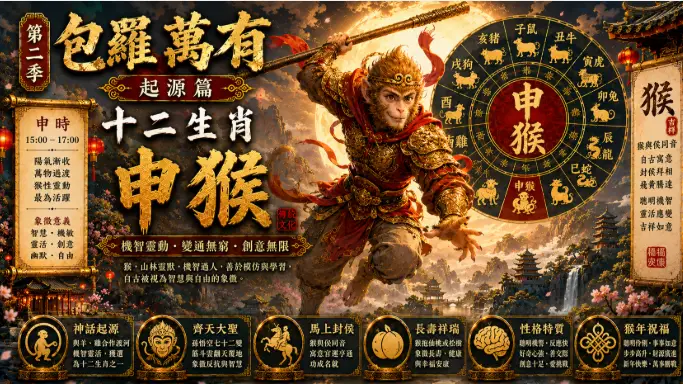
包羅萬有 第二季 起源篇|十二生肖 申猴的智慧傳說與靈巧象徵 | Origins Series Season 2 | The Monkey in the Chinese Zodiac and the Symbol of Intelligence
申猴在十二生肖中象徵機智、靈活與創造力。從神話英雄到民間文化,猴子一直代表聰明與變化能力,也反映東方文化對智慧與自由精神的崇尚。
The Monkey symbolizes intelligence, curiosity, and adaptability in the Chinese Zodiac. From legendary heroes to folk traditions, the Monkey has long represented cleverness, creativity, and the restless spirit of exploration in Eastern culture.
中文版本
申猴是十二生肖中的第九位,在中國文化中象徵智慧、靈巧與變通能力。猴子天性活潑機敏,善於觀察與模仿,因此自古便被視為聰明與創意的代表。在中國民間傳說與文學作品中,猴子的形象極具魅力,其中最著名的便是《西遊記》中的孫悟空。這位齊天大聖不但擁有七十二變與筋斗雲,更以反抗精神與機智勇敢深受人們喜愛,也讓猴子逐漸成為自由與智慧的重要象徵。關於生肖猴的起源,民間同樣流傳玉皇大帝舉辦生肖競賽的故事。傳說中,猴子與羊、雞合作渡河,展現出靈活與團隊精神,最終成功成為十二生肖之一。猴子不依靠力量,而是靠機智與適應能力完成挑戰,因此讓申猴成為聰明與策略的代表。在古代山林文化裡,猴子亦常被視為與自然靈性接近的動物,因為牠們行動敏捷、善於攀爬,彷彿能自由穿梭天地之間。中國古代文化中,「猴」與「侯」同音,因此猴子逐漸被賦予封侯拜相、飛黃騰達的吉祥寓意。在古代繪畫與工藝品裡,經常可以看到猴子騎馬、抱桃或站在松樹上的圖案,象徵官運、長壽與福氣。例如「馬上封侯」便是中國傳統吉祥圖騰之一,深受古人喜愛。這種語音文化,也讓猴子在華人世界中長期擁有幸運與成功象徵。十二地支中的「申」,對應下午三時至五時。古人觀察到猴子常在傍晚前後最為活躍,因此將猴與申時結合。這段時間亦代表陽氣逐漸轉弱、天地開始變化,而猴子的靈活與多變正好呼應這種自然節奏。這種安排反映古代中國人對動物習性與時間哲學的細緻觀察。隨着生肖文化發展,申猴逐漸形成鮮明性格象徵。民間普遍認為屬猴的人聰明機警、反應快速,而且擁有強烈好奇心與學習能力。他們通常善於交際、喜歡新鮮事物,也具備創意與幽默感。雖然有時顯得過於好動或缺乏耐性,但也因此充滿活力與冒險精神。這些生肖性格觀念雖然屬於傳統民俗,但多年來已深深融入華人文化與日常生活。猴子在中國藝術與宗教文化中的形象亦十分豐富。佛教故事中的靈猴、道教傳說中的神猴,以及民間剪紙與年畫中的猴形圖案,都展現猴子活潑而帶有靈性的特色。除了中國以外,猴文化在印度、東南亞與日本亦相當盛行。例如印度神話中的哈奴曼,同樣是象徵力量與智慧的重要猴神。每逢猴年,各地都會推出大量猴子主題的新年裝飾與藝術創作,象徵聰明、成功與活力。今天的申猴,早已超越普通生肖動物本身。牠代表人類對智慧、自由與突破限制的想像,也象徵東方文化中重視靈活應變與創造精神的哲學觀念。從古代神話到現代動漫文化,猴子的形象依然充滿魅力,成為華人世界中最活潑而富有創意的傳統象徵之一。
English Version
The Monkey is the ninth animal in the Chinese Zodiac and has long symbolized intelligence, adaptability, creativity, and curiosity in Chinese culture. Known for their playful nature and remarkable agility, monkeys were admired by ancient societies for their quick thinking and ability to survive in difficult environments. Over time, the Monkey became associated with cleverness, humor, freedom, and innovation, making it one of the most lively and fascinating figures in Chinese mythology and folklore. One of the most famous monkey figures in Chinese literature is Sun Wukong, the legendary Monkey King from the classic novel Journey to the West. Possessing supernatural powers such as shape-shifting and cloud-traveling abilities, Sun Wukong became a symbol of rebellion, courage, intelligence, and self-determination. His popularity greatly strengthened the Monkey’s status as a cultural icon representing wit and fearless individuality. According to the traditional zodiac legend, the Jade Emperor organized a race to determine the order of the zodiac animals. The Monkey cooperated with the Goat and the Rooster to cross a dangerous river, demonstrating teamwork, flexibility, and problem-solving ability. Rather than relying on physical strength, the Monkey used intelligence and adaptability to succeed, reinforcing its symbolic connection to strategy and innovation. In ancient mountain traditions, monkeys were also seen as creatures closely connected to nature and spiritual energy because of their ability to climb freely between trees and cliffs with incredible ease. In Chinese language and symbolism, the word for “monkey” sounds similar to the word for “marquis” or noble rank, giving the animal strong associations with success, promotion, and social advancement. Traditional Chinese paintings and decorative artwork often depict monkeys riding horses, holding peaches, or sitting among pine trees to symbolize prosperity, longevity, and official success. One famous symbolic phrase, “Immediate Promotion to Nobility,” uses monkey imagery as a visual pun representing achievement and honor. Within the traditional Earthly Branch system, the Monkey corresponds to the branch “Shen,” representing the hours between 3 p.m. and 5 p.m. Ancient observers noticed that monkeys were especially active during the late afternoon as daylight slowly faded. This period symbolized movement, transition, and changing energy, naturally matching the Monkey’s lively and unpredictable character. Such symbolic connections reflect how Chinese civilization linked animal behavior with philosophy, timekeeping, and the rhythms of nature. Over centuries, the Monkey also developed strong personality symbolism within zodiac traditions. People born in the Year of the Monkey are commonly believed to be intelligent, humorous, energetic, curious, and socially skilled. They are often admired for their creativity, adaptability, and ability to solve problems quickly. Monkey personalities are frequently described as adventurous and entertaining, although they may sometimes appear impatient or overly restless. While these zodiac interpretations belong to traditional folklore rather than science, they continue to influence cultural identity across many Chinese communities today. Monkeys also hold important positions in Chinese art, religion, and storytelling traditions. Sacred monkeys appear in Buddhist tales, Taoist legends, paper cuttings, temple carvings, and festive decorations. Beyond China, monkey symbolism spread throughout India, Southeast Asia, and Japan. In Hindu mythology, the monkey god Hanuman is revered as a symbol of strength, loyalty, and wisdom, showing how monkey imagery became influential across Asian cultures. During the Year of the Monkey, celebrations often feature monkey-themed decorations, artwork, and cultural performances symbolizing intelligence, vitality, and good fortune. Today, the Monkey represents far more than a zodiac animal. It embodies humanity’s fascination with freedom, creativity, humor, and the pursuit of knowledge. From ancient mythology to modern animation and global popular culture, the Monkey continues to inspire audiences as one of the most energetic and imaginative symbols in Chinese civilization.