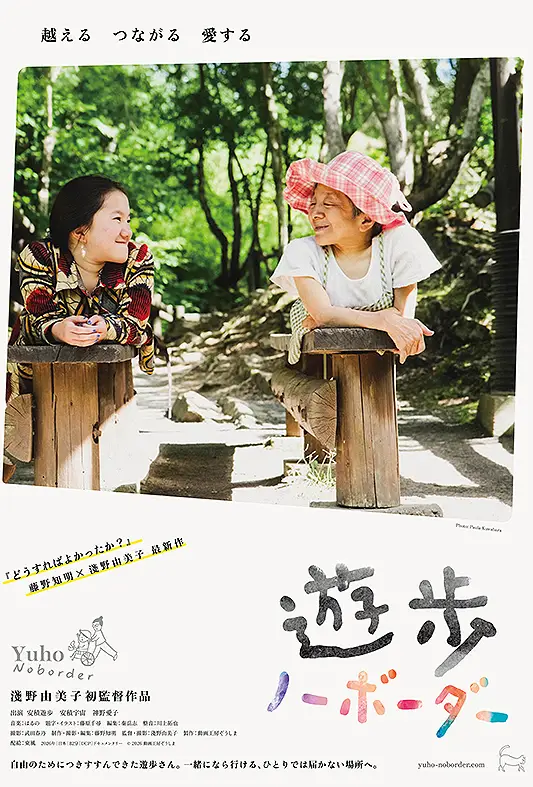
《遊歩 ノーボーダー》是一部關於障礙者自立運動、女性意識與社會改革的紀錄電影,透過安積遊步長年的人生軌跡,重新審視日本社會中的歧視、制度與自由意義。電影不只是描寫一位行動者的歷程,更像是一段跨越家庭、性別與社會邊界的生命對話。
YUHO No Border is a powerful documentary exploring disability rights, feminism and social transformation through the life of activist Yuho Asaka. More than a personal biography, the film becomes an intimate reflection on exclusion, independence and the struggle to redefine freedom within Japanese society.
電影內容
《遊歩 ノーボーダー》以日本障礙者自立生活運動的重要人物安積遊步為核心,透過她漫長而激烈的人生歷程,描繪一位女性如何在充滿歧視與壓迫的社會中持續尋找自由與尊嚴。1956年出生於福島的安積遊步,因患有骨骼疾病而自幼被社會視為「脆弱」與「需要保護」的人。然而這種被定義的人生,卻逐漸成為她反抗制度與社會偏見的起點。電影回望她童年時代因障礙而被剝奪學習機會,也呈現她長年對日本社會以性別、身體能力來區分人的憤怒與質疑。影片並沒有將她塑造成單純勵志人物,而是真實描繪她如何在痛苦、孤獨與衝突中一步步建立自己的思想與行動方式。她與「福島縣青い芝の會」的相遇,是人生重要轉折。透過與腦性麻痺當事者團體的交流,她開始接觸障礙者自我解放與集體抗爭的思想。其後赴美留學時,她更接觸到美國的自立生活運動與女性主義理念,逐漸建立出屬於自己的社會運動方向。電影細緻描述她如何把海外經驗帶回日本,參與建立日本第一批自立生活中心,並推動障礙者自主生活與平等參與社會的觀念。她不僅參加國際會議,更成為推動優生保護法改革的重要人物之一。影片沒有停留在歷史回顧,而是把鏡頭放回她如今的生活狀態。觀眾可以看到她與家人之間長久累積的情感矛盾,尤其是父親與她之間激烈的價值衝突。夾在其中的妹妹愛子,也成為電影重要情感視角。她既理解姊姊追求自由的意志,又承受家庭關係帶來的壓力與拉扯,使影片呈現出複雜而真實的人際情感。電影同時描寫遊步的女兒宇宙。與母親有相同身體特徵的她,如今在海外研究障礙者權利問題,同時攻讀研究所。兩代女性的人生經驗形成微妙對照,也讓電影延伸至下一世代對自由與身份認同的思考。此外,影片中與遊步共同生活的年輕介助者們,也打破傳統照護者與被照護者的界線。他們之間更像是一種自由而平等的共生關係,而非單向的照顧制度。導演淺野由美子以細膩且貼近人物的方式拍攝,不刻意煽情,而是讓觀眾透過日常對話與衝突,自然感受到障礙者在社會中的真實處境。電影既是一部個人紀錄片,也是一部關於制度、身體與社會結構的深層觀察。它不只是談論障礙,而是在追問:究竟什麼才是真正的自由?而社會又如何在不知不覺中替人劃下邊界。
English Version
YUHO No Border follows the extraordinary life and activism of Yuho Asaka, one of Japan’s pioneering voices in the disability rights movement. Through decades of personal struggle, political action and emotional confrontation, the documentary paints a deeply human portrait of a woman who refused to accept the limitations imposed upon her by society. Born in Fukushima in 1956 with a condition that made her bones fragile, Yuho grew up in an environment where disabled people were often denied educational opportunities and treated as burdens rather than individuals with agency. From an early age, she became painfully aware of how Japanese society categorized people according to gender, physical ability and social conformity. Instead of presenting her merely as an inspirational figure, the film honestly captures the complexity of her anger, loneliness and determination as she fought to create a place where she could exist freely. A major turning point in her life came through her connection with the disability activist organization Fukushima Aoi Shiba no Kai, where she encountered radical ideas about self-advocacy and collective resistance among people with cerebral palsy and other disabilities. Later, while studying in the United States, Yuho was introduced to the independent living movement and feminist thought, experiences that profoundly shaped her philosophy. Returning to Japan, she became deeply involved in establishing some of the country’s first independent living centers, promoting the idea that disabled people should have control over their own lives rather than be confined by institutional systems. The documentary also highlights her participation in international conferences and her role in helping challenge Japan’s former Eugenic Protection Law, which historically enabled discrimination against disabled individuals. Rather than remaining a historical overview, the film brings viewers into Yuho’s present-day relationships and daily life. One of its emotional cores lies in the ongoing tension between Yuho and her father, whose conflicting values created years of emotional strain within the family. Between them stands her younger sister Aiko, who struggles with both admiration for Yuho’s courage and the emotional burden of family conflict. This dynamic gives the documentary a raw emotional honesty that goes far beyond political storytelling. Another important presence is Yuho’s daughter, Sora, who shares her mother’s physical condition and now studies disability rights abroad while attending graduate school. Through the relationship between mother and daughter, the film explores how ideas of identity, freedom and activism evolve across generations. The documentary also focuses on the young caregivers who live and work alongside Yuho in unconventional but deeply equal relationships. Instead of portraying caregiving as one-sided assistance, the film presents it as a form of shared life built on trust and mutual respect. Director Yumiko Asano approaches the subject with patience and intimacy, avoiding dramatic manipulation and allowing ordinary conversations, conflicts and quiet moments to reveal the realities of living within a society structured by invisible barriers. Ultimately, YUHO No Border is not simply about disability. It is a profound examination of human dignity, social systems and the question of what freedom truly means in a world constantly trying to define people by their differences.
影片簡介(預告片/片段)
一位障礙運動先驅者,以人生對抗社會邊界與制度偏見。
A pioneering activist challenges social barriers and redefines freedom through her life and resistance.
電影資料
導演:淺野由美子
類型:紀錄片、社會、人權
製片公司:日本紀錄電影製作團隊
上映年份:2026
主要演員
安積遊步
安積愛子
安積宇宙
總結
《遊歩 ノーボーダー》不只是人物紀錄片,更是一部深入日本社會結構與人權問題的作品。電影透過安積遊步的人生,呈現障礙者如何在制度與偏見之中持續爭取自我存在的權利,也讓觀眾重新思考自由、家庭與社會之間的真正關係。
Conclusion
YUHO No Border is far more than a biographical documentary. Through Yuho Asaka’s life and activism, the film offers a powerful reflection on disability rights, social prejudice and personal freedom. Honest, emotional and politically resonant, it invites audiences to reconsider how society defines value, independence and humanity itself.