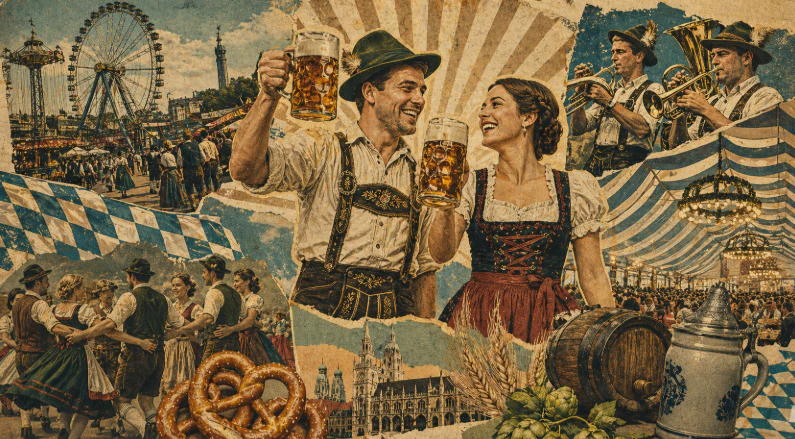
每年秋季於Munich舉行的Oktoberfest,從一場王室婚禮演變為全球最大民俗節慶,融合啤酒、音樂與傳統文化,成為德國的重要象徵之一。
Held each autumn in Munich, Oktoberfest has grown from a royal wedding celebration into the world’s largest folk festival, blending beer, music, and Bavarian traditions.
中文
慕尼黑啤酒節的歷史可以追溯至1810年,當時巴伐利亞王儲Ludwig I of Bavaria與特蕾莎公主舉行婚禮,為了讓市民共同慶祝,官方在慕尼黑城外舉辦大型賽馬活動,地點後來被命名為特蕾莎草地,這場慶典獲得極大成功,因此決定每年延續舉辦,逐漸發展成今日的啤酒節,早期活動以農業展示與賽馬為主,隨著時間推移,啤酒攤位與娛樂設施逐步加入,使節日更加豐富多元,到了19世紀中後期,啤酒已成為活動核心,當地六大啤酒廠開始提供特製啤酒,形成獨特的節慶文化,啤酒節通常從9月中旬開始,持續至10月初,吸引來自世界各地的遊客,每年參與人數可達數百萬人,現場設有大型帳篷、遊樂設施以及傳統音樂表演,參加者穿著巴伐利亞傳統服飾如Dirndl與Lederhosen,展現濃厚的地方文化特色,啤酒節不僅是飲酒活動,更是一場文化盛宴,它結合飲食、音樂與社交,成為展示德國民俗的重要舞台,節日期間所供應的啤酒必須符合純淨法規,並由慕尼黑當地啤酒廠釀造,確保品質與傳統延續,此外啤酒節亦經歷過歷史波折,包括戰爭與疫情期間的停辦,但每次恢復都象徵著文化的延續與城市的生命力,進入現代,啤酒節已成為全球文化符號之一,不僅帶動觀光經濟,也影響其他國家舉辦類似活動,然而其核心精神仍然圍繞著社群與共享,無論是舉杯共飲還是欣賞音樂,人們在這個節日中找到連結與歡樂,從一場王室婚禮到今日的國際盛會,慕尼黑啤酒節見證了文化如何隨時間演變並持續影響世界
English Version
The origins of Oktoberfest date back to 1810, when Crown Prince Ludwig of Bavaria married Princess Therese, and a grand public celebration was organized in Munich to mark the occasion, featuring horse races and festivities that invited citizens to participate in royal joy, the event was held on a field later named Theresienwiese in honor of the princess, and due to its overwhelming success, it became an annual tradition, initially the festival focused on agricultural displays and horse racing, reflecting the rural heritage of Bavaria, but over time beer stalls, music, and amusement attractions were introduced, gradually transforming the event into a vibrant celebration centered around beer culture, by the late 19th century beer had become the defining element of Oktoberfest, with Munich’s major breweries crafting special brews specifically for the festival, today Oktoberfest typically begins in mid-September and runs until early October, attracting millions of visitors from around the world, the festival grounds are filled with large beer tents, traditional Bavarian music, carnival rides, and an atmosphere of lively celebration, attendees often wear traditional clothing such as dirndls and lederhosen, reinforcing cultural identity and heritage, beyond its reputation as a beer festival, Oktoberfest serves as a cultural showcase that highlights Bavarian traditions, craftsmanship, and communal spirit, strict regulations ensure that only locally brewed beer adhering to purity laws is served, preserving authenticity and quality, throughout history the festival has faced interruptions due to wars and global crises, yet its revival each time demonstrates resilience and cultural continuity, in the modern era Oktoberfest has become a global icon, inspiring similar events worldwide and contributing significantly to tourism and local economy, however at its core it remains a celebration of togetherness, where people gather to share food, music, and joy, raising glasses not only in celebration but in connection, from its beginnings as a royal wedding festivity to its status as an international cultural phenomenon, Oktoberfest reflects how traditions evolve while maintaining their cultural essence.