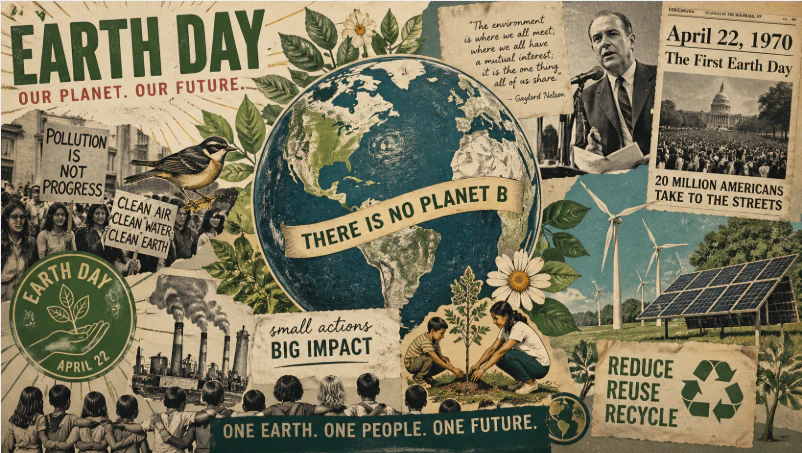
每年4月22日的Earth Day提醒人類重新審視與地球的關係,從一場學生運動發展為全球行動,這一天的誕生不僅是環保史的轉折,更是人類文明自省的重要象徵。
Every April 22, Earth Day invites humanity to rethink its relationship with the planet, evolving from a student-led movement into a global call for action and reflection on our shared future.
中文
世界地球日的誕生,源於20世紀中期人類對工業化後果的深刻反思,當時美國正經歷高速經濟發展,但空氣污染、水質惡化以及生態破壞問題日益嚴重,1969年加州聖塔芭芭拉外海發生嚴重漏油事故,成為喚醒公眾環保意識的重要事件,翌年由美國參議員蓋洛德・尼爾森發起,在1970年4月22日舉行首次地球日活動,吸引超過2000萬人參與,這是當時美國歷史上最大規模的公民運動之一,標誌著環境保護從邊緣議題走向主流,並促成美國環境保護署的成立以及多項環境法案的出台,地球日的核心精神在於「行動」,它不只是紀念日,更是一種動員,隨著時間推移,這一活動逐漸擴展至全球,1990年地球日正式國際化,超過140個國家參與,將環保議題帶入全球視野,進一步推動回收、減廢與氣候議題的普及,進入21世紀後,地球日的焦點轉向氣候變化、生物多樣性流失以及可持續發展,尤其在數位時代,社交媒體成為傳播環保理念的重要工具,使個人行動得以快速擴散,然而地球日的意義並不僅止於象徵性的活動,它更提醒人類面對一個現實,即地球資源有限而人類需求無限,如何在發展與保護之間取得平衡,成為當代最重要的課題之一,從減少塑膠使用到支持綠色能源,每一個微小行動都是對未來的投資,地球日的價值在於它將抽象的環境問題轉化為具體的生活選擇,使每一個人都能成為改變的一部分,從最初的抗議與呼籲,到今日全球數十億人共同參與的環境運動,地球日已不再只是某一國家的倡議,而是全人類共同的責任與承諾,它象徵著一種新的文明意識,即人類不再只是地球的使用者,而是守護者與共生者
English Version
The origin of Earth Day can be traced back to a period of growing environmental awareness during the mid-20th century, when rapid industrialization brought prosperity but also severe ecological consequences, including air pollution, contaminated water, and widespread habitat destruction, a turning point came in 1969 with a massive oil spill off the coast of Santa Barbara, which shocked the public and highlighted the urgent need for environmental reform, inspired by this crisis, U.S. Senator Gaylord Nelson proposed a nationwide environmental teach-in, and on April 22, 1970, the first Earth Day was held, drawing more than 20 million participants across the United States, making it one of the largest civic demonstrations in history at the time, this movement successfully pushed environmental issues into the political mainstream and led to the establishment of the Environmental Protection Agency as well as the passage of key environmental legislation, what made Earth Day unique was its emphasis on collective action, it was not merely symbolic but deeply participatory, over time the movement expanded beyond national borders, and by 1990 Earth Day had become a global event involving more than 140 countries, bringing environmental awareness to an international scale and encouraging practices such as recycling, conservation, and sustainable living, in the 21st century the focus of Earth Day has shifted toward pressing global challenges such as climate change, biodiversity loss, and renewable energy transition, digital platforms have further amplified its reach, allowing individuals to engage, share, and mobilize efforts in real time, yet the deeper meaning of Earth Day goes beyond campaigns or annual celebrations, it serves as a reminder of a fundamental truth that the Earth’s resources are finite while human demands continue to grow, the challenge lies in finding a balance between development and sustainability, from reducing plastic consumption to supporting green technologies, every small decision contributes to a larger impact, Earth Day transforms abstract environmental concerns into tangible everyday actions, empowering individuals to take responsibility for the planet’s future, what began as a protest movement has evolved into a global commitment shared by billions, symbolizing a shift in human consciousness from being mere consumers of the Earth to becoming its stewards and partners in coexistence.