自助餐看似現代,其實源於歐洲古老飲食習慣,經歷多次文化融合才成今日形式。本文帶你了解其歷史與演變。
Buffets may feel modern, but their roots trace back to old European dining customs, evolving through cultural exchange into today’s global format.
中文
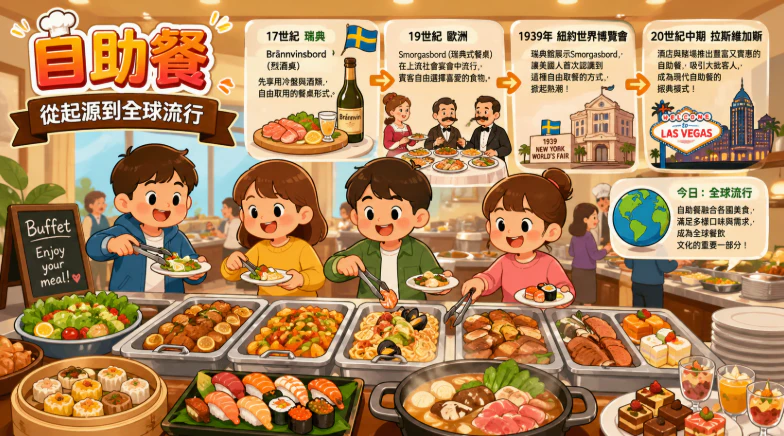
自助餐的概念並非現代產物,其歷史可以追溯到17世紀的瑞典,當時出現了一種名為“Brännvinsbord”的餐桌形式,意思是“烈酒桌”,人們會在用餐前先享用冷盤與酒類,這種形式後來逐漸發展成為今日所熟知的Smorgasbord,也就是多樣冷盤自由取用的餐桌,這種用餐方式強調自由、共享與多樣選擇,成為自助餐的最早雛形,到了19世紀,這種瑞典式餐飲逐漸傳播到歐洲其他地區,尤其是在上流社會宴會中流行,賓客可以自由走動並選擇自己喜歡的食物,打破了傳統固定座位與逐道上菜的限制,而真正讓自助餐走向世界舞台的關鍵時刻,則是在1939年的紐約世界博覽會,當時瑞典館展示了Smorgasbord,讓美國民眾首次大規模接觸這種自由取餐的方式,引起極大關注與模仿,隨後自助餐文化迅速在美國發展,特別是在20世紀中期的拉斯維加斯,酒店為吸引賭客,推出價格實惠且種類豐富的自助餐,讓客人可以快速用餐後回到賭場,這種商業模式極為成功,也奠定了現代自助餐的核心精神,即高效率、多樣選擇與價格吸引力,隨著時間推進,自助餐逐漸從酒店與賭場擴展到全球餐飲業,從高級飯店到平價餐廳皆可見其身影,並且根據不同地區文化進行在地化,例如亞洲地區會加入熱炒、壽司、火鍋等元素,使自助餐不再只是冷盤與西式料理,而是融合多國飲食文化的綜合餐飲形式,此外,自助餐也反映了現代社會節奏的變化,人們追求效率與選擇權,希望在有限時間內享用多樣美食,而不受傳統餐飲流程限制,然而,自助餐亦面臨一些批評,例如食物浪費與品質控制問題,許多餐廳因此引入限時、按重量收費或減少浪費的措施,以提升可持續性與經營效率,總體而言,自助餐從北歐的簡單餐桌演變為全球流行的飲食模式,不僅是一種用餐方式,更是一種文化交流與現代生活方式的體現
English Version
The concept of the buffet is far older than many assume, with its origins tracing back to 17th-century Sweden where a dining style known as “Brännvinsbord,” meaning “brandy table,” first appeared, this setup involved guests enjoying cold dishes and spirits before the main meal, gradually evolving into the famous Smorgasbord, a spread of varied cold foods laid out for self-service, emphasizing freedom of choice and social interaction, by the 19th century this Swedish dining tradition began spreading across Europe, particularly among the upper classes where formal dining rules started loosening, allowing guests to move freely and select dishes at their own pace rather than being confined to fixed seating and sequential courses, the pivotal moment that introduced buffet-style dining to a global audience occurred during the 1939 New York World’s Fair where the Swedish pavilion showcased the Smorgasbord concept, capturing the imagination of American visitors and inspiring widespread adoption, following this exposure the buffet gained rapid popularity in the United States, especially in cities like Las Vegas where casinos and hotels embraced the model as a strategic tool to attract and retain customers, offering affordable, abundant food that encouraged guests to dine quickly and return to gambling, this approach proved highly successful and established the modern buffet’s defining traits of variety, efficiency, and value, over time the buffet expanded beyond casinos and hotels into mainstream dining across the world, adapting to local tastes and culinary traditions, in Asia for instance buffets often include hot stir-fried dishes, sushi, and hot pot options, transforming the concept into a multicultural dining experience rather than a purely Western format, the buffet also reflects broader societal shifts toward convenience and autonomy, as diners increasingly prefer flexible dining experiences that allow them to control portion size, food selection, and pace, however the model is not without criticism, issues such as food waste and maintaining consistent quality have prompted many establishments to innovate with time limits, pay-by-weight systems, and sustainability initiatives, despite these challenges the buffet remains a powerful symbol of culinary globalization, illustrating how a simple Nordic dining custom evolved into a worldwide phenomenon that continues to adapt to changing lifestyles and expectations.