在宮崎駿的作品裡,所謂的壞人往往不是邪惡,而只是站在不同的位置做出選擇,當立場改變,對與錯也開始變得模糊,而世界因此變得更接近真實。
In Miyazaki’s films, so-called villains are rarely evil in a simple sense, but individuals making choices from different positions, and as perspectives shift, the boundaries between right and wrong begin to blur, bringing the world closer to reality.
中文
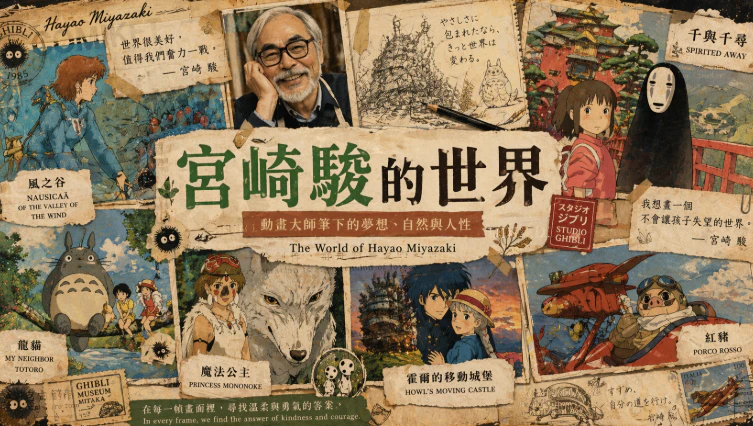
宮崎駿的故事很少出現傳統意義上的反派角色,他並不關心誰是壞人,而更關心人為什麼會做出那樣的選擇,在魔法公主中,黑帽大人並不是單純的破壞者,她建立鐵鎮,收留被社會排斥的人,給予他們工作與尊嚴,但同時她也砍伐森林,與自然對立,她的行動既帶來希望,也帶來破壞,而在千與千尋中,湯婆婆看似貪婪而強勢,但她同樣是一個維持秩序的人,她經營澡堂,管理眾多角色,她的行為有其邏輯與必要性,而無臉男則更直接地呈現出環境如何影響個體,他在不同情境中表現出完全不同的面貌,並不是因為他本質改變,而是因為他回應了周圍的世界,宮崎駿透過這些角色告訴觀眾,所謂的善與惡,往往不是固定的屬性,而是關係中的產物,每一個角色都在自己的位置上行動,他們的選擇受到環境、需求與過去經驗的影響,而當這些因素改變,行為也會隨之改變,這種描寫讓角色不再是單一功能的存在,而變得立體而矛盾,宮崎駿並沒有試圖讓觀眾喜歡或討厭某一方,而是讓觀眾去理解每一方的理由,這種理解並不等於認同,而是一種看見,當觀眾開始理解不同立場時,世界就不再只是對立,而是一種複雜的網絡,而在這樣的世界裡,衝突並不來自邪惡,而來自不同需求之間的碰撞,這種觀點讓宮崎駿的作品帶著一種獨特的現實感,即使在奇幻的設定之中,角色依然像現實中的人一樣,帶著矛盾與不完美,而這種不完美,使他們更接近觀眾,也讓故事更具深度,宮崎駿並沒有提供簡單的道德答案,他讓問題保持開放,讓觀眾在不同角色之間移動,去思考如果自己站在那個位置,會做出什麼選擇,而這種思考,或許正是他作品中最重要的部分,因為當人開始理解他人時,也開始重新理解世界,而在這個過程中,所謂的反派也就不再存在,取而代之的,是一個沒有絕對立場的世界.
English Version
Miyazaki’s narratives rarely rely on traditional villains, instead focusing on the motivations behind each character’s actions, in Princess Mononoke Lady Eboshi is not portrayed as purely destructive, she builds Iron Town as a refuge for those rejected by society, offering them purpose and dignity, yet her expansion also leads to environmental destruction, placing her in direct conflict with the natural world, her role embodies both creation and harm, while in Spirited Away Yubaba appears domineering and greedy, but she also maintains order and structure within the bathhouse, her actions are not arbitrary but driven by responsibility and control, and No-Face further illustrates how identity can shift depending on context, reflecting the behaviors and values of the environment he inhabits, rather than possessing a fixed moral nature, through these characters Miyazaki suggests that morality is not an inherent trait but something shaped by relationships and circumstances, individuals act according to their position, influenced by needs, histories, and surroundings, and as these conditions change, so do their choices, this approach transforms characters into complex and often contradictory figures, moving beyond simple categorizations of good and evil, Miyazaki does not ask the audience to take sides but to understand multiple perspectives, and this act of understanding does not require agreement, but recognition, when viewers begin to see the reasoning behind different positions, conflict becomes less about opposition and more about interaction between competing needs, this perspective gives Miyazaki’s work a grounded realism, even within fantastical settings, as characters mirror the ambiguity and imperfection of real people, and it is this imperfection that makes them relatable and compelling, rather than offering clear moral resolutions, Miyazaki leaves questions open, encouraging audiences to move between viewpoints and consider what choices they might make under similar circumstances, this reflective process becomes central to his storytelling, as understanding others leads to a deeper understanding of the world itself, and in such a world, the concept of a true villain dissolves, replaced by a landscape shaped by perspective, complexity, and coexistence.