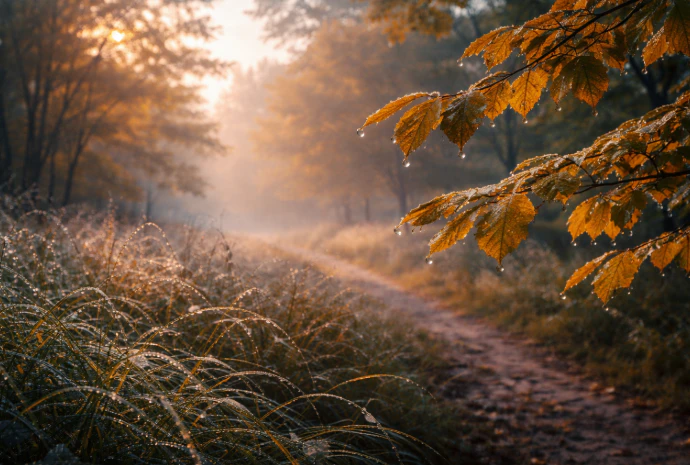
寒露,標誌著秋天進一步加深,氣溫開始明顯下降。清晨的露水帶著寒意,空氣變得清冷而乾爽。
Cold Dew marks a deeper stage of autumn, as temperatures begin to drop more noticeably. Morning dew carries a chill, and the air becomes cooler and clearer.
中文
寒露,是秋天逐漸走向深處的一個節氣,如果說白露還帶著一點柔和與過渡,那麼寒露則明確地讓人感受到冷空氣的存在。清晨的氣溫明顯下降,當人們走出戶外時,空氣帶著一種輕微的刺感,呼吸之間可以感受到冷意進入身體。露水仍然存在,但與白露不同,它不再只是濕潤,而是帶著溫度的下降,觸碰時會感到冰涼。這種變化,使人對季節的轉換有了更直接的感受。白天的陽光依然存在,但已經失去了夏天的力量,光線變得清透而偏冷,照在地面上時,不再帶來熱,而是一種明亮卻溫和的存在。影子變得更加清晰,輪廓銳利,整個空間呈現出一種乾淨的視覺效果。寒露的空氣,是這個節氣最具特徵的部分,它乾燥、清晰,帶著一種可以被感知的冷。城市中的變化也開始變得明顯,人們逐漸換上較厚的衣物,早晚的街道少了夏天的輕裝,取而代之的是外套與圍巾的出現。這些細節,讓整個城市呈現出不同的節奏。對學生而言,寒露通常已經進入學期的中段,生活完全回到規律之中,清晨的冷空氣讓人更容易清醒,也讓日常節奏更加穩定。對上班族而言,寒露則是一種明確的轉換點,工作與生活不再受到炎熱影響,效率提升,同時也開始面對氣溫下降帶來的調整。寒露同時帶著一種收斂的特質,自然界的顏色開始變得更深,綠色逐漸轉為黃與褐,植物的生命節奏開始減緩。這種變化,使整個環境呈現出一種沉靜的氣氛。夜晚的寒露更加明顯,氣溫下降幅度更大,空氣變得冷而清透,天空顯得更加深遠。人們在夜裡行走時,會感受到一種安靜的冷,這種冷不像冬天那樣嚴峻,而是一種提醒,讓人知道季節正在走向下一個階段。寒露的記憶,往往與清晨的空氣有關,是走出門時感受到的第一口冷氣,是露水在植物上閃耀卻帶著寒意的畫面,也是光線變得清晰而不帶熱的感覺。在這個節氣裡,人們開始真正與秋天同步,從感覺到行為,都出現轉變。寒露提醒我們,變化不會停留在表面,而是會逐漸深入,從氣溫到環境,再到生活節奏,一層一層地影響著日常。這是一個從溫和走向清冷的過程,也是一個讓人準備迎接更深秋與冬天的開始。
English Version
Cold Dew represents a stage where autumn moves beyond transition and begins to deepen into a more defined presence. If White Dew carries a sense of softness and gradual change, Cold Dew introduces a clearer and more noticeable chill. Early mornings bring a distinct drop in temperature, and stepping outside, one can feel a slight sharpness in the air. Each breath carries a cool sensation that reaches inward, making the presence of colder air undeniable. Dew still forms on surfaces, but unlike before, it is no longer just moisture; it now carries a cold touch, signaling a further decline in temperature. This shift makes seasonal change more tangible and immediate. Daylight remains, but it has lost the intensity associated with summer. The sunlight appears clearer and cooler, illuminating the environment without adding warmth. Shadows become sharper and more defined, creating a crisp visual quality that enhances the perception of space. The air itself becomes one of the defining features of this period. It is dry, transparent, and distinctly cool, something that can be physically felt rather than merely observed. In urban environments, changes become increasingly visible. People begin to wear heavier clothing, and the lightness of summer attire is replaced by layers, jackets, and scarves. These adjustments subtly alter the rhythm of the city. For students, this period often falls in the middle of the academic term, where routines are fully established. The cooler mornings help with alertness and concentration, reinforcing a steady daily rhythm. For working adults, Cold Dew represents a clear turning point. With the heat no longer a factor, productivity improves, but new adjustments are required as temperatures continue to drop. This season also carries a sense of restraint. Colors in nature deepen, greens gradually shifting toward yellows and browns, and plant life begins to slow its pace. The environment takes on a quieter and more introspective tone. Nights during this period are especially notable. Temperatures drop further, and the air becomes even clearer, revealing a deeper sky. Walking at night, one experiences a calm and gentle cold—not yet the harshness of winter, but a clear indication of what is approaching. The memory of Cold Dew is often tied to these early morning sensations: the first breath of cool air, the sight of dew glistening with a cold edge, and the clarity of light without heat. During this time, people begin to align more fully with autumn, both in feeling and in behavior. It is a period where change moves beyond the surface and becomes integrated into daily life. Cold Dew reminds us that transformation is not sudden, but layered, gradually influencing temperature, environment, and rhythm. It is a progression from mildness to clarity, preparing both nature and people for the deeper stages of autumn and the arrival of winter.