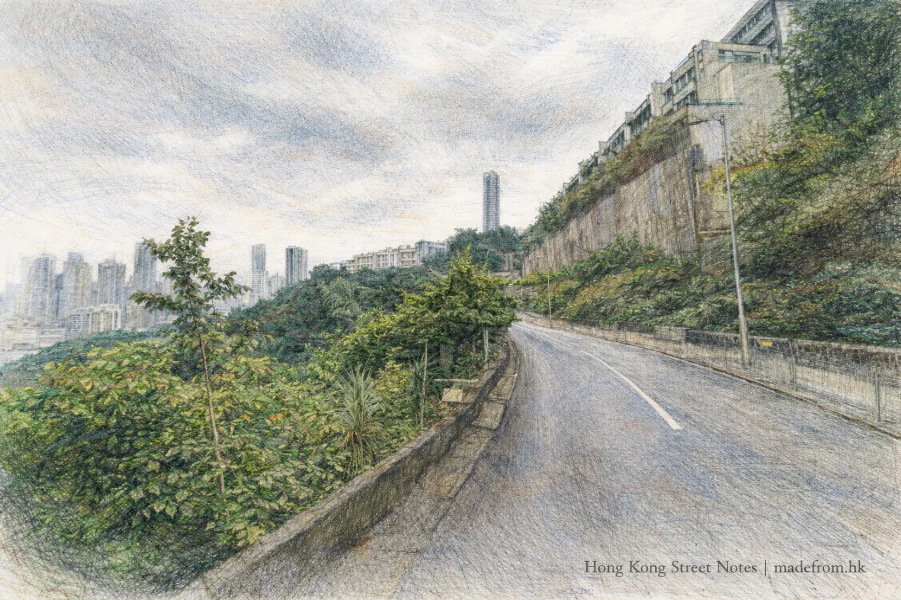
位於香港半山與山頂之間的司徒拔道,是一條蜿蜒於綠意與豪宅之中的道路,既承載殖民時代的權力印記,也見證城市由寧靜山徑走向高尚住宅區的轉變。
Set along the lush slopes between Mid-Levels and The Peak, Stubbs Road quietly reflects Hong Kong’s layered past—where colonial authority once defined the landscape, and modern luxury living gradually reshaped its identity into one of the city’s most prestigious residential enclaves.
中文
司徒拔道(Stubbs Road)位於香港港島中部,連接跑馬地與山頂一帶,是一條沿山勢而建、曲折上升的主要道路,其名稱源自香港第十六任總督 司徒拔(Reginald Stubbs),反映出殖民時期以官員命名街道的傳統,也象徵當時權力與地理空間之間的密切關係,這條道路最早於20世紀初逐步開拓,隨著香港城市發展與人口增加,半山區逐漸成為外籍人士與富裕階層的居住地,而司徒拔道正正位於這個階層化空間的核心地帶,早期道路較為狹窄,主要供馬車及早期汽車通行,沿途環境清幽,遠離當時繁忙的中環商業區,帶有濃厚的殖民山城氣息,在日治時期及戰後重建階段,該區並未遭受大規模破壞,因此保留了不少原有格局,到了1950至1970年代,隨著香港經濟起飛及地產發展,司徒拔道開始出現更多低密度住宅及豪宅項目,逐步轉型為高尚住宅地段之一,而道路兩旁的建築亦從早期的獨立洋房,演變為現代高層住宅與豪華公寓,反映出香港土地資源緊張下的垂直發展趨勢,在城市變遷中,司徒拔道亦見證了交通系統的改善與私家車文化的興起,道路被拓寬及優化,成為連接山頂與市區的重要幹道之一,然而即使經歷多次發展與翻新,該區仍保留著相對寧靜的居住氛圍,與下方密集的都市形成鮮明對比,其街道特色在於沿途綠樹成蔭、視野開闊,可俯瞰跑馬地馬場及維多利亞港部分景色,同時亦鄰近多條行山徑與自然景觀,形成一種城市與自然交錯的獨特空間,而在文化層面上,司徒拔道不僅是一條交通道路,更是一種身份與階級的象徵,其地址往往代表著高端生活方式與社會地位,吸引本地富豪及外籍專業人士居住,現今的司徒拔道已成為香港傳統豪宅區的重要代表之一,在快速變化的城市中,它保留了一種相對緩慢而穩定的節奏,既承載歷史記憶,也持續見證香港社會結構與居住模式的轉變,從殖民命名到現代城市象徵,這條道路如同一條時間的斜坡,串連著過去與現在,靜靜地存在於香港的山城輪廓之中。
English Version
Stubbs Road sits along the central slopes of Hong Kong Island, linking Happy Valley to the Peak in a winding ascent that reflects both geography and history, its name derived from Reginald Edward Stubbs, a former colonial governor, illustrating a period when urban spaces were closely tied to administrative power and imperial identity, the road began taking shape in the early 20th century as Hong Kong expanded beyond its original commercial core, with the Mid-Levels emerging as a preferred residential area for expatriates and affluent communities seeking cooler air and distance from the dense activity below, in its early years Stubbs Road was relatively narrow and quiet, used by carriages and early automobiles, offering a serene environment framed by greenery and hillside views, unlike the bustling streets of Central, during the wartime period and subsequent post-war recovery the area remained relatively intact, preserving its spatial character and reinforcing its status as a residential enclave, from the 1950s through the 1970s, as Hong Kong experienced rapid economic growth, the district surrounding Stubbs Road underwent gradual transformation, low-density villas and standalone houses began giving way to more modern residential developments, including luxury apartments and high-rise buildings, reflecting the city’s increasing demand for housing and limited land supply, infrastructure improvements also enhanced accessibility, turning the road into an important link between the Peak and urban districts, despite these changes Stubbs Road has retained a distinct sense of calm and exclusivity, its tree-lined stretches and elevated viewpoints offering glimpses of Happy Valley Racecourse and Victoria Harbour, while nearby trails and green spaces continue to blend natural and urban environments, culturally the road has evolved into more than just a route—it represents a lifestyle associated with prestige, privacy, and elevation both literally and socially, its address often carries connotations of status, attracting business elites, professionals, and long-term residents, today Stubbs Road stands as a symbol of Hong Kong’s layered identity, where colonial legacy, urban development, and contemporary luxury intersect, it is a place where time seems to move differently, preserving echoes of the past while accommodating the demands of a modern city, ultimately serving as a quiet yet powerful reminder of how geography, history, and society shape the meaning of a single street.