冇掩雞籠 – 自出自入|Cantonese Slang About Absolute Freedom and Unrestricted Access | 廣東話歇後語
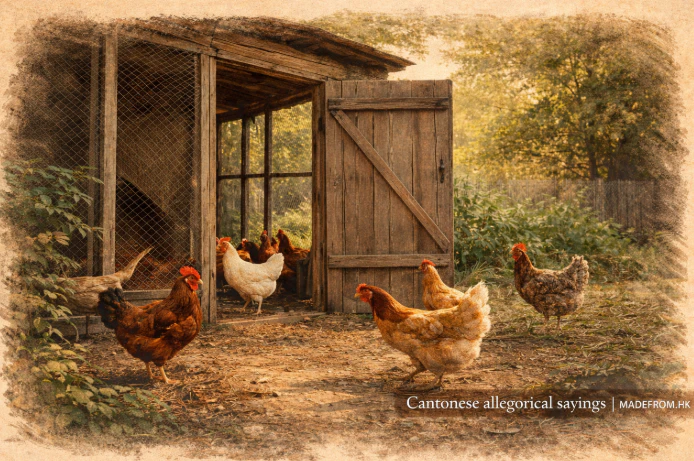
「冇掩雞籠-自出自入」是一句充滿香港民間生活味道的廣東話歇後語,畫面感非常鮮明。從前鄉村養雞,多數會用竹籠或者木籠圈養雞隻,如果雞籠沒有蓋好,雞自然會四圍走動,隨時自由進出,完全不受限制。久而久之,廣東人便借用這種情景,形容某些地方管理鬆散、出入毫無規矩,又或者形容一個人行動自由、不受拘束。這句歇後語簡單直接,卻蘊含濃厚的生活智慧,也反映了舊時香港與嶺南地區的農村文化特色。
The Cantonese saying “冇掩雞籠 – 自出自入” paints an instantly recognizable image rooted in traditional village life. In older farming communities, chickens were commonly kept inside bamboo or wooden cages. If the cage had no cover, the chickens could wander in and out whenever they pleased. Over time, Cantonese speakers turned this everyday scene into a colorful metaphor describing situations where there are no restrictions, no supervision, or complete freedom of movement. The expression is still widely understood today and is often used humorously when talking about loose management, casual environments, or people who come and go as they wish.
意思
「冇掩雞籠-自出自入」字面意思是雞籠沒有蓋,雞隻自然能夠自由進出,因此引申為沒有約束、沒有規矩、任由別人隨便出入的情況。在日常生活中,這句話經常用來形容管理鬆散,例如公司辦公室沒有人看守、家門長期不鎖、群組或者社交圈子任何人都能隨便加入。它也可以用來形容一個人過分自由散漫,不受管束。廣東人使用這句歇後語時,通常帶有一點幽默感,有時甚至暗含批評意味。例如有人批評某個地方保安不足,便會說:「呢度簡直冇掩雞籠,自出自入。」意思就是任何人都可以隨便進入,毫無限制。另外,父母有時形容子女夜歸、行蹤自由,也會半開玩笑地說家裡像「冇掩雞籠」。這句話雖然來自舊式農村生活,但直到今天仍然十分貼地,因為無論在職場、家庭還是社交生活,人們依然會遇到管理過於寬鬆或者缺乏規矩的情況。正因如此,這句歇後語至今仍然活躍於香港人的日常對話之中,帶有濃厚的廣東文化特色與市井氣息。
English Version
Literally translated, the phrase refers to a chicken cage without a lid, allowing chickens to walk in and out freely. Figuratively, however, it describes any situation where there is little control, weak supervision, or unrestricted access. Cantonese speakers often use it when talking about places with poor security, relaxed rules, or environments where people can move around without permission. The expression can also describe a person who behaves too casually or without discipline. In daily conversation, it is usually delivered with humor, though sometimes it carries criticism beneath the joke. Someone might complain that an office has no security by saying it feels like “a chicken cage without a cover,” meaning anyone can enter freely. Parents may also jokingly describe a household with children constantly coming and going at all hours in the same way. Even though the saying originated from traditional agricultural life, it remains highly relevant in modern cities like Hong Kong because people still encounter workplaces, homes, and social spaces with loose management or unclear boundaries. Its lasting popularity comes from the vivid imagery and relatable meaning that continue to resonate with Cantonese culture today.
用法
這句歇後語在廣東話口語之中相當常見,多數用於輕鬆對話或者帶有調侃意味的場合。當人們發現某個地方保安鬆懈、制度混亂,便會自然地說「冇掩雞籠」。例如辦公室沒有人登記訪客、屋企大門長開、朋友聚會任何人都能加入,都適合使用這句話。有時亦可用來形容人過分自由,例如有人經常突然離開工作崗位,又或者深夜才回家,長輩便可能用這句歇後語來打趣。由於畫面生動,所以即使年輕一代亦容易理解與接受。
English Version
This expression is commonly heard in casual Cantonese conversations, especially in humorous or sarcastic situations. People use it when describing places with weak security, poor organization, or a lack of rules. An office where visitors walk in without registration, a home with doors constantly left open, or a social gathering where anyone can appear uninvited are all situations that fit the saying perfectly. It may also describe someone with too much personal freedom, such as an employee frequently disappearing from work or a teenager staying out late every night. Because the imagery is simple and vivid, even younger generations can easily understand and use the phrase naturally in modern conversation.
小故事:
阿強新搬進一棟舊式唐樓,住了幾日後便發現大廈的鐵閘經常沒有關上。無論白天還是深夜,都有人自由出入,有時甚至連陌生人也能直接走進樓梯間。某晚,他放工回家,看見幾個外賣員坐在地下大堂聊天,又有小朋友在走廊跑來跑去,完全沒有人理會。阿強忍不住向管理員投訴:「你哋呢度保安咁鬆,簡直冇掩雞籠,自出自入啦!」管理員聽完只是苦笑,說大廈多年來一直如此,住戶早已習慣。後來有一次,樓上鄰居忘記帶鎖匙,竟然直接從後門進入大廈,再爬窗回家,令阿強更加哭笑不得。不過住久之後,他慢慢發現這棟舊樓雖然管理鬆散,但街坊之間卻十分熟絡。有人會幫忙收快遞,有老人家坐在門口乘涼聊天,小朋友亦互相照顧。漸漸地,阿強開始明白,這種「冇掩雞籠」的感覺,除了代表缺乏規矩,其實也包含了一種老香港的人情味與自由氣氛。
English Version
Keung had just moved into an old apartment building in Hong Kong when he noticed something unusual. The main security gate was almost never closed. Day or night, people wandered in and out freely, and even strangers could walk into the stairwell without being questioned. One evening after work, he returned home to find delivery workers chatting in the lobby while children raced through the corridors unsupervised. Frustrated, he complained to the building caretaker, saying the place was like “a chicken cage without a lid,” where everyone could come and go as they pleased. The caretaker simply laughed and explained that the building had been like that for decades. Later, one of Keung’s neighbors forgot his keys and casually entered through the back entrance before climbing through a window to get home. Keung could hardly believe what he was seeing. Yet after living there for several months, he began noticing another side of the building. Neighbors helped collect parcels for one another, elderly residents sat together chatting every afternoon, and children were watched over by everyone on the floor. Slowly, Keung realized that while the building lacked strict rules, it also carried a warmth and openness that reflected the spirit of old Hong Kong communities.
結語
「冇掩雞籠-自出自入」不只是形容自由出入那麼簡單,它更反映了廣東人善於以生活場景比喻人情世態的語言特色。短短一句話,既生動幽默,又帶有濃厚地方文化色彩,因此多年來一直流傳至今,成為廣東話歇後語之中的經典之一。
English Version
“冇掩雞籠 – 自出自入” is more than a funny expression about freedom of movement. It reflects the Cantonese habit of turning everyday life into vivid and memorable metaphors. With its humor, imagery, and cultural flavor, the saying has survived across generations and remains one of the most recognizable traditional Cantonese expressions today.