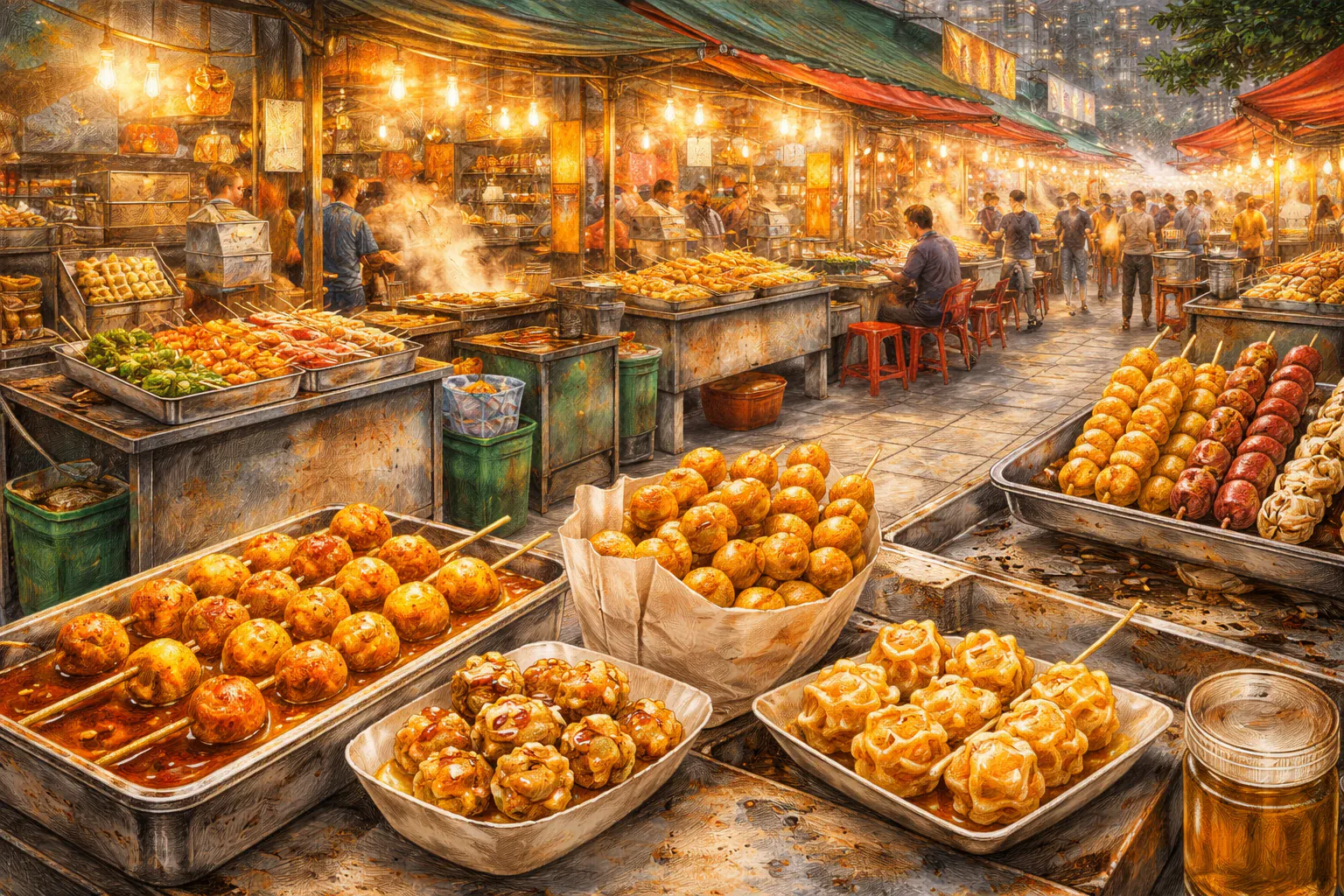
在香港的街頭文化裡,小食攤檔一直是城市最熱鬧的風景之一。從魚蛋、燒賣、雞蛋仔到格仔餅,這些價廉味美的小食陪伴着一代又一代香港人成長。放學後的學生、下班的上班族、逛街的市民,都會在街角的小攤前停下腳步,買一份熱騰騰的小食。這些簡單的味道不僅填飽肚子,也構成香港獨特的街頭飲食文化。回望香港街頭小食的年代,那些熟悉的香味與排隊的人群,仍然留在城市最溫暖的記憶裡。
Hong Kong’s street snacks once defined the rhythm of everyday life, filling corners with aroma, sound, and human connection. From curry fish balls to golden egg waffles, these simple treats carried more than flavor—they held memories of childhood, community, and a city always in motion. Together, they formed a shared culinary language that still echoes through Hong Kong’s collective identity.
在香港繁忙的街道上,除了大型餐廳與茶餐廳之外,還有一種充滿活力的飲食文化,那就是街頭小食。這些小小的攤檔,雖然規模不大,卻為城市帶來無數香味與熱鬧氣氛。
香港街頭小食的歷史,可以追溯到早期的市集與小販文化。當城市逐漸發展,街道兩旁開始出現售賣簡單食物的小販。他們用手推車或小攤檔,製作各式各樣的小食,吸引過路行人。
其中最具代表性的街頭小食之一,就是魚蛋。把魚漿製成小球,再放入滾燙的咖喱湯中煮熟,香味四溢。顧客通常會用竹籤串起魚蛋,一邊走一邊吃,成為香港街頭常見的畫面。
燒賣也是深受歡迎的小食。與酒樓裡的燒賣不同,街頭燒賣通常較為簡單,多以魚肉或豬肉製成,配上醬油或辣椒醬。價格便宜,因此深受學生與年輕人喜愛。
雞蛋仔則是香港最具代表性的甜點之一。把雞蛋與麵粉製成麵糊,再倒入特製的模具中烘烤,形成一顆顆圓形的小球。剛出爐的雞蛋仔外脆內軟,散發濃濃蛋香,常常吸引不少人排隊購買。
格仔餅也是許多香港人童年的味道。兩片鬆軟的餅皮中間夾上花生醬、牛油與砂糖,再對折成三角形。簡單的材料,卻帶來令人難忘的甜味。
除了甜食,街頭還有各式各樣的鹹食,例如煎釀三寶、臭豆腐、碗仔翅與炸大腸等。這些小食通常味道濃烈,香氣撲鼻,非常適合邊走邊吃。
煎釀三寶是香港街頭極具特色的小食之一。把魚漿釀入青椒、茄子或豆腐中,再放在鐵板上煎至金黃。配上甜醬或辣醬,味道格外濃郁。
臭豆腐則帶着獨特氣味,但卻吸引不少食客。炸至外脆內軟,再淋上醬汁與辣椒,形成一種令人又愛又怕的街頭美食。
街頭小食之所以受歡迎,除了味道之外,也因為價格親民。學生只需花少量零用錢,就可以買到一份熱騰騰的小食。對許多人來說,這些食物承載着童年的記憶。
放學後的街角,常常可以看到學生排隊買魚蛋或雞蛋仔。大家一邊聊天,一邊分享食物,形成充滿活力的城市畫面。
對上班族來說,街頭小食也是忙碌生活中的小確幸。下班途中買一串魚蛋,或者逛街時吃一份雞蛋仔,都能為一天帶來一點輕鬆。
在香港的節日與夜市裡,街頭小食更是不可缺少的元素。燈光下的小攤檔排列成一排,香味瀰漫整條街道,吸引無數人前來品嚐。
然而,隨着城市管理與衛生規定的改變,街頭小販數量逐漸減少。許多傳統的小食攤檔被要求遷入室內市場或固定店舖。
雖然環境變得更整潔,但那種隨處可見的街頭小食景象也逐漸減少。曾經熱鬧的街角,如今已變得安靜許多。
即使如此,香港人對街頭小食的喜愛仍然沒有改變。不少小食店舖繼續保留傳統做法,也有一些創新版本出現,例如加入新口味的雞蛋仔或特色魚蛋。
近年來,香港街頭小食甚至走向世界。在不同國家與城市,人們也可以找到賣雞蛋仔或魚蛋的店舖,讓更多人認識這種獨特的飲食文化。
回望香港街頭小食的年代,可以看到城市最活躍的一面。那些充滿香味的小攤、排隊的人群與忙碌的小販,共同構成了街道的節奏。
對很多香港人來說,街頭小食不只是食物,而是一種生活的味道。那些熟悉的香氣,往往能喚起許多關於童年與青春的回憶。
在城市不斷變化的今天,街頭小食依然提醒人們,香港曾經是一個充滿煙火氣息與人情味的地方。那些簡單的小吃,也因此成為城市文化的重要部分。
English Version
There was a time when Hong Kong’s streets were alive with the sights, sounds, and scents of small food stalls offering an array of beloved snacks. These were not grand establishments or carefully curated dining experiences, but humble setups that existed as part of the city’s natural flow. Among the most iconic were curry fish balls and egg waffles, two street foods that came to symbolize the everyday life of Hong Kong. Found at busy intersections, outside schools, near transport hubs, and tucked into narrow alleyways, these stalls created an informal network of flavor and familiarity across the city. They were accessible to everyone, affordable, and deeply embedded in daily routines. Fish balls, served on skewers and coated in rich, fragrant curry sauce, were a quick and satisfying snack for people on the move. Their bold flavor and warming spice made them especially appealing, whether as a brief pause during a busy day or as a casual treat shared among friends. Egg waffles, on the other hand, offered a different kind of comfort. Crisp on the outside and soft within, their sweet aroma drew people in from afar. Freshly made and served hot, they were often associated with childhood, after-school moments, and small celebrations of everyday life. Together, these snacks represented a balance of savory and sweet, a pairing that mirrored the diversity and energy of the city itself. What made these street snacks truly special was not just their taste, but the environment in which they were experienced. The act of buying and eating them was spontaneous, woven into the movement of the city. People did not plan for these moments; they encountered them naturally, as part of their daily journeys. Vendors worked quickly and efficiently, yet there was always a human presence behind the exchange. Familiar faces returned day after day, forming quiet relationships with the stall owners. A simple order could be accompanied by a brief conversation, a nod of recognition, or a shared understanding built over time. These small interactions gave depth to the experience, turning an ordinary snack into a meaningful moment of connection. The origins of Hong Kong’s street snacks are closely tied to the city’s history of resilience and adaptability. In times when resources were limited, these foods provided affordable and practical nourishment. Vendors used simple ingredients and creative techniques to produce flavors that were both satisfying and distinctive. Over time, what began as necessity evolved into tradition. Street snacks became part of the cultural fabric of Hong Kong, reflecting the ingenuity and spirit of its people. Each skewer of fish balls and each batch of egg waffles carried with it a story—not only of individual taste, but of a collective experience shaped by shared circumstances. As Hong Kong modernized, the landscape of street food underwent significant changes. Regulations, urban development, and shifting economic conditions led to the gradual disappearance of many traditional street stalls. In their place, licensed shops and chain outlets began to dominate, offering standardized versions of these classic snacks. While these modern alternatives ensured consistency and improved hygiene, they often lacked the spontaneity and authenticity that defined the original street-side experience. The atmosphere changed, becoming more controlled and less integrated with the surrounding environment. The street, once a place of casual gathering and interaction, became more focused on movement and efficiency. Despite these changes, the cultural significance of Hong Kong’s street snacks remains strong. Fish balls and egg waffles continue to be enjoyed, whether in traditional settings or modern adaptations. More importantly, they continue to evoke a sense of nostalgia and belonging. For many, these foods are tied to memories of childhood, of friendships, and of a city that felt both vibrant and intimate. They serve as reminders of a time when life moved quickly but still allowed space for small, meaningful pauses. In remembering the era of Hong Kong’s street snacks, we are not only recalling flavors, but also reconnecting with a way of life. It is a reminder that culture is often found in the ordinary—in the corners of streets, in the warmth of simple food, and in the fleeting interactions that bring people together. These snacks, modest in form yet rich in meaning, continue to represent the heart of Hong Kong’s urban identity, carrying forward a legacy that endures beyond the physical presence of the stalls themselves.