🎵 8月13日今日歷史|柏林圍牆開始分隔一座城市與一個世界 Today in History, August 13 | The Berlin Wall Began Dividing a City and a World
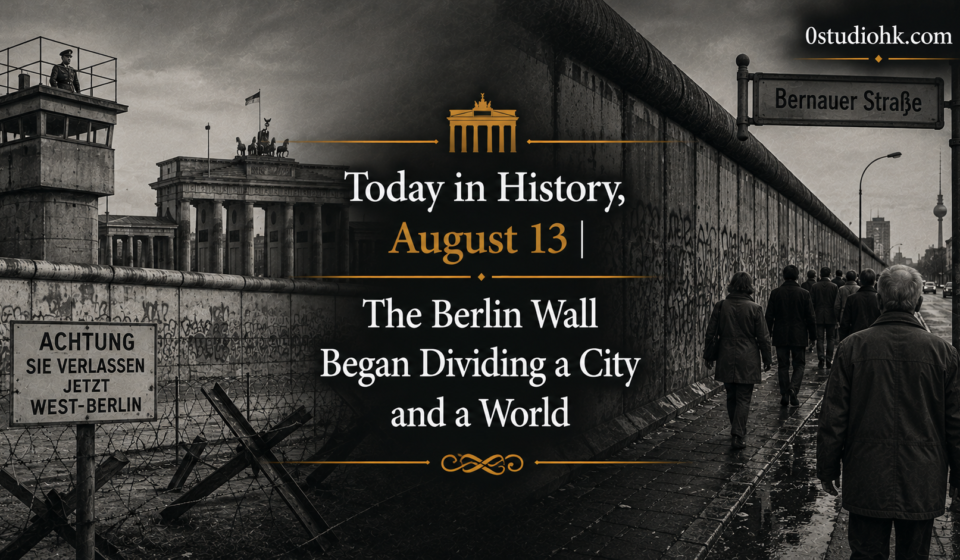
1961年8月13日,東德開始封鎖東、西柏林之間的通道,先以鐵絲網及臨時障礙物分隔城市,之後逐步興建成為著名的柏林圍牆。這道圍牆存在了28年,成為冷戰分裂最具象徵性的歷史標誌。
On August 13, 1961, East Germany began sealing the border between East and West Berlin with barbed wire and barriers. The temporary fortifications eventually developed into the Berlin Wall, which divided the city for 28 years and became one of the most powerful symbols of the Cold War.
中文版本
1961年8月13日清晨,柏林市民醒來後,發現自己熟悉的城市正在一夜之間被重新劃分。東德政府派出警察、軍隊及其他武裝力量,在東柏林與西柏林之間的分界線設置鐵絲網、木製障礙及其他封鎖設施,並逐步切斷兩邊居民原本相對自由的通行。這一天後來成為柏林圍牆開始興建的日期,也成為冷戰歷史上最令人難忘的日子之一。
要理解1961年8月13日的突然封鎖,必須先了解第二次世界大戰結束後的德國。1945年納粹德國戰敗,德國被盟軍分區佔領,柏林雖然位於蘇聯佔領區內,也同樣被分成不同的佔領區。隨著美國、英國、法國與蘇聯之間的關係逐漸惡化,德國最終形成東、西兩個政治體制不同的國家,而柏林亦成為冷戰最敏感的城市之一。1949年,西德與東德分別成立,柏林則繼續維持東、西分區的特殊狀態。
在1950年代至1961年間,大量東德居民經由柏林前往西德。對東德政府而言,人口大量外流不只是人口問題,更涉及勞動力、專業人才及國家制度的信心。德國歷史資料指出,自東德成立至1961年前後,約有250萬人離開東德前往西方,其中不少是年輕人及具專業技能的人士。1961年7月更有超過3萬名東德居民前往西柏林,是1953年以來單月最高數字。
柏林因此成為一條非常特殊的逃亡通道。城市本身被分成東柏林與西柏林,但在圍牆出現之前,東、西兩邊居民仍可以在一定程度上穿越城市。對一些東德居民而言,前往西柏林再進入西德,是離開東德的一條相對可行的路線。隨著人口外流持續增加,東德領導層越來越擔心國家經濟及社會穩定受到影響。
1961年夏天,柏林危機進一步升溫。美國總統約翰・甘迺迪在7月宣布,美國及其他西方盟國在柏林有幾項核心利益,包括西方盟軍留在柏林的權利、通往柏林的通道,以及西柏林居民維持自身生活方式及自決權的權利。與此同時,東德領導層得到蘇聯方面的支持,準備採取更加嚴格的措施阻止人口繼續流向西方。
8月12日至13日的夜間,東德開始實施封鎖行動。警察、邊防部隊及國家人民軍在城市內部的分界線部署,並設置鐵絲網、路障及反坦克障礙。部分地區的鐵路及交通亦受到影響。到了8月13日,柏林已經出現一條清晰而強硬的分隔線。最初的設施並不是我們今天所熟悉的巨大混凝土牆,而是鐵絲網及臨時障礙物;其後才逐步改建成更加堅固、複雜的邊境系統。
這個變化對普通人而言極其突然。有人前一天仍然可以到城市另一邊工作、探親或購物,第二天卻發現原本熟悉的道路已經被封鎖。朋友、親戚甚至家人可能就在城市另一側,卻突然變得難以見面。德國歷史資料指出,柏林圍牆立即中斷了東、西柏林居民之間原本相對自由的流動,而原本城市內約80個舊有通行點,圍牆建立後只剩少數通道繼續使用。
其中最著名的通行點之一就是Checkpoint Charlie,中文通常稱為查理檢查哨。它後來成為冷戰最具代表性的地點之一。外國人、外交人員及不同類別人士的通行受到嚴格規定,城市中的交通、地鐵及鐵路系統也因分隔而受到影響。柏林不再只是一座城市,而變成冷戰兩大陣營直接接觸的前線。
柏林圍牆在最初幾天並沒有立即形成後來那種完整的混凝土結構。東德政府逐步把臨時鐵絲網改造成更加複雜的邊境防線。經過多年建設,圍牆系統包括混凝土牆、金屬圍欄、警戒區、照明設施、巡邏道路及瞭望塔等。柏林官方資料指出,在圍牆存在的28年間,邊境設施不斷被修改、擴建及強化。
圍牆的目的不只是阻止人們自由穿越城市,也成為東德限制居民離開國家的重要工具。對東德政府而言,封鎖西柏林可以減少人口外流;但對被分隔的居民而言,這意味著個人自由受到重大限制。有人失去了工作,有人無法探望親人,有些家庭甚至被長期分隔。這種突然的城市分裂,令柏林圍牆很快成為冷戰政治壓力的具體象徵。
西柏林居民對圍牆的反應亦十分強烈。當時的西柏林市長威利・布蘭特在圍牆開始興建時到現場了解情況,他後來成為西德總理。相關歷史影像記錄了他在勃蘭登堡門附近觀看圍牆施工的情景。
而對西方國家而言,柏林圍牆亦是一個非常複雜的政治問題。美國及西方盟國不能輕易接受東德單方面改變柏林的現狀,但同時又不希望因柏林問題直接與蘇聯爆發更大規模的軍事衝突。這種微妙的平衡,正是冷戰時代的典型特徵:兩個超級大國彼此對抗,卻又極力避免直接走向全面戰爭。
隨著時間過去,柏林圍牆逐漸由臨時封鎖變成一套高度軍事化的邊境系統。圍牆不只是一道牆,而是一整套阻止逃亡的設施。有人嘗試翻越圍牆,有人利用地下隧道,有人尋找其他方式逃離東德。這些逃亡故事成為柏林圍牆歷史中非常重要的一部分,也反映了人們在高度限制環境下尋求自由的願望。
柏林圍牆最終存在了28年。1961年8月13日開始的封鎖,並沒有只維持數日或數月,而是逐漸變成一個跨越數十年的政治現實。整整一代柏林人是在一座被分割的城市中成長。有些孩子出生時,圍牆已經存在;他們長大後,甚至很難想像沒有圍牆的柏林會是甚麼樣子。
直到1989年,東歐政治局勢開始發生巨大變化,東德的社會壓力及要求自由出行的聲音越來越強烈。1989年11月9日,柏林圍牆的通行限制出現重大突破,市民開始大批聚集在邊境通道,圍牆最終被打開。那一刻與1961年8月13日形成強烈對比:一邊是城市被突然封鎖,另一邊則是人群突破分隔。
今天回望8月13日,我們通常首先想到的是一堵牆,但柏林圍牆真正代表的其實是一個時代。它象徵冷戰的政治分裂,也象徵國家、制度與個人自由之間的衝突。它把一座城市分成兩個世界,亦把家庭、朋友、工作與生活分隔開來。
更值得思考的是,柏林圍牆最終並沒有永久存在。1989年圍牆倒下後,東、西德最終走向統一,柏林再次成為一座完整的城市。今天很多曾經存在圍牆的地方已經變成普通街道、公園及城市空間,但部分遺址仍然保存,提醒後人這座城市曾經如何被分割。
1961年8月13日的歷史意義,因此不只是「柏林圍牆開始興建」。它讓世界看見,一座城市可以在一夜之間被政治力量重新劃線;同時也提醒我們,城市的道路、家庭的團聚及自由移動,並不是理所當然。柏林圍牆最終成為冷戰的象徵,而它的倒下則成為歐洲走向新時代的重要畫面。今天再回望那一天,我們看到的不只是一堵牆的開始,更是一段長達28年的分裂歷史正式展開。
English Version
On August 13, 1961, Berlin woke to a city that had suddenly changed. During the night, East German police, military forces, and other security units moved into position along the dividing line between East and West Berlin. Barbed wire, barricades, and other temporary obstacles were erected to prevent movement between the two sides. What began as a rapidly constructed barrier would eventually become the Berlin Wall, one of the most recognizable symbols of the Cold War.
The events of August 13 cannot be understood without looking at the situation in Germany after the Second World War. After Nazi Germany was defeated in 1945, the country was divided into occupation zones controlled by the United States, Britain, France, and the Soviet Union. Berlin, although located deep inside the Soviet occupation zone, was also divided among the victorious powers. As relations between the Soviet Union and the Western Allies deteriorated, Germany eventually became divided into two separate states with opposing political systems. Berlin remained divided as well, making the city one of the most sensitive locations in the emerging Cold War.
The situation became increasingly difficult for East Germany during the 1950s. Large numbers of people were leaving the country and heading west. Many travelled through Berlin, where the border between the Eastern and Western parts of the city was still relatively accessible compared with other routes out of East Germany. According to Berlin historical sources, around 2.5 million people left East Germany for the West between the establishment of the country and 1961. Many were young people, workers, and professionals. The loss of so many citizens created serious economic and political concerns for the East German leadership.
The problem became particularly serious in the summer of 1961. More than 30,000 East German residents travelled to West Berlin during July alone, the highest monthly figure since 1953. For the East German government, this was not simply a matter of people moving from one place to another. It represented a continuing loss of workers and skilled people and a visible challenge to the legitimacy of the East German system.
Berlin had therefore become a unique escape route. People could live in East Berlin, work or visit relatives in the West, and in some cases use West Berlin as a route to West Germany. The continued movement of people made the city increasingly difficult for East Germany to control. The leadership eventually decided that the border had to be closed.
The international situation was already extremely tense. In July 1961, U.S. President John F. Kennedy publicly outlined what he considered the essential interests of the Western powers in Berlin: the right of the Western Allies to remain in the city, their right of access to Berlin, and the survival and self-determination of West Berlin. At the same time, East German leader Walter Ulbricht received Soviet approval for measures intended to stop the continuing flow of people to the West.
During the night of August 12–13, East German forces began sealing the border. Police, border troops, and military units moved into the city and established barriers along the sector boundary. Roads were blocked, rail connections were disrupted, and barbed-wire fences appeared in locations where people had previously crossed with relatively few restrictions. By the morning of August 13, the physical division of Berlin had become unmistakable.
The first barrier was not the massive concrete structure that later became famous. The initial system consisted largely of barbed wire and temporary obstacles. Over the following days and years, however, these defenses were developed into a far more sophisticated border system. Concrete walls, metal fencing, patrol roads, lighting, observation towers, and controlled areas were added. Berlin’s official historical records state that the border fortifications were repeatedly modified, expanded, and strengthened during the 28 years between the construction and the fall of the Wall.
For ordinary Berliners, the effect was immediate and deeply personal. A street that had previously connected neighborhoods could suddenly become a dead end. A person could wake up and discover that relatives, friends, colleagues, or workplaces were now on the other side of a heavily guarded border. The division was not simply a line on a political map. It changed daily life.
Historical documentation shows that the Wall immediately interrupted movement between East and West Berlin. Before the Wall, people could cross the internal city border through many locations. After its construction, only a small number of crossings remained. One of the most famous was Checkpoint Charlie, which became a globally recognized symbol of the Cold War.
The division also affected the city’s transportation network. Rail and subway connections were disrupted, and stations that once formed part of the ordinary urban transportation system became inaccessible or heavily controlled. Berlin was no longer functioning simply as one city. It had become a frontline between two political systems.
The Western response was complicated. West Berliners were angry and frightened, while Western governments had to consider how far they could challenge the East German action without triggering a much larger confrontation with the Soviet Union. The situation demonstrated the dangerous balance of the Cold War. The United States and its allies were determined to defend their position in West Berlin, but they also wanted to avoid turning the crisis into a direct military conflict between nuclear powers.
West Berlin’s mayor, Willy Brandt, became one of the most visible political figures during the crisis. Historical photographs show him watching the construction of the Wall near the Brandenburg Gate on August 13, 1961. His presence and response helped him become an important figure in West Berlin’s history and later in West German politics.
As the years passed, the Berlin Wall became much more than a simple wall. It developed into a heavily guarded border system designed to prevent people from leaving East Germany. The security zone included multiple layers of barriers and observation facilities. The purpose was to make unauthorized crossings extremely difficult and dangerous.
Despite these controls, people continued to look for ways to escape. Some tried to cross the barriers directly. Others searched for hidden routes or constructed tunnels. Escape attempts became a significant part of the history of the Wall, reflecting the determination of individuals who wanted the freedom to choose where they lived. A later escape operation through a tunnel demonstrated both the risks involved and the lengths people were willing to go to overcome the border.
The Wall also divided families. Some people had relatives only a short distance away but could no longer visit them freely. Others lost access to workplaces, schools, neighborhoods, or familiar parts of the city. For people who grew up after 1961, the divided city became normal life. A generation of Berliners spent their childhood and early adulthood knowing the Wall as a permanent part of their surroundings.
The Berlin Wall remained in place for 28 years. During that time, it became one of the strongest physical representations of the Cold War. It represented the political division between East and West, but it also represented a much more personal conflict between state control and individual freedom.
The Wall’s existence also changed the meaning of Berlin itself. The city became a place where two political systems faced each other directly. Military forces from the United States and the Soviet Union remained nearby, while checkpoints and border crossings became internationally recognized symbols of the confrontation. Berlin was no longer merely a divided German city; it had become one of the central stages of the Cold War.
The story eventually moved in the opposite direction. By the late 1980s, political change was spreading across Eastern Europe. Pressure for greater freedom of movement increased inside East Germany, and the government faced growing public demonstrations and demands for reform. On November 9, 1989, an announcement concerning travel regulations triggered huge crowds at border crossings. The barriers were eventually opened, and Berliners from both sides began crossing freely.
The contrast between August 13, 1961, and November 9, 1989, could hardly have been greater. In 1961, a city was suddenly sealed and divided. In 1989, people gathered at the barriers and helped turn them into openings. The Wall that had represented separation for nearly three decades became one of the most powerful images of political change in modern European history.
The fall of the Wall eventually contributed to the reunification of Germany. The physical barriers disappeared from most of the city, although sections were preserved as historical memorials. Today, Berlin contains many reminders of the division, including surviving sections of the Wall, memorial sites, and former border locations. The city that was once divided has become a major symbol of European reunification.
Looking back at August 13, 1961, therefore means remembering more than the construction of a physical barrier. It means remembering the people whose everyday lives were changed by political decisions made during the Cold War. The Wall separated streets, neighborhoods, workplaces, friends, and families. It demonstrated how quickly political conflict could transform ordinary urban life.
The date also reminds us that political borders are not always permanent. The Berlin Wall stood for 28 years and appeared to many people to be an unavoidable part of life. Yet it eventually fell, and the city was reunited.
August 13 is therefore a date of both division and historical reflection. It marks the beginning of one of the most famous barriers in modern history, but it also allows us to remember what happened when that barrier eventually disappeared. The Berlin Wall became a symbol of the Cold War because it physically represented a world divided by competing political systems. Its fall later became a symbol of the possibility of overcoming those divisions.
Today, the streets of Berlin no longer function as the divided city of 1961. Yet the memory of that morning remains important. A city that had once been separated by barbed wire and concrete eventually became whole again. August 13, 1961, reminds us how quickly freedom of movement can disappear—and how deeply political decisions can affect ordinary human lives.
總結
1961年8月13日,東德封鎖東西柏林並開始興建柏林圍牆,城市及家庭從此被分隔28年,成為冷戰分裂最鮮明的象徵。
On August 13, 1961, East Germany sealed Berlin and began building the Wall, dividing people and families for 28 years and creating one of the Cold War’s most powerful symbols.