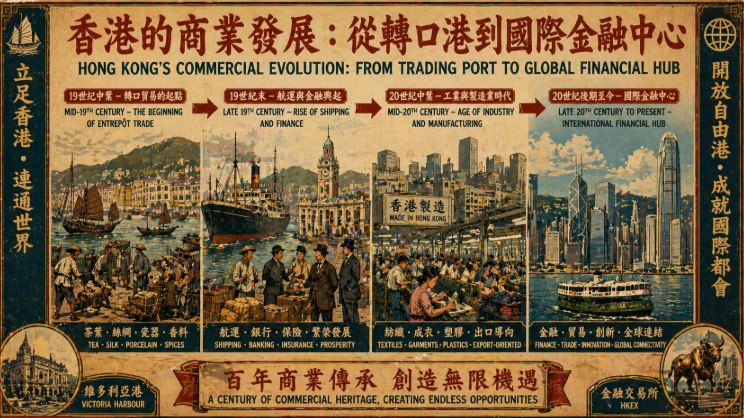
自開埠以來,香港憑藉優越地理位置迅速發展為重要貿易港口,華商與外商共同推動商業活動,逐步建立起多元而具國際影響力的經濟體系。
Since its founding as a port, Hong Kong has leveraged its strategic location to grow into a vibrant trading center, where local entrepreneurs and foreign merchants together shaped a dynamic and globally connected economy.
中文
香港的商業發展始於十九世紀中葉開埠之後,憑藉其位於中國南方沿海的地理優勢以及自由港政策,迅速成為連接中國與世界的重要轉口貿易樞紐,最初的商業活動以進出口貿易為主,外國商行與華人商號在維多利亞港兩岸建立據點,進行茶葉、絲綢、瓷器等商品的交易,同時也包括當時極具爭議的鴉片貿易,這些活動奠定了香港作為國際貿易港的基礎,隨著時間推移,華人商人逐漸在市場中取得更重要地位,他們熟悉中國內地市場並具備靈活經營能力,在中外貿易之間扮演橋樑角色,使香港的商業網絡更加穩固與多元,十九世紀末至二十世紀初,隨著航運與金融服務的發展,香港的商業模式逐漸由單一貿易轉向多元經濟,銀行、保險與航運公司相繼成立,為商業活動提供資金與物流支持,使整體經濟體系更為成熟,同時工業亦開始萌芽,尤其是在二十世紀中葉,隨著內地局勢變化,大量資本與技術流入香港,促使製造業迅速發展,紡織、成衣與塑膠產品成為主要出口商品,使香港從單純的轉口港轉變為製造與出口並重的經濟體,在這一過程中,中小企業展現出高度靈活性與創新能力,形成獨特的產業結構,而政府則採取相對自由放任的經濟政策,提供穩定營商環境,進一步吸引外資進入,到了二十世紀後期,隨著全球經濟轉型與中國改革開放,香港再次調整其經濟方向,逐步由製造業轉向服務業與金融業,股票市場與銀行體系迅速擴張,使香港成為亞洲重要的金融中心之一,國際資本透過香港進入中國市場,同時香港企業亦走向全球,形成高度國際化的經濟網絡,商業發展不僅帶動城市繁榮,也塑造了香港社會的價值觀,效率、靈活與國際視野成為核心特質,從早期的碼頭與貨倉,到現代的摩天大樓與金融區,香港的商業空間不斷演變,見證著城市由邊陲港口轉變為全球經濟樞紐的歷程,這一發展並非單一線性過程,而是在不同歷史階段中不斷調整與轉型的結果,顯示出香港在面對外部變化時的適應能力與持續競爭力,也使其在全球經濟體系中佔據獨特而重要的位置
English Version
Hong Kong’s commercial story began in the mid-nineteenth century when its natural harbor and free port status positioned it as a gateway between China and the wider world, early trade revolved around the exchange of goods such as tea, silk, and ceramics, facilitated by foreign trading houses and Chinese merchants who established a thriving marketplace along Victoria Harbour, despite the controversies surrounding certain commodities like opium, these exchanges laid the groundwork for a powerful trading economy, over time Chinese entrepreneurs gained increasing prominence, using their knowledge of regional markets and networks to bridge cultural and commercial divides, reinforcing Hong Kong’s role as a vital intermediary in global trade, by the late nineteenth and early twentieth centuries, the economy began to diversify beyond basic trade, the rise of shipping services, financial institutions, and insurance companies provided essential infrastructure that supported more complex commercial activities, industrialization took hold more firmly in the mid-twentieth century as political and economic shifts in mainland China drove capital and skilled labor into Hong Kong, transforming it into a manufacturing powerhouse, industries such as textiles, garments, and plastics became key exports, marking a shift from a purely entrepot economy to one that combined production and trade, small and medium enterprises played a crucial role during this period, demonstrating remarkable adaptability and innovation, supported by a business environment characterized by low taxation and minimal government intervention, which encouraged investment and entrepreneurship, in the late twentieth century Hong Kong underwent another major transition as global economic trends and China’s opening-up policies reshaped its trajectory, manufacturing gradually relocated while services and finance took center stage, the expansion of the stock market and banking sector elevated Hong Kong into a leading international financial center, serving as a conduit for global capital entering China and for Chinese enterprises reaching international markets, this evolution not only fueled economic growth but also shaped the city’s identity, embedding values of efficiency, resilience, and global connectivity into its culture, from bustling docks and warehouses to towering skyscrapers and financial districts, Hong Kong’s commercial landscape reflects a continuous process of reinvention, illustrating how the city has adapted to shifting global dynamics while maintaining its competitive edge and strategic importance in the world economy.