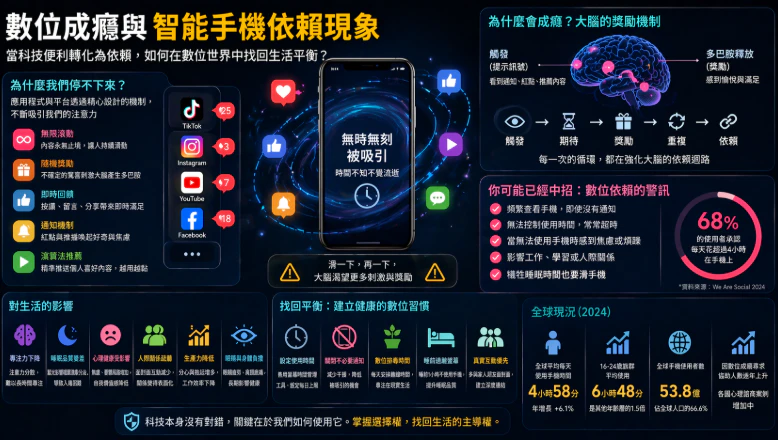
智能手機與社交平台讓人隨時連線,TikTok與Instagram帶來便利同時,也引發成癮與數位依賴問題。
English: Constant connectivity through apps like TikTok and Instagram brings convenience while raising concerns about addiction and digital dependence.
中文
在數碼時代,科技不再只是工具,而逐漸演變為人們日常生活不可或缺的一部分,甚至形成一種難以察覺的依賴。隨著iPhone與Android普及,智能手機成為隨身裝置,人們的時間被不斷切割成碎片,並被各種應用程式填滿。特別是像TikTok這類短影音平台,透過演算法精準推送內容,讓用戶在不知不覺中持續滑動,形成強烈的使用習慣。這種設計並非偶然,而是結合心理學與數據分析,利用即時回饋與隨機獎勵機制,使大腦產生類似上癮的反應。除了娛樂內容,社交平台如Instagram亦透過按讚與通知機制,強化用戶的參與感與期待,讓人不斷回到平台尋求認同與關注。這種數位依賴逐漸改變人們的生活節奏與專注力,長時間使用手機可能導致注意力下降、睡眠品質變差,甚至影響心理健康。另一方面,數位依賴也體現在工作與生活的界線模糊,人們隨時接收訊息與通知,使休息時間被壓縮,形成持續在線的壓力。然而,成癮並不只是負面現象,它同時反映出科技設計的成功與人類對連結與刺激的需求,問題的核心在於如何平衡使用方式。越來越多平台開始引入使用時間提醒與數碼健康工具,試圖幫助用戶建立更健康的使用習慣,但最終的關鍵仍在於個人對科技的理解與控制。從更宏觀的角度來看,數位依賴是一種新型態的社會現象,它不只是個人問題,而是整個數碼生態系統所共同塑造的結果。當科技深入生活的每一個層面,人們需要重新思考與科技的關係,從被動使用轉向有意識的選擇,才能在便利與依賴之間找到平衡點。
English Version
In the digital age, technology has evolved beyond a simple tool into an essential and deeply integrated part of everyday life, often creating subtle yet powerful forms of dependence. With the widespread adoption of devices like the iPhone and systems such as Android, smartphones have become constant companions, filling fragmented moments of time with endless streams of content. Platforms like TikTok are specifically designed to keep users engaged through algorithm-driven recommendations, encouraging continuous scrolling and prolonged usage. This is not accidental; it reflects a deliberate integration of behavioral psychology and data analytics, leveraging instant gratification and variable rewards to stimulate patterns similar to addiction. Social platforms such as Instagram further reinforce this behavior through likes, notifications, and social validation, prompting users to return repeatedly in search of recognition and connection. As a result, digital dependence begins to reshape daily routines, reducing attention spans, affecting sleep quality, and influencing mental well-being. At the same time, the boundary between work and personal life becomes increasingly blurred, as constant connectivity creates pressure to remain available at all times. However, digital addiction is not solely a negative phenomenon; it also highlights the effectiveness of modern design and the human desire for engagement and stimulation. The real challenge lies in achieving balance. Many platforms have introduced digital well-being features, such as usage tracking and screen-time reminders, to encourage healthier habits, but ultimately the responsibility rests with users to manage their relationship with technology consciously. On a broader level, digital dependence represents a new kind of social condition—one shaped collectively by the entire digital ecosystem. As technology continues to permeate every aspect of life, individuals must rethink their interaction with it, shifting from passive consumption to intentional use in order to maintain a healthy balance between convenience and control.