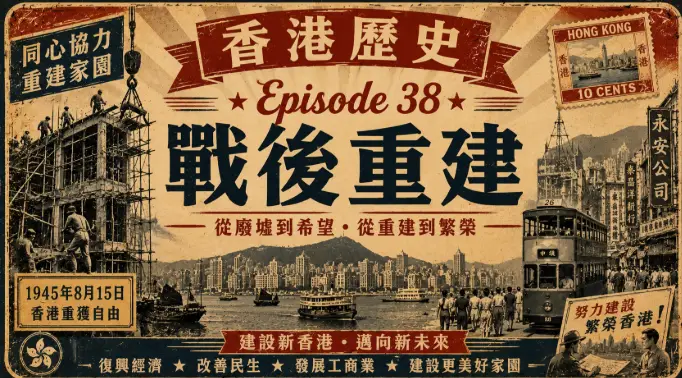
1945年日本投降後,香港重新回到英國統治。經歷戰爭破壞與三年零八個月的艱苦歲月,這座城市開始從廢墟中慢慢重建,逐步走向新的發展時代。
After World War II ended in 1945, Hong Kong faced the enormous task of rebuilding a shattered city. With damaged infrastructure, economic collapse, and a reduced population, the colony entered a difficult but transformative era of recovery and renewal.
中文
1945年8月,日本宣布投降,香港結束長達三年零八個月的日治時期。當英國軍隊重新返回香港時,眼前的城市已與戰前截然不同。經過多年戰爭與佔領,香港經濟幾乎停頓,港口貿易大幅衰退,許多建築受損,人口亦由戰前高峰急跌。大量居民在戰時逃離香港,有些人死於飢荒與疾病,也有人在混亂中失去家園。戰後初期的香港,可以說是一座百廢待興的城市。英國政府重新接管香港後,首先面對的是恢復社會秩序與基本民生。當時街道設施殘舊,食水與電力供應不穩,醫療系統亦十分缺乏。政府需要重新建立行政機構,同時恢復港口、交通與公共服務。由於大量戰時軍票已失去價值,港幣制度亦需要重新穩定。市面物價高漲,糧食供應依然不足,不少市民仍然需要依靠配給制度生活。戰後香港最重要的復甦關鍵之一,是大量人口重新回流。許多在戰時離開香港的居民開始返回,同時中國內地局勢動盪,亦令更多難民南下香港。人口迅速增加,令房屋、醫療與就業壓力大幅上升。大量木屋區在山邊與市區空地出現,形成擁擠而簡陋的社區。不過在人口增加同時,香港亦重新恢復商業活力。維多利亞港再次成為亞洲重要港口,航運與轉口貿易逐漸復甦。1940年代後期,中國內戰持續,大量上海商人與工廠資本轉移至香港,對香港經濟產生重大影響。紡織、塑膠與輕工業開始快速發展,香港由傳統轉口港逐漸轉型成工業城市。戰後的香港社會亦開始出現新變化。政府逐步推動公共衛生與教育建設,希望避免戰前貧窮與疾病問題再次惡化。醫院、學校與公共房屋制度開始慢慢建立。雖然當時生活條件依然艱苦,但許多香港人相信只要努力工作,便有機會改善生活。這種務實與拼搏精神,逐漸成為戰後香港的重要社會文化。另一方面,冷戰局勢亦開始影響香港。1949年中華人民共和國成立後,香港成為中國與西方世界之間的重要窗口。大量資金、人才與企業繼續流入香港,令本地工商業迅速成長。到了1950年代,香港工廠林立,出口工業開始進入黃金時代。雖然市民仍需面對擠迫居住環境與低工資問題,但整體經濟氣氛已與戰後初期截然不同。戰後重建不只是恢復建築與經濟,更是一場城市精神的重新建立。許多曾經歷戰爭的人,希望下一代能夠擁有更穩定與和平的生活。香港人在戰後努力工作、重新建立家庭與社區,也讓這座曾經遭受戰火破壞的城市重新煥發活力。從戰後廢墟到後來成為亞洲經濟中心,香港的復甦歷程成為20世紀亞洲城市發展中極具代表性的故事之一。
English Version
When World War II ended in August 1945, Hong Kong emerged from occupation exhausted and deeply damaged. Years of war, food shortages, disease, and economic collapse had transformed the once-thriving colonial port into a weakened city struggling to survive. British forces returned to reestablish administration, but rebuilding Hong Kong would prove to be an enormous challenge. Infrastructure had deteriorated, public services barely functioned, and much of the population had either fled or perished during the occupation years. Streets, utilities, hospitals, and transport systems all required urgent repair. The economy had almost completely collapsed. Wartime military currency lost its value overnight, businesses faced severe shortages, and ordinary families struggled to obtain basic necessities. Food remained scarce even after liberation, forcing authorities to continue rationing in the early postwar years. Yet despite these difficulties, signs of recovery slowly began to appear. One of the most important forces behind Hong Kong’s reconstruction was the return of people. Residents who had escaped during the occupation gradually came back, hoping to rebuild their lives. At the same time, instability in mainland China drove new waves of migrants southward. Refugees, merchants, workers, and entrepreneurs arrived in growing numbers, rapidly increasing Hong Kong’s population. This sudden expansion placed enormous pressure on housing and public services. Hillsides and vacant land became crowded with temporary wooden settlements where many families lived in cramped and dangerous conditions. However, population growth also brought energy and economic opportunity. Victoria Harbour regained its role as a major trading hub connecting Asia with international markets. Shipping activity resumed, commerce revived, and factories began appearing across urban districts. The late 1940s proved especially significant because political turmoil in mainland China encouraged industrialists and investors from cities like Shanghai to relocate their businesses to Hong Kong. Textile manufacturing, plastics production, and light industry expanded rapidly, gradually transforming the colony from a trading port into an industrial economy. The postwar period also reshaped Hong Kong society in broader ways. Colonial authorities recognized the urgent need to improve sanitation, healthcare, and education after witnessing the devastation of wartime conditions. Hospitals reopened, schools expanded, and new social policies slowly emerged. Although living standards remained difficult for many working-class families, there was a growing belief that determination and hard work could create a better future. This practical spirit became closely associated with postwar Hong Kong culture. Global politics also played a major role in shaping the colony’s future. After the establishment of the People’s Republic of China in 1949, Hong Kong gained strategic importance as a gateway between China and the Western world. Capital, skilled labor, and commercial networks continued flowing into the city, accelerating economic growth. By the 1950s, factories filled industrial districts while exports from Hong Kong reached markets around the world. Working conditions were often harsh and wages remained low, but the atmosphere of desperation that marked the immediate postwar years gradually faded. Reconstruction in Hong Kong was not simply about repairing buildings or restoring trade. It represented the rebuilding of confidence, identity, and hope after years of suffering. Families who had survived war and occupation focused on stability, education, and opportunity for future generations. Through resilience and relentless effort, Hong Kong transformed itself from a damaged wartime colony into one of Asia’s most dynamic urban economies. The city’s postwar recovery remains one of the most remarkable examples of reconstruction and reinvention in modern Asian history.
總結
戰後重建讓香港由戰爭廢墟重新站起,也奠定日後經濟起飛的重要基礎。這段復甦歲月,展現香港人在逆境中的拼搏與重生力量。
Hong Kong’s postwar recovery transformed a devastated colony into a growing economic center. The rebuilding years revealed the determination, resilience, and ambition that would later shape the city’s modern identity and success.