每一個城市都有屬於自己的節日節奏,而在華人社會裡,沒有任何節日能像農曆新年那樣,讓整個城市一起改變氣氛。無論是街道的燈飾、商店的裝飾,還是人們臉上的神情,都會在歲末的日子裡慢慢變得不一樣。
農曆新年的感覺,其實很早就開始了。通常從農曆十二月開始,街市和商場便出現紅色的裝飾。紅紙、春聯、燈籠、揮春,掛滿店舖門口。空氣裡似乎多了一種特別的聲音——人群的談話聲、購物袋摩擦的聲音、還有商販招呼客人的聲音。
小時候對新年的記憶,多半來自準備的過程。大掃除是每個家庭幾乎都會做的事情。舊報紙鋪在地上,家具被一件一件搬開,窗戶被擦得透明。大人總會說,新年之前要把舊的一切整理乾淨,這樣新的一年才會順利開始。
街市在年三十之前總是特別熱鬧。魚檔、肉檔、水果檔前面排滿人,大家都在為年夜飯準備食材。燒肉、白切雞、海鮮、蔬菜,一樣一樣被帶回家。那些食物不只是食物,更像是一種儀式。它們象徵著團圓,也象徵著對來年的祝福。
在很多人的童年記憶裡,年夜飯是一年中最重要的一頓飯。平日不常見面的親戚,會在這一天聚在一起。桌子上擺滿菜餚,氣氛既熱鬧又溫暖。長輩會說幾句祝福的話,小孩則期待著另一件事情——紅包。
紅包其實不只是金錢。對小孩來說,它是一種節日的象徵。紅色的封套裡裝著祝福,也裝著一點點屬於童年的驚喜。當紅包被一個一個遞到手裡時,整個節日的氣氛似乎達到最高點。
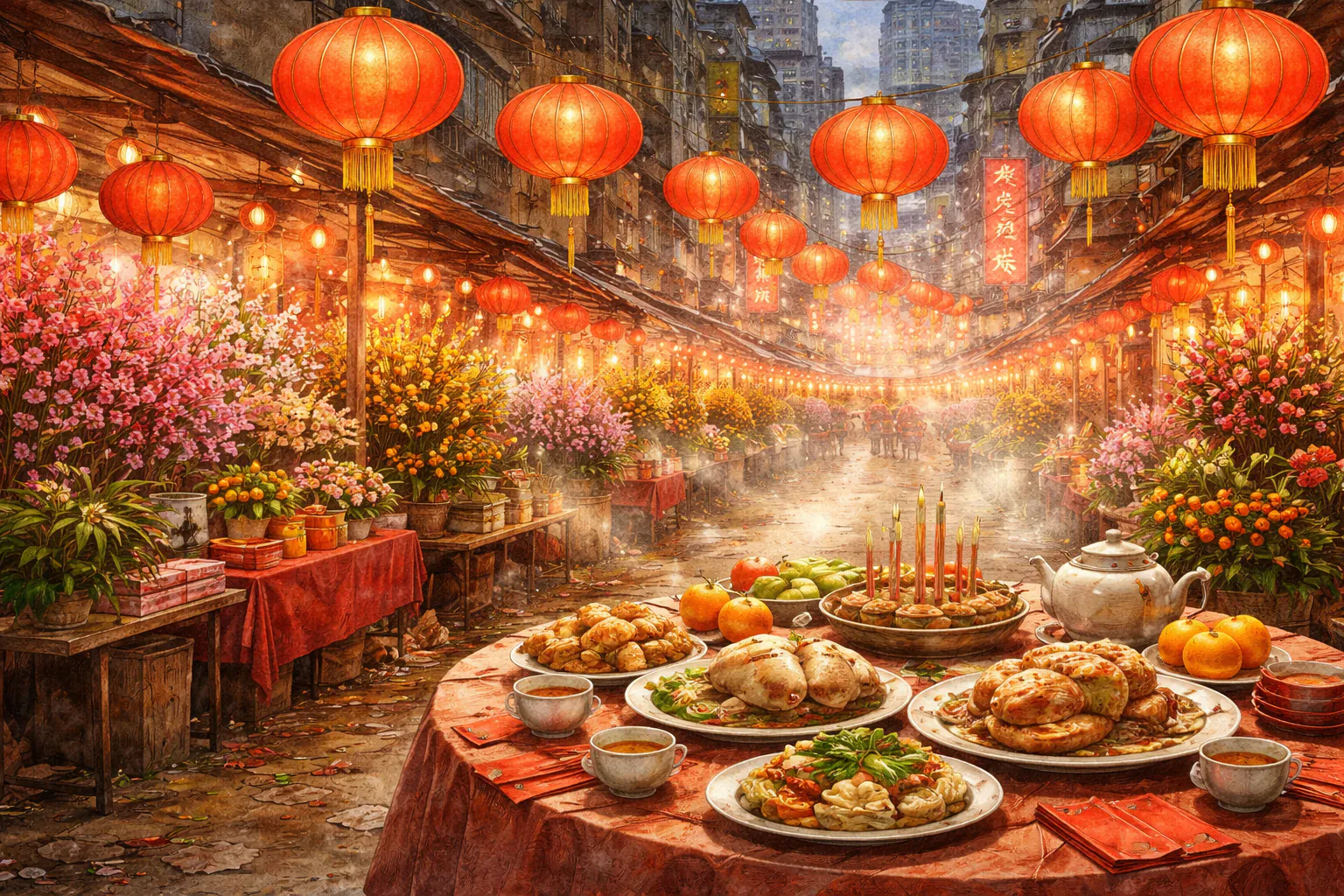
在香港這樣的城市裡,新年的氣氛也會延伸到街道。很多人會到花市逛一逛。維多利亞公園的年宵市場曾經是許多人每年必到的地方。攤檔裡擺滿年花:桃花、水仙、蘭花、金桔。每一種花都有不同的寓意,象徵著繁榮、富足與好運。
夜晚的城市在新年前夕常常顯得特別明亮。燈飾掛在商場門口,紅燈籠在街道上輕輕搖動。即使只是走在普通的街道上,也能感覺到節日的氣氛。
大年初一的早晨通常比平日安靜。很多店舖仍然關門,街道上人不多。人們穿上新衣服,互相拜年。有人會去探親,也有人選擇到廟宇上香,希望新一年平安順利。
新年的幾天裡,城市像是進入了一種暫時放慢的節奏。平日忙碌的生活忽然停下來,人們有時間與家人聊天,也有時間回想過去一年發生的事情。這種暫停的感覺,也許正是農曆新年的真正意義。
隨著時代改變,新年的形式也在慢慢變化。有人開始用電子紅包,有人選擇旅行過年,也有家庭不再像以前那樣舉行大型聚餐。但無論形式如何改變,節日的核心似乎仍然沒有變。
農曆新年之所以重要,也許並不是因為那些具體的習俗,而是因為它讓人們有機會重新聚在一起。家人、朋友、親戚,在忙碌的生活裡再次相遇。大家坐在同一張桌子前,分享食物與故事。
時間會慢慢改變城市,也會改變家庭的樣子。有些長輩離開了,有些孩子長大了。但每一年當紅燈籠再次掛起,當街市再次熱鬧起來,人們仍然會記得那些熟悉的畫面。
也許正因為如此,農曆新年總帶著一種特別的情感。它既屬於今天,也屬於過去。那些曾經一起過年的人,或許不再出現在餐桌旁,但記憶仍然留在節日的氣氛裡。
當夜色降臨,城市的燈光慢慢亮起,人們帶著祝福走進新的一年。農曆新年並不只是時間的開始,它更像是一個提醒——提醒人們,在不斷向前的生活裡,仍然要記得團圓與彼此。
English Version
As winter approaches its final stretch and anticipation begins to build across the city, the Lunar New Year emerges as the most vibrant and emotionally charged moment in the annual cycle, transforming urban space into a landscape of color, sound, and collective energy that reflects both tradition and contemporary life. In Hong Kong, this transformation is especially visible, as streets, markets, and residential areas gradually shift in appearance and atmosphere, marked by the presence of red decorations, glowing lanterns, and the steady increase of activity leading up to the celebration. Unlike quieter festivals that emphasize reflection or stillness, the Lunar New Year is defined by preparation, movement, and anticipation, where the days before the festival carry as much significance as the celebration itself, creating a sense of buildup that culminates in the arrival of the new year. Markets become focal points of this transition, filled with seasonal goods, flowers, decorations, and symbolic items that represent prosperity, luck, and renewal, turning everyday shopping into a ritualized activity that blends necessity with cultural meaning. The act of choosing and bringing these items home contributes to a collective transformation of private spaces, where households participate in the visual and emotional language of the festival through decoration and arrangement. Reunion dinner stands at the emotional core of the celebration, representing not only a shared meal but a reaffirmation of family bonds and continuity, where generations gather around a table to mark the closing of one year and the beginning of another. The atmosphere during this time is shaped by both presence and memory, as conversations, traditions, and even the arrangement of dishes carry meanings that extend beyond the immediate moment, connecting participants to past celebrations and future expectations. Lanterns, whether displayed in public or within homes, introduce a visual warmth that complements the festive environment, their glow acting as a symbol of hope and continuity that bridges the transition between years. The city itself becomes an active participant in this process, as public spaces are adapted to accommodate celebrations, from decorative installations to organized events that invite participation from residents and visitors alike. The density and scale of Hong Kong amplify these experiences, creating a sense of immersion where individual and collective celebrations overlap, forming a continuous flow of activity that defines the festive period. At the same time, the Lunar New Year also carries a reflective dimension, as the act of transitioning into a new cycle naturally encourages consideration of the past and anticipation of what lies ahead, blending forward-looking optimism with acknowledgment of what has been. This duality is embedded within many traditions, from symbolic cleaning and renewal practices to the exchange of greetings and well-wishes, each contributing to a broader cultural narrative centered on transformation and continuity. Food, sound, and visual elements all play a role in shaping the sensory landscape of the festival, from the rhythm of bustling markets to the warmth of indoor gatherings, creating a layered experience that engages multiple aspects of daily life. Despite rapid modernization and changing lifestyles, the Lunar New Year remains one of the most resilient cultural practices in Hong Kong, continuously adapting while retaining its core significance, allowing it to resonate across generations and social contexts. Ultimately, it is this combination of preparation, gathering, and shared atmosphere that defines the festival, transforming the city into a space where tradition and modernity coexist, and where individual experiences contribute to a larger narrative of renewal, connection, and cultural continuity that marks the beginning of each new year.