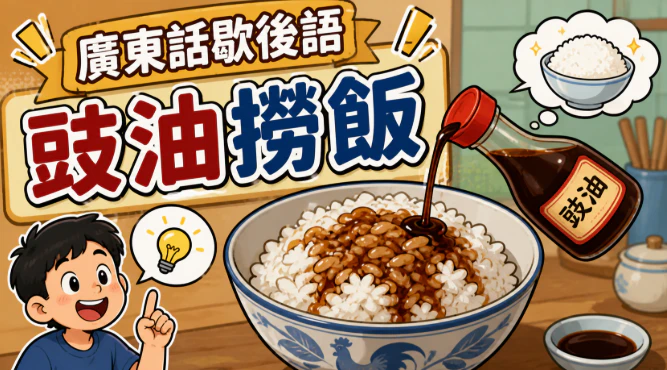
有些事情看似精緻講究,其實只是表面功夫。《豉油撈飯:整色整水》正好揭示這種外表華麗但內容單薄的現象。
Some things appear refined and elaborate on the surface, yet lack real substance beneath. This Cantonese saying captures the idea of making something look impressive without adding true value.
意思
中文
「豉油撈飯:整色整水」這句廣東話歇後語,字面上指的是把豉油淋在白飯上,看似顏色誘人,但實際上只是簡單的調味,並沒有豐富的內容或配料。這個日常飲食畫面被引申為一種處事或表達方式,即只重視外在形式,刻意營造效果,卻缺乏實質內容。所謂「整色整水」,就是刻意做出花樣、包裝或表演,讓人看起來很有心思,但實際上並沒有真正的深度或價值。這句歇後語常帶有批評意味,用來形容某些人做事過於注重表面,例如過度包裝簡單內容、誇大其詞,或以形式掩蓋空洞本質。在現代社會中,這種現象並不少見,無論是社交場合、商業宣傳還是日常溝通,都可能出現「看起來很厲害」但實際上內容不足的情況。因此,這句話也提醒人們,應該重視實質而非只追求外在效果。
English Version
The literal image of this idiom is a bowl of plain rice mixed with soy sauce—visually darker and perhaps more appealing, yet fundamentally simple and lacking variety. From this everyday scene, the meaning extends to describe situations where appearance is enhanced without adding real substance. The phrase “dressing it up” suggests deliberate effort to create an impression, often through style, presentation, or exaggeration, while the core remains shallow. It is commonly used in a critical sense to point out when someone focuses too much on presentation rather than meaningful content. This could apply to overhyped ideas, overly polished displays, or communication that sounds impressive but lacks depth. In modern contexts, it resonates strongly in areas such as marketing, social media, and public speaking, where surface appeal can sometimes overshadow genuine value. Ultimately, the saying encourages discernment, reminding us to look beyond appearances and evaluate what truly matters.
用法
中文
這句歇後語常用於批評或形容某些事情華而不實,例如過度包裝、誇大其詞或只重形式不重內容。也可以用於輕鬆調侃,例如:「你呢個提案有啲似豉油撈飯,整色整水。」
English Version
This expression is often used to criticize situations where appearance outweighs substance, such as exaggerated claims or overly polished presentations. It can also be used humorously to point out something that looks impressive but lacks depth.
小故事:
中文
阿偉負責為公司準備一個新產品的簡報,他花了大量時間設計動畫效果與華麗排版,整個簡報看起來十分吸引。會議當天,大家一開始都被畫面吸引,但當主管開始詢問產品細節與數據時,阿偉卻回答得支支吾吾,內容明顯不足。會議結束後,同事私下說:「個簡報真係豉油撈飯,整色整水。」這句話讓阿偉反思自己的準備方式。之後,他開始把重心放在內容本身,重新整理資料,補充數據與分析。下一次簡報時,他的表現雖然不再那麼花巧,但內容扎實,反而獲得更多認可。這次經歷讓他明白,真正能說服人的,不是外表,而是實質。
English Version
Ah Wai was tasked with preparing a presentation for a new product. He spent most of his time perfecting animations and visual design, creating a presentation that looked impressive and engaging. During the meeting, his colleagues were initially captivated by the visuals. However, when the manager asked about product details and supporting data, Ah Wai struggled to provide clear answers, revealing a lack of substance. After the meeting, a colleague commented that the presentation was all style and no depth. The remark made Ah Wai reconsider his approach. He shifted his focus to strengthening the content, organizing information more clearly and adding solid data and analysis. At his next presentation, although it was less flashy, it was far more convincing and well-received. The experience taught him that true impact comes from substance, not just appearance.
結語
中文
外表可以吸引目光,但內容才能留下價值。真正重要的,永遠在於內在。
English Version
Appearance may capture attention, but substance creates lasting value. What truly matters lies beneath the surface.