三國演義第一百一十六回:鍾會分兵漢中道,鄧艾偷渡陰平道|漢中失守,劍閣難阻滅蜀奇兵 |Romance of the Three Kingdoms Chapter 116: Zhong Hui Advances Through Hanzhong as Deng Ai Crosses Yinping|Hanzhong Falls and the Final Shu Defense Is Bypassed

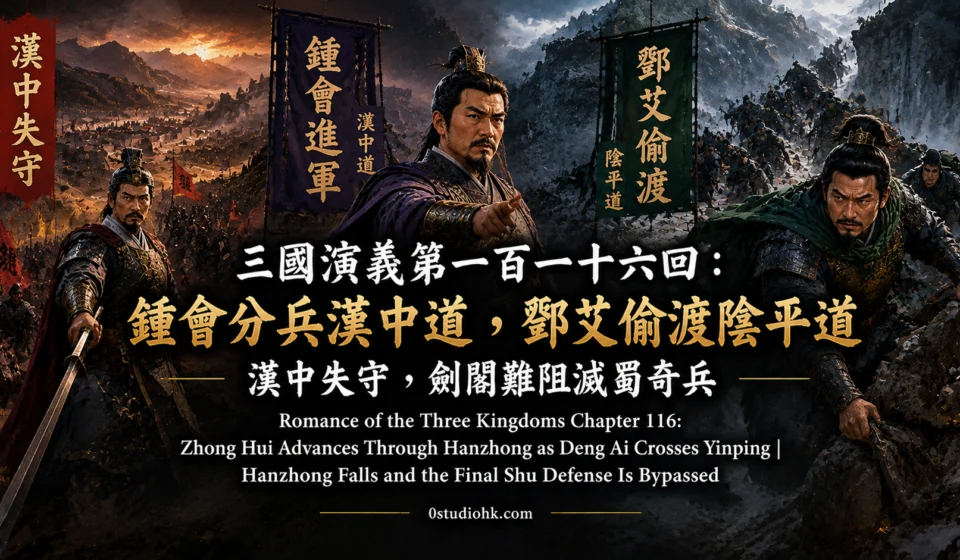
魏軍正式發動滅蜀之戰,鍾會率大軍直撲漢中,蜀將傅僉戰死、蔣舒投降,漢中諸郡相繼失守。姜維擺脫魏軍牽制後退守劍閣,依靠天險成功擋住鍾會主力。就在鍾會久攻不下、準備退兵之際,鄧艾提出一個近乎瘋狂的計畫:率精兵偷渡陰平,翻越七百里荒山,繞過蜀漢正面防線。這場冒險一旦成功,蜀漢後方將直接暴露。
中文版本
魏國籌劃已久的滅蜀之戰,終於全面展開。經過多年準備,司馬昭已經認定蜀漢國力衰弱,正是徹底結束魏蜀長年戰爭的時候。鍾會奉命統率大軍南下,兵力浩大,目標直指漢中。與此同時,鄧艾也率領另一支魏軍尋找突破蜀漢防線的機會。這一次,魏國不再只是防守,也不再只是等待姜維北伐耗盡力量,而是主動將戰火推向蜀漢腹地。姜維此時仍然身在沓中,原本希望利用屯田保存軍力,同時防備魏軍。然而當魏軍真正發動大規模進攻後,他才發現局勢已經遠比想像中危急。鍾會大軍首先向漢中方向推進,魏軍兵力遠勝蜀漢守軍,沿途各處關隘都承受巨大壓力。漢中是蜀漢北方最重要的屏障,一旦失守,通往蜀地的道路便會逐漸打開。蜀將傅僉知道漢中的重要性,因此決心死守。他率軍抵抗魏軍進攻,即使形勢越來越不利,也沒有輕易退讓。可是蜀軍兵力有限,外援又難以及時抵達,最終傅僉戰死沙場。另一名蜀將蔣舒則選擇投降,使魏軍更加容易突破漢中防線。隨著主要守軍力量被削弱,漢中諸郡相繼失陷。魏軍迅速向前推進,蜀漢多年建立的北方防線終於出現巨大缺口。姜維收到漢中失守的消息後,立即明白自己不能再繼續留在原來的位置。他必須迅速尋找一處能夠阻擋魏軍主力的地方。於是,他擺脫魏軍牽制,率領部隊向劍閣方向撤退。劍閣自古就是蜀地重要險關,山勢陡峭,道路狹窄,易守難攻。姜維知道,自己如今已經沒有足夠力量在平原上與鍾會大軍正面決戰,唯一可以依靠的,就是蜀地天然的山川險阻。蜀軍抵達劍閣後,姜維立即部署防禦。他命令士兵修築營寨、加強關隘,並利用山勢布置層層防線。鍾會率領魏軍主力隨後趕到,看到劍閣的地形後,也知道這將是一場非常艱難的攻城戰。魏軍一次又一次發動進攻,蜀軍則依靠險關頑強抵抗。姜維親自坐鎮劍閣,指揮士兵利用山道與城防阻擋魏軍。鍾會雖然兵力遠勝,卻始終無法輕易突破。時間一天一天過去,魏軍消耗大量兵力與糧草,卻仍然不能攻下劍閣。鍾會開始感到焦急。他原本以為蜀漢已經國力衰弱,只要大軍南下,便可以迅速攻破蜀地。但姜維死守劍閣,令他的主力大軍被牢牢牽制。最後,鍾會甚至開始考慮是否應該暫時退兵,重新尋找進攻方向。就在這個時候,鄧艾提出了一個完全不同的計畫。他沒有把希望放在劍閣正面,而是提出繞過劍閣,直接進入蜀漢腹地。這條道路,就是陰平。陰平山區荒僻險峻,長達數百里幾乎無人煙,普通大軍根本不願意冒險通過。可是鄧艾正是看中了這一點。蜀軍將主要兵力集中在劍閣,便意味著後方其他地方的防守必然薄弱。如果魏軍能夠從陰平翻山越嶺,便可以避開姜維苦心經營的正面防線,直接出現在蜀漢腹地。這個計畫極其危險。魏軍一旦進入荒山,後面沒有容易撤退的道路,糧草也難以補充。如果途中遇到暴雨、山崩或糧食耗盡,整支軍隊都可能葬身山谷。然而鄧艾認為,正因為這條道路危險,蜀漢才最不可能在那裡部署重兵。他決定親自率領精兵冒險前進。魏軍進入陰平山區後,真正的考驗才開始。前方沒有寬闊大道,只有崎嶇山路。士兵需要逢山開道,遇水搭橋。很多地方只能依靠繩索攀爬,有些山坡陡峭得連站立都十分困難。糧食與裝備逐漸減少,士兵的體力也一步一步消耗。可是鄧艾沒有退縮。他知道,如果現在返回,鍾會在劍閣的攻勢又會重新陷入僵局;如果繼續前進,一旦成功,便可以讓整個蜀漢陷入措手不及的危機。為了渡過最險峻的山路,魏軍甚至採取極端的方法。有些地方無法正常下山,士兵便利用裹氈等方法從山頂向下滾落,再逐步集合。這種近乎不要命的行軍方式,令魏軍付出巨大代價,但也讓他們逐漸突破了蜀漢認為難以通行的天然屏障。姜維此時仍然集中力量守在劍閣。他成功擋住鍾會,卻不知道真正危險的敵人正在從另一條道路逼近。這正是鄧艾計畫最可怕的地方。姜維越成功守住劍閣,便越會將更多兵力集中在這裡;而劍閣越安全,蜀漢後方便越容易被忽略。鄧艾正是利用了這個戰略盲點。魏軍在荒山中艱苦前進,終於逐漸走出陰平險道。當士兵再次看到道路與城池時,許多人幾乎不敢相信自己真的成功了。可是鄧艾知道,真正的戰鬥才剛剛開始。前方的第一個重要目標,是江油。江油一旦失守,蜀漢腹地便會暴露在魏軍面前。鄧艾立即率軍向江油進發。蜀將馬邈面對突然從天而降的魏軍,完全沒有想到敵人會從陰平方向出現。蜀漢原本以為最重要的防線是劍閣,卻沒有料到魏軍已經繞過了劍閣。馬邈在巨大壓力之下,最終選擇不戰而降。江油城門打開的那一刻,鄧艾的奇兵終於真正進入蜀漢腹地。這個消息若傳到劍閣,姜維必然震動。因為他苦苦守住鍾會主力,原本以為只要劍閣不失,蜀漢便仍有機會抵抗;如今鄧艾卻從背後突破,整個戰局已經發生根本改變。鍾會在劍閣受阻,鄧艾則成功繞道而進,魏軍的兩支力量形成了截然不同的戰局。姜維此時才真正明白,自己面對的不只是一次普通的魏軍進攻,而是一場精心設計的滅蜀戰爭。漢中已經失守,劍閣雖然仍然牢固,但蜀漢後方已經出現裂口。鄧艾的軍隊正在向成都方向逼近,而蜀漢卻沒有足夠時間重新建立防線。姜維站在劍閣關上,望著遠方山川,心中沉重無比。他成功阻擋了鍾會,卻也因此將大部分力量集中在劍閣。這個曾經最安全的防線,如今反而成為牽制他的地方。鄧艾則利用這個機會,完成了一次令人難以置信的奇襲。陰平山道的風仍然猛烈,魏軍士兵拖著疲憊的身軀向前。沒有人知道前方還有多少敵人,但鄧艾已經看見了蜀漢最脆弱的地方。滅蜀之戰,到此已經真正進入最後階段。姜維與鍾會仍然在劍閣對峙,而鄧艾已經站在蜀漢腹地。蜀漢的命運,開始在兩條道路之間急速轉變。
English Version
The long-prepared Wei campaign against Shu Han had finally begun in full force. After years of preparation, Sima Zhao concluded that Shu Han had become too weak to sustain another prolonged war. Zhong Hui was ordered to lead a massive army south toward Hanzhong, while Deng Ai commanded another force and searched for a way through the Shu defenses. Wei was no longer simply waiting for Jiang Wei to launch another Northern Expedition. It was now taking the initiative and carrying the war directly into Shu territory. Jiang Wei was still stationed at Tazhong, where he had established agricultural settlements in an attempt to preserve his forces and remain away from the political struggles in Chengdu. But when Wei launched its major invasion, he quickly realized that the situation was far more dangerous than he had expected. Zhong Hui’s army advanced toward Hanzhong with overwhelming strength. Hanzhong was the most important northern shield of Shu Han, and if it fell, the roads into the Shu heartland would become much more vulnerable. The Shu commander Fu Qian understood the importance of the region and decided to defend it to the death. He resisted the Wei assault even as his position became increasingly desperate. Shu forces were too limited, and reinforcements could not arrive quickly enough. Eventually, Fu Qian was killed in battle. Another Shu commander, Jiang Shu, surrendered, making it much easier for Wei to continue its advance. One after another, the districts of Hanzhong fell. The defensive system that Shu Han had relied upon for generations was suddenly breaking apart. When Jiang Wei received news of the collapse, he understood that he could no longer remain where he was. He needed to find a position where the much larger Wei army could be stopped. He therefore broke away from the forces attempting to contain him and rapidly withdrew toward Jiange. Jiange was one of the great natural gateways into Shu. Steep mountains and narrow roads made it extremely difficult to attack. Jiang Wei knew that he no longer possessed enough strength to confront Zhong Hui’s enormous army on open ground. The mountains were now his greatest weapon. Once his army reached Jiange, Jiang Wei immediately organized the defenses. Soldiers strengthened the fortifications, established defensive positions, and used the surrounding terrain to create layers of resistance. Zhong Hui soon arrived with the main Wei army. When he saw the geography of Jiange, he realized that the campaign would not be easy. Wei forces attacked repeatedly, but Shu defenders held their positions. Jiang Wei personally directed the defense, using the narrow roads and mountain barriers to prevent the Wei army from gaining a breakthrough. Zhong Hui possessed overwhelming numerical strength, but numbers alone were not enough. Day after day, Wei soldiers attacked without achieving a decisive result. Supplies were consumed, casualties increased, and the campaign began to lose momentum. Zhong Hui grew increasingly frustrated. He had expected the weakened Shu Han to collapse quickly once the invasion began. Instead, Jiang Wei had transformed Jiange into an almost impossible barrier. Eventually, Zhong Hui began considering whether his army should withdraw and seek another route. At that moment, Deng Ai proposed a radically different strategy. Rather than continuing to attack Jiange from the front, he suggested bypassing the entire defensive position and entering the Shu heartland through Yinping. The route was extraordinarily dangerous. The mountains were remote and difficult to cross, stretching for hundreds of miles through territory with little human settlement. A conventional army would never choose such a path. Deng Ai saw precisely that as its greatest advantage. Shu had concentrated its strongest forces at Jiange. That meant other parts of the kingdom were necessarily more lightly defended. If Wei could cross the Yinping mountains, it could bypass Jiang Wei’s main defensive line and suddenly appear deep inside Shu territory. The plan was extremely risky. Once the Wei force entered the wilderness, retreat would become difficult. Food could not easily be replaced, and there were few safe roads through the mountains. A landslide, storm, or shortage of supplies could destroy the entire expedition. Deng Ai nevertheless believed that the danger itself created the opportunity. Because Shu considered the route almost impossible to use, it was unlikely to have placed a large army there. He decided to personally lead an elite force through the mountains. Once the Wei soldiers entered Yinping, the real ordeal began. There were no broad roads. The army had to clear paths through the mountains and construct bridges across streams and ravines. In many places, soldiers had to climb using ropes. Some slopes were so steep that simply standing was difficult. Food supplies declined, equipment became harder to carry, and exhaustion spread through the ranks. Deng Ai refused to turn back. He understood that returning would leave Zhong Hui trapped before Jiange, while continuing the march offered the possibility of changing the entire war. In some of the most dangerous sections, the soldiers had to use extreme methods to descend the mountains. Wrapped in protective coverings, they rolled down steep slopes and regrouped below. The journey was brutal, but the force slowly crossed the natural barrier that Shu had believed almost impossible to penetrate. Meanwhile, Jiang Wei remained concentrated at Jiange. He had successfully stopped Zhong Hui, but he did not realize that the greater danger was approaching from another direction. This was the central strength of Deng Ai’s strategy. The more successfully Jiang Wei defended Jiange, the more forces Shu was encouraged to concentrate there. And the more secure Jiange appeared, the weaker the defenses behind it became. Deng Ai exploited exactly this strategic blind spot. Deep inside the mountains, the Wei soldiers continued forward despite hunger and exhaustion. Eventually, they emerged from the most dangerous sections of the Yinping route. When the soldiers once again saw roads and signs of human settlement, many could hardly believe that they had succeeded. But Deng Ai knew that the most important stage was still ahead. Their first major target was Jiangyou. If Jiangyou fell, the Shu heartland would be exposed to the Wei army. Deng Ai immediately led his troops toward the city. The Shu commander Ma Miao was completely unprepared for the sudden appearance of Wei soldiers. Shu Han had expected the main threat to come through Jiange. No one had imagined that an enemy army would suddenly emerge from Yinping. Faced with the unexpected arrival of Deng Ai’s force, Ma Miao eventually surrendered without fighting. When the gates of Jiangyou opened, Deng Ai’s surprise force had finally entered the heartland of Shu. The news would have enormous consequences if it reached Jiang Wei at Jiange. Jiang Wei had fought desperately to hold Zhong Hui’s main army at the mountain pass. He believed that as long as Jiange remained secure, Shu Han still had a chance to resist. Now Deng Ai had bypassed the entire defense system and appeared behind him. The strategic balance had changed completely. Zhong Hui remained blocked at Jiange, while Deng Ai had successfully entered Shu through the rear. Jiang Wei finally understood that this was not another ordinary Wei offensive. It was a carefully designed campaign to destroy Shu Han itself. Hanzhong had fallen. Jiange remained strong, but the heartland behind it had been exposed. Deng Ai’s army was moving deeper toward Chengdu, and Shu had very little time to construct a new defensive line. Jiang Wei stood upon the defenses of Jiange and looked toward the distant mountains. He had succeeded in stopping Zhong Hui, but that success had also forced Shu to concentrate its strength at one location. The strongest defensive position had become the very place that prevented Jiang Wei from responding quickly to the new threat. Deng Ai had exploited the opening and completed one of the most dangerous surprise advances in the war. The winds across the Yinping mountains continued to blow as exhausted Wei soldiers moved forward. No one knew exactly what enemies awaited them, but Deng Ai could already see the weakness at the heart of Shu Han’s defenses. The campaign to conquer Shu had now entered its final and most dangerous stage. Jiang Wei and Zhong Hui remained locked in confrontation at Jiange, while Deng Ai stood deep inside Shu territory. The fate of Shu Han was now changing rapidly between two separate roads.