
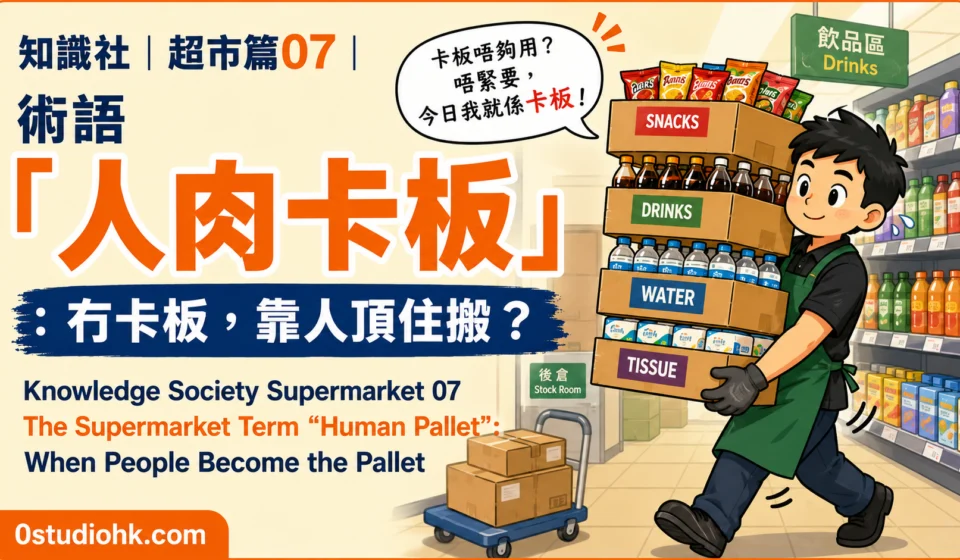
知識社|超市篇07|術語「人肉卡板」:冇卡板,靠人頂住搬? | Knowledge Society Supermarket 07 | The Supermarket Term “Human Pallet”: When People Become the Pallet

超市後倉搬貨去貨架,唔係每一次都有卡板車或者推車可以用。有時為咗快手,員工會一次過用雙手、手臂甚至身體承托幾件貨,直接由一區搬去另一區。現場一句「今日做人肉卡板」,其實就係講緊呢種情況。
Moving products from the stockroom to the sales floor does not always involve a pallet or trolley. Sometimes staff simply carry several items at once to get the job done faster. In supermarket slang, the humorous idea of becoming a “human pallet” captures this very familiar side of retail work.
中文版本
「人肉卡板」係一個非常有香港現場味道嘅講法,但首先要講清楚,佢並唔係一個國際統一嘅正式零售術語,而係將理貨員搬貨工作形象化嘅口語說法。真正嘅卡板(pallet)係用嚟承托、集中及搬運貨品嘅平台,配合唧車、叉車或者其他搬運設備,可以一次過處理大量貨物。 但喺超市日常工作入面,唔係所有貨品都值得為咗搬幾件而推一架車出嚟。有時後倉距離貨架只係幾步路,或者通道比較窄,員工可能會直接用雙手抱住幾件貨,行去貨架補貨。於是就出現一句幾生動嘅講法:「今日做人肉卡板。」意思唔係真係將人當成搬運工具,而係笑自己暫時代替咗卡板嘅其中一部分功能——用身體承托住一批貨,再將貨送到需要嘅地方。最典型嘅情況可能係紙巾、紙包飲品、零食、樽裝飲品或者其他比較容易用手搬運嘅貨品。理貨員可能一手抱幾件,另一隻手再拎幾件,快速由後倉走到貨架。對顧客嚟講,可能只係見到員工抱住一堆貨經過;但對員工嚟講,呢個動作其實係日常補貨流程其中一部分。點解唔用卡板?第一個原因係數量。有時只係欠幾件貨,為咗幾件貨推一架搬運工具,未必有效率。第二個原因係空間。超市貨架之間嘅通道並唔一定容許大型設備自由轉身,尤其繁忙時間顧客多,推車反而可能增加阻塞。第三個原因係速度。如果貨品就在附近,一個員工抱住幾件貨行過去,可能幾十秒就完成;如果先去搵車、將貨放上車、推過去、再卸貨,反而多咗幾個步驟。當然,「快」唔代表可以亂搬。真正需要注意嘅係貨品重量、體積、數量、行走路線同搬運姿勢。職業安全資料一直提醒,重複搬運、彎腰、扭身或者以不良姿勢搬重物,都可能增加肌肉骨骼受傷風險。 所以「人肉卡板」最有趣嘅地方,唔係鼓勵員工用身體頂住越多貨越好,而係反映超市現場一種非常實際嘅工作思維:少量、短距離、合適重量,就直接搬;數量大、貨品重或者距離遠,就應該使用合適嘅搬運設備。 一個有經驗嘅理貨員,通常會知道咩情況可以手搬,咩情況需要工具。呢個判斷其實好重要,因為超市補貨並唔係單純「有貨就搬」。員工仲要考慮貨架高度、通道有冇顧客、貨品會唔會跌、搬運途中會唔會撞到其他貨架,以及自己能否安全完成工作。有時一個看似簡單嘅抱貨動作,背後其實係對時間、空間同工作量嘅取捨。更加有趣嘅係,「人肉卡板」同之前嘅「疊頭」同「掃墓」其實可以連成一條完整流程。後倉有貨,員工先要將貨搬出嚟;搬到貨架之後,要建立或者補充「疊頭」;貨架被顧客買亂之後,又要再「掃墓」整理。顧客最後見到嘅,只係一個整齊貨架,但背後可能已經經過幾次搬運、補貨同整理。呢個亦係超市工作最容易被忽略嘅地方:貨品唔會自己由後倉走到貨架,更唔會自己排到整整齊齊。每一件商品背後,都有人處理過。當然,並唔係每間超市都會使用「人肉卡板」呢個講法。有些地方可能只會講「抱貨」、「手搬」、「搬貨」或者直接講「補貨」。所以,呢個詞最適合作為《知識社|超市篇》嘅現場黑話,讓大家用一個簡單又有畫面嘅方式,理解理貨員每日點樣處理貨品。下次你見到一個員工抱住一大堆貨行過貨架,可能就會明白:「今日,卡板放假,真人上場。」不過講笑還講笑,真正專業嘅零售工作,始終係效率與安全一齊要。能夠用工具,就唔需要逞強;適合手搬,先用最簡單方法處理。所謂「人肉卡板」,最精彩嘅並唔係一個人可以搬幾多,而係員工知道幾時應該自己搬,幾時應該叫工具幫手。
English Version
“Human pallet” is best understood as a humorous, informal expression rather than an official international retail term. A pallet is normally a platform used to consolidate and move goods, often together with pallet trucks, forklifts or other material-handling equipment. In a supermarket, however, not every replenishment job requires a pallet or trolley. Sometimes only a few products need to be moved from the stockroom to a nearby shelf. If the distance is short and the items are manageable, a staff member may simply pick them up and carry them directly. This is where the idea of the “human pallet” becomes such a memorable piece of supermarket slang. The worker is not literally replacing a pallet. Instead, the phrase humorously describes a person temporarily doing the job of carrying a small quantity of products from one location to another. Imagine an employee carrying several boxes of tissues, packets of snacks or bottles of drinks from the back room to the sales floor. To a shopper, it may look like an ordinary part of the working day. To the employee, it is a quick replenishment decision: there are only a few items, the shelf is nearby, and using a trolley may create more work than simply carrying the products. There are several reasons why manual carrying can sometimes be quicker. Quantity is one. If only three or four products are needed, preparing a trolley may not be worthwhile. Space is another. Supermarket aisles can become crowded, especially during busy shopping periods, and a larger trolley may make movement more difficult. Distance also matters. Carrying a small number of suitable items a short distance can take only a few seconds, whereas collecting equipment, loading it, moving it and unloading it adds several steps. But speed should never be confused with lifting as much as possible. Manual-handling guidance emphasises that factors such as weight, posture, repetition, twisting and awkward movement can contribute to musculoskeletal injuries. This is why the real lesson behind the “human pallet” is not that supermarket employees should carry everything themselves. It is that good retail work involves making a practical judgement about the right method for the job. A small quantity of light products over a short distance may be perfectly manageable by hand. Heavy goods, large quantities, awkward loads or longer distances are different matters and may require suitable handling equipment. An experienced supermarket worker has to consider more than just the product itself. They need to think about the weight and shape of the load, the condition of the packaging, the route to the shelf, nearby shoppers, the available aisle space and whether the products can be carried without blocking their view. A seemingly simple trip from the stockroom to the shelf can therefore involve several small decisions. This also connects naturally with other supermarket terms in this series. The products first have to leave the stockroom. They may then be used to build or replenish a promotional “stacking display”. After customers remove products throughout the day, staff may need to carry out shelf recovery or “掃墓” to restore the display. What the customer eventually sees is simply a neat shelf full of products. Behind that shelf may be several separate movements: carrying, replenishing, arranging, checking and recovering. The “human pallet” is therefore a humorous way of highlighting something customers rarely notice—the physical work that keeps a supermarket running. It is also worth remembering that this expression will not be used by every supermarket or every retail company. Some workplaces may simply call the activity manual handling, hand carrying, replenishment or restocking. That is why “Human Pallet” works best in this series as an informal, easy-to-understand label rather than a claim about universal retail vocabulary. Next time you see a supermarket employee carrying several products at once, you may see the scene differently. The person is not just “carrying boxes”. They are making a quick operational decision about how to move stock efficiently. And, jokingly speaking, there is a simple explanation: the pallet is taking a day off, so the human version has arrived. But the professional principle remains straightforward: efficiency and safety have to work together. Use manual carrying when the load and situation are appropriate, and use proper handling equipment when the job requires it. The real skill is not knowing how much one person can carry. It is knowing when a person should carry it—and when the equipment should do the work instead.
總評
「人肉卡板」係一個好有畫面嘅超市現場黑話,反映員工為咗少量、短距離補貨而直接手搬貨品。不過真正專業嘅做法,永遠係效率同安全並重。
“Human pallet” is a vivid supermarket expression for manually carrying a small quantity of stock when the situation allows it. The real skill, however, is knowing when manual carrying is appropriate and when proper handling equipment should take over.