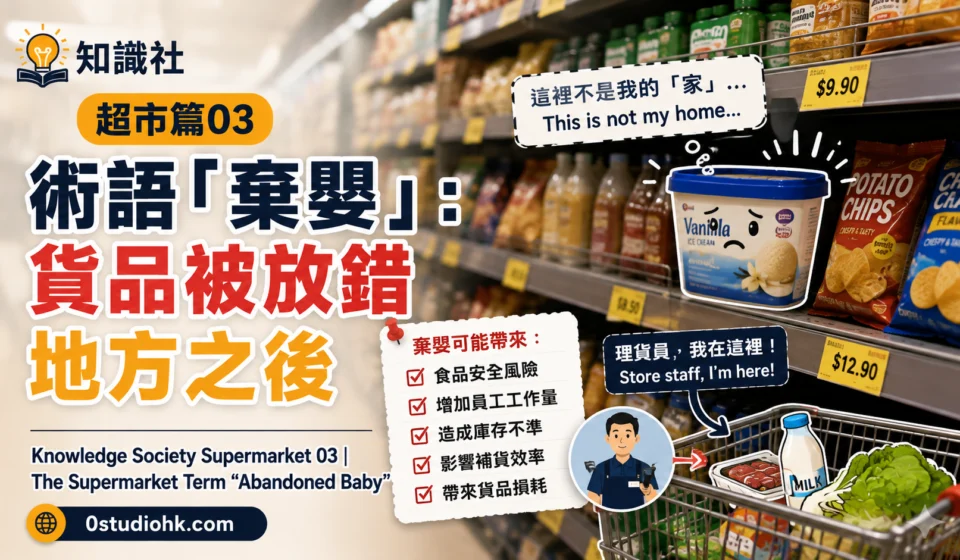
知識社|超市篇03|術語「棄嬰」:貨品被放錯地方之後 | Knowledge Society Supermarket 03 | The Supermarket Term “Abandoned Baby”
行超市時,你有冇見過一件貨品,明明屬於冷藏櫃,最後卻出現在零食架?又或者一盒飲品被放到完全不相關的貨架?零售現場有時會用「棄嬰」呢個形象化講法,形容顧客揀咗貨品之後又放低,最後留低喺錯誤位置。
Have you ever found a product sitting on a shelf where it clearly does not belong? A chilled item left beside snacks, or a bottle placed among household goods, may look like a small mistake. In retail operations, such misplaced products can be described informally as an “abandoned baby”—an item picked up by a shopper but left behind in the wrong place.
中文版本
「棄嬰」本身係一個大家都熟悉嘅詞語,正式意思係被父母遺棄嘅嬰兒;教育部《重編國語辭典》亦將「棄嬰」解作被父母遺棄嘅嬰兒。 不過喺超市現場,如果用「棄嬰」去形容貨品,意思完全唔係字面上嘅嬰兒,而係一種將零售現象形象化嘅口語講法:顧客將貨品由原本位置拎走,行到另一個地方之後改變主意,於是隨手將貨品放低,但冇將佢放返原來嘅貨架。件貨就好似「被遺棄」咁,自己留咗喺一個唔屬於佢嘅地方。對顧客嚟講,可能只係一個非常普通嘅動作。例如原本想買一盒雪糕,行到收銀前突然覺得太貴,於是將雪糕放喺飲品架;又或者拎咗一盒冷藏食品,行到另一區之後突然唔想買,順手放喺貨架邊。顧客可能覺得「一件貨啫,冇乜大不了」,但對超市員工嚟講,呢件貨品就開始產生後續工作。第一個問題係:佢仲可唔可以正常出售?如果係普通常溫貨品,員工可能只需要將貨品重新放回正確位置,問題比較簡單。但如果係雪糕、乳製品、鮮肉、冷藏食品或者其他需要控制溫度嘅貨品,情況就完全唔同。貨品離開原本嘅冷藏環境太耐,員工未必知道佢離開咗幾耐,亦未必可以單靠外觀看出產品曾經處於不適當溫度。因此,所謂「棄嬰」並唔只係貨架亂咗少少,而可能牽涉食品安全、損耗、庫存準確度同員工工作量。再諗深一層,一件被放錯位置嘅貨品亦可能造成「假缺貨」。例如貨架上明明有十件產品,但其中兩件被顧客放咗去其他地方,理貨員望住貨架時可能以為庫存不足,於是再去後倉搵貨補貨。結果前面有貨、後面亦有貨,但系統或者員工嘅判斷仍然可能受到影響。對大型超市而言,呢種情況每日可能發生好多次。單件貨品睇落唔嚴重,但數量一多,就會變成營運問題。更麻煩嘅係「跨溫層棄嬰」。一件冷藏食品如果被放到常溫貨架,唔可以簡單當成普通錯位貨品處理;相反,一件常溫罐頭被放到冷藏櫃,通常食品安全風險未必一樣,但仍然需要重新整理。於是理貨員除咗要「補貨」,其實亦做緊一項經常被顧客睇唔到嘅工作——尋找同處理被遺留嘅貨品。呢個現象亦提醒我哋,超市營運並唔係「貨品擺上架就完成」。貨品由倉庫去貨架,再由貨架進入顧客購物車,最後去到收銀處,中間每一步都可能出現偏離。顧客將貨品放錯位置,就係其中一個最細微、但又最常見嘅變數。所以「棄嬰」呢個講法有趣嘅地方,就係將一件好細微嘅零售問題變得非常容易理解:貨品原本有自己嘅「家」,突然被帶到另一區,最後就留低喺唔屬於佢嘅地方。下次你行超市見到一件貨品放錯位置,可能會覺得只係有人擺錯咗;但對超市而言,嗰件「棄嬰」其實可能已經開始產生一連串工作。零售現場好多問題,都係由呢啲睇落好細嘅事情開始。
English Version
The word “abandoned baby” normally refers to an infant who has been left behind by a parent. In supermarket operations, however, the expression can be used informally as a vivid way of describing something completely different: a product that has been picked up by a customer and then abandoned somewhere far from its proper shelf. Imagine a shopper taking a tub of ice cream from the freezer, changing their mind before checkout, and leaving it beside a shelf of snacks. From the shopper’s perspective, it may seem harmless. The product is still there, so what is the problem? For supermarket staff, however, the situation can create several layers of work. A misplaced ambient product may simply need to be returned to its correct shelf. But a chilled or frozen product raises a much more important question: how long has it been outside the required temperature-controlled environment? A worker cannot always know when the customer left it there. That uncertainty can turn a simple misplaced item into a potential food-safety and waste issue. This is why not every misplaced product can simply be picked up and put back immediately. Temperature-sensitive goods may need different handling depending on the product and store procedures. There is another less obvious problem: misplaced products can interfere with stock visibility. Suppose a shelf should contain ten units, but two customers have taken products away and abandoned them in completely different aisles. The shelf may now look short of stock even though the products are still somewhere inside the store. A staff member may believe the shelf needs replenishment and search the back room for more stock. The store therefore appears to have a stock problem when the real problem is product displacement. At a larger supermarket, repeated incidents can create considerable additional work. Staff have to identify the product, determine where it belongs, check whether it can safely return to sale, and then move it back to the correct location. This is one reason retail work involves much more than simply filling shelves. Products are constantly moving through a system: warehouse, sales floor, customer basket, checkout and eventually the customer’s home. Every time a product leaves its intended path, staff may have to correct the situation. The “abandoned baby” idea is useful because it gives this small operational problem a memorable image. The product once had a clear home on its own shelf. A shopper picked it up, carried it somewhere else, changed their mind and left it behind. Now the product is effectively “homeless” until a member of staff finds it. The term should be understood as informal retail language rather than a universal technical definition. The formal dictionary meaning of “abandoned baby” is completely different. But as a workplace metaphor, it captures something that supermarket employees see regularly: products that have been separated from their intended location and need to be recovered. Next time you notice a product sitting in the wrong aisle, it may look like nothing more than a careless mistake. Behind that small mistake, however, there can be extra checking, extra walking, potential waste and additional pressure on store staff. In retail, tiny problems often become large operational costs simply because they happen again and again.
總評
「棄嬰」係一個幾生動嘅超市現場比喻:貨品離開原本位置,被顧客放到其他地方,最後要由員工搵返。睇似小事,累積起來就會影響補貨、庫存、損耗甚至食品安全。
“Abandoned baby” is a memorable retail metaphor for a product left away from its proper location. One misplaced item may seem insignificant, but repeated incidents can increase staff workload and affect replenishment, stock accuracy, waste and food-safety handling.