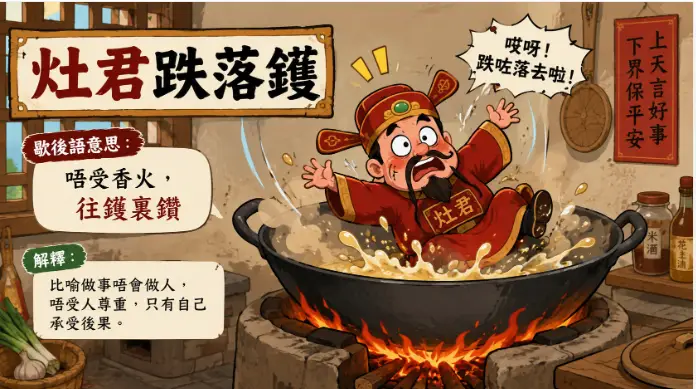
廣東話歇後語充滿生活氣息,往往以民間信仰、日常用品或人物形象作比喻,再以一句簡短而傳神的答案點出重點。「灶君跌落鑊-精神」便是一句極具廣東特色的歇後語。灶君本來是掌管廚房的神明,當祂跌進煮食用的鑊中,便巧妙地引出「精神」二字,既有神靈之意,也有活力充沛、醒神有勁的意思,因此令人一聽便留下深刻印象。
Cantonese sayings often blend humor, folklore, and everyday experiences into memorable expressions. “The Kitchen God Falls into the Wok – Full of Spirit and Energy” is one such example. Drawing on the traditional image of the Kitchen God, the phrase creates a playful connection between a household deity and the word “spirit,” which can mean both a supernatural presence and a lively state of mind. The result is a witty expression that remains popular in casual conversation.
中文
「灶君跌落鑊-精神」的核心意思是形容一個人非常有精神、充滿活力、狀態良好,又或者經過休息後變得神采飛揚。歇後語中的「灶君」是中國民間信仰中的廚房守護神,而「精神」除了表示神靈之外,在廣東話裡更常用來形容人的精神狀態。當灶君跌進鑊裡,答案自然聯想到「精神」,形成雙關效果。這句歇後語帶有輕鬆幽默色彩,通常不是用來形容嚴肅場合,而是在朋友、家人或同事之間談論一個人特別醒目、特別有幹勁時使用。例如有人通宵工作後仍然精神奕奕,旁人便可能笑說他是「灶君跌落鑊」。又或者小朋友放假後精力旺盛,到處跑來跑去,也可用這句話來形容。這種說法反映了廣東人善於把抽象概念轉化為生動畫面的語言特色,讓人透過一個有趣的場景,立即理解其中含義。同時,它也帶有一點讚賞意味,表示對方精神飽滿、反應敏捷,甚至有種充滿朝氣的感覺。因此,這句歇後語不單是語言遊戲,更是一種充滿生活智慧的表達方式。
English Version
The saying “The Kitchen God Falls into the Wok – Full of Spirit and Energy” is commonly used to describe someone who appears energetic, alert, enthusiastic, and in excellent condition. The humor comes from the double meaning of the word “spirit.” In traditional Chinese culture, the Kitchen God is a household deity associated with the family kitchen. When the Kitchen God metaphorically falls into a cooking wok, the punchline naturally becomes “spirit,” referring both to a divine being and to a person’s mental vitality. In everyday Cantonese conversations, the expression is often used when someone seems unusually lively or refreshed. A worker who stays productive after a long day, a student who remains focused despite a busy schedule, or a child bursting with energy during a holiday can all be described with this phrase. The saying is playful rather than formal, making it especially suitable for friendly conversations. It reflects a characteristic feature of Cantonese culture: turning ordinary objects and familiar images into vivid linguistic humor. By creating a funny mental picture, the phrase communicates its meaning instantly and effectively. Beyond simple amusement, it often carries a positive tone, suggesting admiration for someone’s enthusiasm, stamina, sharpness, or cheerful attitude.
用法
這句歇後語多用於口語交流,適合形容別人精神飽滿、生龍活虎的狀態。例如:「你昨晚只睡幾個鐘,今日仲咁精神,真係灶君跌落鑊呀!」又或者:「放假第一日,啲細路個個灶君跌落鑊咁,停都停唔到。」由於語氣輕鬆幽默,因此常見於朋友之間的玩笑或日常閒談之中。若在正式文件或商業場合使用則較少見,但在文學創作、專欄文章或廣東文化介紹中則十分生動有趣。
English Version
This expression is mainly used in informal speech to praise or jokingly comment on someone’s energetic condition. For example, if a person slept very little but still looks active and cheerful, friends may use the saying to describe them. It can also refer to children who seem impossible to tire out or workers who remain productive throughout the day. Because the phrase is humorous and culturally rich, it works best in conversations, storytelling, and cultural writing rather than in formal business communication.
小故事:
阿明在超市工作,每逢節日前夕都特別忙碌。一天晚上,貨車延遲到達,整個團隊要加班整理貨品。大家忙到深夜,回家時都已經筋疲力盡。第二天一早,同事們陸續回到店裡,每個人都打著呵欠,唯獨阿明精神奕奕,不但提早到達,還主動幫忙整理貨架。主管見到他這副模樣,忍不住笑著說:「你昨晚唔使瞓覺㗎?做乜仲咁精神?」阿明笑答:「返屋企沖個涼,再飲杯熱茶,就醒晒啦!」旁邊的同事聽見後立即接話:「佢唔係普通人,簡直係灶君跌落鑊!」眾人聽完哈哈大笑。後來整個上午,阿明都保持十足幹勁,不但完成自己的工作,還幫助其他同事處理貨品。到午飯時間,大家都佩服他的體力和精神。從此之後,只要阿明狀態特別好,同事們便會笑著稱他做「灶君跌落鑊」。這句歇後語也因此成為他們工作中的開心話題,讓繁忙的工作環境增添不少歡樂氣氛。
English Version
Ming worked in a busy supermarket where holiday seasons always brought extra pressure. One evening, a delayed delivery truck forced the entire team to stay late and organize stock until well past midnight. Everyone went home exhausted. The next morning, employees returned looking tired, rubbing their eyes and struggling to wake up. Surprisingly, Ming arrived early, smiling and full of energy. He immediately began arranging shelves and helping with preparations before anyone asked. His manager looked at him in disbelief and joked, “Did you even sleep last night?” Ming laughed and replied that a hot shower and a cup of tea had done the trick. Another colleague quickly added, “He’s like the Kitchen God falling into the wok—full of spirit!” The whole team burst into laughter. Throughout the morning, Ming continued working enthusiastically, helping not only with his own tasks but also supporting others whenever needed. By lunchtime, everyone was impressed by his energy and positive attitude. From that day on, whenever Ming appeared especially lively, his coworkers would jokingly describe him with that Cantonese saying. The phrase became an inside joke that brightened the atmosphere and reminded everyone that a cheerful spirit can make even the busiest workday more enjoyable.
結語
「灶君跌落鑊-精神」是一句充滿廣東民間智慧的歇後語,以幽默的神明形象帶出活力充沛的意思。短短幾個字,既有文化背景,又有語言趣味,至今仍然是廣東話中生動而受歡迎的表達方式。
English Version
“The Kitchen God Falls into the Wok – Full of Spirit and Energy” is a vivid Cantonese saying that combines folklore, humor, and everyday observation. Its clever wordplay and memorable imagery continue to make it a lively expression for describing enthusiasm, vitality, and a positive state of mind.