包羅萬有 第二季 起源篇|十二生肖 辰龍的神話與帝王象徵 | Origins Series Season 2 | The Dragon in the Chinese Zodiac and the Myth of Imperial Power
辰龍是十二生肖中唯一虛構神獸,象徵權力、祥瑞與天地力量。從皇權象徵到民間信仰,龍在中國文化中擁有至高地位,也是最具代表性的東方神話生物之一。
The Dragon is the only mythical creature in the Chinese Zodiac, symbolizing power, fortune, and cosmic energy. Revered throughout Chinese history, the Dragon became a legendary icon deeply connected to emperors, spirituality, and cultural identity.
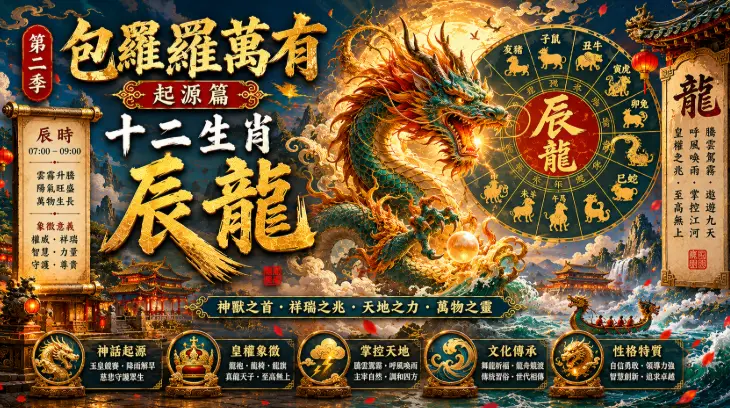
辰龍是十二生肖中的第五位,也是十二生肖裡唯一並非真實存在的神話生物。在中國文化中,龍擁有極高地位,自古便被視為掌控天地、風雨與江河的神獸。相比其他生肖動物,龍不只是象徵力量,更代表皇權、祥瑞與宇宙秩序,因此成為中華文明最重要的文化圖騰之一。關於生肖龍的起源,民間流傳玉皇大帝舉辦生肖競賽的故事。傳說中,龍本來有能力輕易奪得第一,但在途中因為替百姓降雨解旱,又幫助其他生物渡河,因此延誤時間,最終成為第五位生肖。這個故事不但展現龍強大力量,也強調牠慈悲與守護眾生的一面,因此讓辰龍成為權威與仁德兼備的象徵。在中國古代神話裡,龍與自然力量密不可分。古人相信龍能騰雲駕霧、控制雷電與降雨,因此農耕社會對龍極為崇敬。每逢旱災或重要祭典,人們都會舉行祈雨儀式,希望得到龍神庇佑。中國各地亦流傳大量龍王傳說,其中東海龍王最為著名,被視為統治海洋與水域的重要神祇。由於中國古代社會高度依賴農業,龍逐漸成為風調雨順與國泰民安的重要象徵。龍在皇權文化中的地位同樣非凡。自秦漢以後,歷代皇帝逐漸將自己視為「真龍天子」,以龍作為皇室專屬象徵。皇帝所穿龍袍、所坐龍椅以及宮殿裝飾中的龍紋,都代表至高無上的權力與神聖地位。在封建時代,普通百姓甚至不能隨意使用龍圖騰,可見龍在政治文化中的特殊性。十二地支中的「辰」,對應上午七時至九時。古人認為這段時間雲霧開始升騰,而龍正象徵騰空而起的力量,因此將龍與辰時結合。這種安排反映古代中國人對自然現象與宇宙運行的哲學理解,也讓龍成為天地能量與生命循環的重要象徵。隨着生肖文化發展,辰龍逐漸形成鮮明性格象徵。民間普遍認為屬龍的人自信、充滿魅力、具有領導能力,而且擁有遠大理想與強烈行動力。他們通常勇於冒險,不甘平凡,因此在華人社會中,龍年出生的人往往被視為特別幸運。甚至不少家庭會選擇在龍年生育,希望孩子將來擁有成功與福氣。除了民俗與命理之外,龍在中國藝術與文化中的影響更遍及各個領域。從宮殿雕刻、陶瓷、書畫到舞龍表演,龍一直是最具代表性的中國文化符號之一。舞龍尤其常見於農曆新年與大型慶典,人們相信龍舞能驅邪納福、帶來繁榮與好運。今天的辰龍,早已超越生肖動物本身。牠象徵的不只是力量與權威,更代表中華民族對天空、自然與神秘力量的想像。從古代帝王文化到現代流行藝術,龍依然是全球華人文化中最震撼、最神聖,也最具代表性的傳統象徵之一。
English Version
The Dragon is the fifth animal in the Chinese Zodiac and stands apart from all the others as the only mythical creature in the twelve-animal cycle. In Chinese culture, the Dragon has long been regarded as a sacred symbol of power, prosperity, wisdom, and cosmic balance. More than a legendary beast, the Dragon became one of the most important cultural icons in Chinese civilization, representing both heavenly authority and the forces of nature. According to the famous zodiac legend, the Jade Emperor organized a race to determine the order of the zodiac animals. The Dragon, with its ability to fly and command the skies, could easily have finished first. However, along the journey, the Dragon stopped to bring rain to drought-stricken villages and helped other creatures cross dangerous waters. Because of these compassionate acts, the Dragon arrived later and became the fifth zodiac sign. This story transformed the Dragon into a symbol not only of strength and greatness, but also of generosity and protection. In ancient Chinese mythology, Dragons were closely connected to rain, rivers, oceans, storms, and the balance of natural forces. Farming communities believed Dragons controlled the weather and ensured successful harvests. During times of drought, people often held ceremonies and prayers asking Dragon deities to send rain and restore balance to the land. Numerous legends about Dragon Kings spread throughout China, especially stories about the Dragon King of the Eastern Sea, who ruled over oceans and waterways. Because agriculture depended heavily on rainfall, Dragons became powerful symbols of prosperity, harmony, and national well-being. The Dragon also occupied an extraordinary position in imperial Chinese culture. Beginning in the Qin and Han dynasties, emperors increasingly referred to themselves as “True Dragons” or “Sons of Heaven.” Dragon imagery appeared on imperial robes, palace decorations, ceremonial objects, and the emperor’s throne itself. In many dynasties, ordinary citizens were forbidden from using certain dragon symbols, highlighting the creature’s exclusive connection to supreme authority and divine legitimacy. Within the traditional Earthly Branch system, the Dragon corresponds to the branch “Chen,” representing the hours between 7 a.m. and 9 a.m. Ancient Chinese philosophers believed this was the time when mist and clouds began rising into the sky, reflecting the Dragon’s association with ascension, movement, and heavenly energy. This symbolic connection demonstrates how Chinese culture linked mythology, natural observation, and cosmology into a unified worldview. As zodiac traditions evolved, the Dragon developed strong personality symbolism. People born in the Year of the Dragon are commonly believed to be charismatic, ambitious, energetic, intelligent, and natural leaders. They are often viewed as fearless individuals driven by vision and determination. In many Chinese communities, Dragon years are considered especially lucky, and some families even plan childbirth during Dragon years in hopes of giving children a prosperous future. Beyond astrology and folklore, the Dragon remains one of the most influential symbols in Chinese art and cultural expression. Dragons appear in architecture, paintings, ceramics, festivals, martial traditions, and ceremonial performances. Dragon dances performed during Lunar New Year celebrations are believed to drive away evil spirits and invite prosperity, happiness, and good fortune. Today, the Dragon continues to represent far more than a zodiac sign. It embodies the imagination, spiritual beliefs, and cultural pride of Chinese civilization itself. From imperial dynasties to modern global culture, the Dragon remains one of the most majestic and enduring symbols in the Chinese world.