包羅萬有 第二季 起源篇|十二生肖 未羊的祥和文化與善良象徵 | Origins Series Season 2 | The Goat in the Chinese Zodiac and the Symbol of Harmony
未羊在十二生肖中象徵溫和、善良與和平精神。從古代農耕文化到民間吉祥寓意,羊一直代表豐收與福氣,也反映東方文化對仁愛與和諧的重視。
The Goat symbolizes kindness, peace, and harmony in the Chinese Zodiac. Throughout ancient agricultural life and traditional folklore, the Goat became a cherished symbol of prosperity, compassion, and gentle strength in Eastern culture.
中文版本
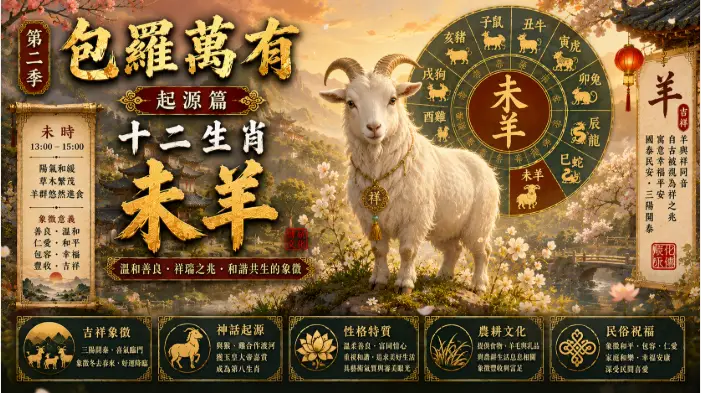
未羊是十二生肖中的第八位,在中國文化裡象徵溫柔、善良與祥和。相比龍虎等充滿威勢的生肖,羊的形象更偏向平靜與親切,因此自古深受人們喜愛。在古代農耕社會中,羊不但提供肉食、羊毛與乳品,也與祭祀文化有密切關係,因此逐漸成為豐收、富足與吉祥的重要象徵。關於生肖羊的起源,民間同樣流傳玉皇大帝舉辦生肖競賽的故事。傳說中,羊與猴、雞互相合作渡河,最終共同完成競賽。玉皇大帝欣賞羊的善良與團結精神,因此讓羊成為第八位生肖。這個故事讓未羊不只是溫順動物,更成為仁愛與合作精神的重要代表。在中國古代文化中,「羊」與「祥」同音,因此羊一直被視為吉祥象徵。古代器物、玉雕與建築裝飾中經常出現羊圖騰,代表幸福與平安。尤其「三陽開泰」更是中國最著名的吉祥寓意之一,象徵冬去春來、萬象更新與好運降臨。這種文化聯想,讓羊在華人世界中長期擁有正面而溫暖的形象。十二地支中的「未」,對應下午一時至三時。古人認為這段時間草木旺盛,而羊亦喜歡在午後悠閒進食,因此將羊與未時結合。未時同時象徵陽氣逐漸平穩,代表成熟與和諧,因此未羊亦帶有安定、包容與和平的文化含義。這種安排反映古代中國人對自然節奏與生命循環的觀察智慧。隨着生肖文化發展,未羊逐漸形成鮮明性格象徵。民間普遍認為屬羊的人溫柔體貼、富有同情心,而且重視感情與人際關係。他們通常具有藝術氣質與良好審美,同時不喜衝突,傾向追求和平與穩定生活。雖然有時顯得過於敏感或優柔寡斷,但也因此更容易理解別人情感。這些生肖性格觀念雖然源自民俗文化,但多年來已深深融入華人社會。羊在中國藝術與宗教文化中的地位亦相當重要。古代青銅器中常見羊形紋飾,而在佛教文化裡,羊亦象徵慈悲與忍耐。部分少數民族更將羊視為神聖動物,認為牠代表生命與自然祝福。在中國傳統繪畫中,牧羊與山野景象常用來表達田園寧靜與與世無爭的理想生活。除了中國之外,羊文化在蒙古、中亞與中東地區亦十分重要。每逢羊年,各地都會推出大量與羊相關的新年裝飾、藝術設計與賀年商品,象徵平安、幸福與家庭和樂。今天的未羊,早已超越生肖動物本身。牠代表人類對和平、善良與安穩生活的追求,也象徵東方文化中重視仁愛與包容的精神。從古代農村文明到現代流行文化,羊依然是華人世界中最溫暖而富有親和力的傳統象徵之一。
English Version
The Goat is the eighth animal in the Chinese Zodiac and has long symbolized peace, kindness, compassion, and harmony in Chinese culture. Compared to powerful zodiac creatures such as the Dragon or Tiger, the Goat represents gentleness and emotional warmth, making it one of the most comforting and beloved symbols in traditional folklore. In ancient agricultural societies, goats provided milk, wool, and food, while also playing important roles in rituals and seasonal ceremonies. Over time, the Goat became closely associated with prosperity, blessing, and peaceful living. According to the traditional zodiac legend, the Jade Emperor organized a race to determine the order of the zodiac animals. In some versions of the story, the Goat worked together with the Monkey and the Rooster to cross a river and reach the finish line. Impressed by the Goat’s kindness, teamwork, and cooperative spirit, the Jade Emperor rewarded it with the eighth position in the zodiac cycle. This legend transformed the Goat into a symbol not only of gentleness, but also of unity and generosity. In Chinese culture, the word for “goat” or “sheep” shares a similar pronunciation with the word meaning “good fortune” or “auspiciousness.” Because of this linguistic connection, goat imagery became strongly linked to blessings and prosperity. Ancient jade carvings, bronze decorations, and traditional architecture frequently featured goat motifs as symbols of happiness and peace. One of the most famous Chinese expressions, “Three Yang Bring Prosperity,” uses goat symbolism to represent the arrival of spring, positive energy, and good fortune after winter. Within the traditional Earthly Branch system, the Goat corresponds to the branch “Wei,” representing the hours between 1 p.m. and 3 p.m. Ancient observers noticed that goats often grazed calmly during the warm afternoon hours, making this period naturally associated with the animal. Philosophically, this time of day also symbolized balance, maturity, and harmony, reinforcing the Goat’s connection to peace and stability. This symbolic pairing reflects how Chinese civilization blended natural observation with philosophical meaning and daily life. Over centuries, the Goat also developed distinct personality symbolism within zodiac traditions. People born in the Year of the Goat are commonly believed to be compassionate, artistic, thoughtful, gentle, and emotionally sensitive. They are often admired for their creativity, kindness, and ability to maintain harmony in relationships. While Goat personalities may sometimes appear indecisive or overly emotional, they are generally valued for their empathy and peaceful nature. Though these beliefs belong to traditional folklore rather than science, they remain influential across many Chinese communities today. The Goat also occupies an important place in Chinese art, religion, and cultural symbolism. Ancient bronze vessels frequently displayed goat imagery, while Buddhist traditions sometimes associated goats with patience, humility, and compassion. In several ethnic minority cultures, goats were even viewed as sacred animals connected to nature and spiritual blessings. Classical Chinese paintings often portrayed goats wandering through mountain landscapes to symbolize tranquility, simplicity, and harmony with the natural world. Beyond China, goat symbolism also spread throughout Mongolia, Central Asia, and parts of the Middle East, where goats played essential roles in nomadic and agricultural life. During the Year of the Goat, communities celebrate with goat-themed decorations, artistic designs, and cultural events representing peace, family happiness, and prosperity. Today, the Goat represents far more than a zodiac animal. It embodies humanity’s desire for kindness, emotional warmth, and harmonious living. From ancient rural civilizations to modern popular culture, the Goat remains one of the most gentle and beloved symbols in Chinese tradition.