
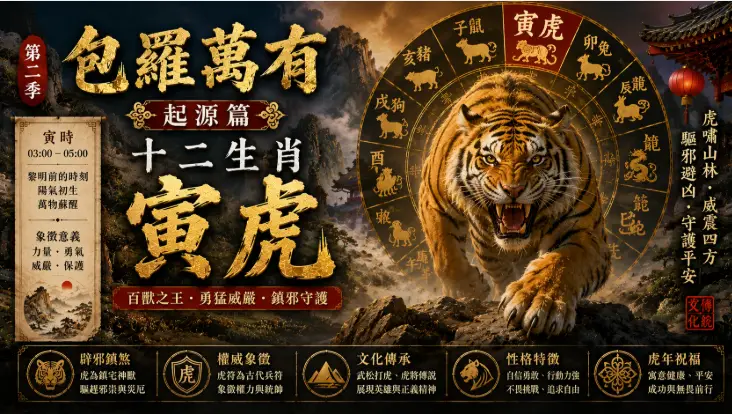
包羅萬有 第二季 起源篇|十二生肖 寅虎的傳說與王者象徵 | Origins Series Season 2 | The Tiger in the Chinese Zodiac and Its Symbol of Power
寅虎在十二生肖中象徵勇氣、力量與王者氣勢。自古以來,老虎不只是猛獸,更是中國文化中鎮邪避凶的重要神獸,承載人們對力量與守護的想像。
The Tiger stands as a symbol of courage, strength, and authority in the Chinese Zodiac. Revered for centuries as both a feared predator and a spiritual guardian, the Tiger occupies a powerful place in Chinese mythology and cultural tradition.
中文
寅虎是十二生肖中的第三位,在中國文化裡擁有極高地位。老虎自古被稱為「百獸之王」,不但象徵力量與威嚴,也代表勇敢與守護。在古代社會,人們對老虎既敬畏又崇拜,因為牠既是山林中的頂級掠食者,也被認為具有驅邪鎮煞的神秘力量。關於生肖虎的起源,民間流傳玉皇大帝舉辦生肖競賽的故事。相傳老虎憑藉強大體力與驚人氣勢,在競賽中成功奪得前列位置,因此成為十二生肖中的第三位。雖然老虎兇猛,但故事中也強調牠保護弱小與擊退妖邪的能力,因此讓寅虎逐漸成為正義與勇氣的象徵。在中國古代神話與民間信仰裡,老虎經常與辟邪文化有關。古人相信虎能驅趕鬼魅與災禍,因此不少地方會在孩童鞋帽繡上虎頭圖案,希望保護孩子平安成長。農村地區亦流行張貼虎畫、雕刻石虎或擺放虎符,用以鎮宅避邪。甚至在古代軍事文化中,虎符也是調動軍隊的重要信物,象徵權力與統帥地位。十二地支中的「寅」對應凌晨三時至五時,這段時間被認為是黑夜逐漸退去、陽氣開始增長的時刻。古人觀察到老虎常在黎明前後出沒,因此將老虎與寅時配對。這種安排不只是時間紀錄方式,也反映中國古代對自然生態與生命循環的理解。隨着生肖文化流傳,寅虎逐漸擁有鮮明性格象徵。民間普遍認為屬虎的人勇敢、自信、充滿領導能力,而且具有冒險精神與行動力。他們通常不怕挑戰,喜歡追求突破與自由,但有時也容易衝動與固執。這些生肖性格觀念雖然屬於傳統民俗,但多年來已深深影響華人社會的人際與文化觀念。老虎在中國藝術與文學中的形象亦極為豐富。歷代畫家常以猛虎下山、虎嘯山林等畫作展現氣勢與生命力。在道教文化裡,白虎更是四象神獸之一,代表西方與秋季,具有守護與戰鬥力量。民間故事中的武松打虎、虎將傳說與山林英雄形象,也進一步強化老虎在華人文化中的英雄地位。除了中國以外,生肖虎文化亦影響東亞與東南亞地區。在韓國、日本與越南文化中,老虎同樣被視為力量與守護象徵。每逢虎年,各地都會推出大量與老虎相關的新年裝飾、藝術作品與節慶活動,讓生肖虎成為極受歡迎的文化主題。今天的寅虎,早已超越單純生肖動物的身份。牠代表人類對力量、勇氣與正義的想像,也象徵對未知世界的敬畏。從古代山林圖騰到現代流行文化,老虎依然是華人世界最具魅力與震撼力的傳統象徵之一。
English Version
The Tiger is the third animal in the Chinese Zodiac and has long been regarded as one of the most powerful symbols in Chinese culture. Known as the “King of Beasts,” the Tiger represents strength, bravery, authority, and protection. Throughout history, people both feared and admired this magnificent predator, believing it possessed supernatural abilities capable of driving away evil spirits and guarding against danger. According to the traditional zodiac legend, the Jade Emperor organized a race to determine the order of the zodiac animals. The Tiger, relying on its immense strength and fearless determination, overcame dangerous rivers and rough terrain to secure third place in the competition. While fierce and intimidating, the Tiger was also respected for defending weaker creatures and fighting harmful forces, helping it become a symbol of justice and courage in Chinese folklore. In ancient Chinese beliefs, Tigers were strongly associated with spiritual protection. Parents often dressed children in tiger-head shoes or hats embroidered with tiger faces, believing these designs would scare away evil and keep children safe. Rural communities frequently displayed tiger paintings, stone carvings, and symbolic tiger figures around homes to ward off misfortune. In military history, tiger-shaped command tokens known as tiger tallies symbolized imperial authority and were used to mobilize armies, further strengthening the Tiger’s connection to power and leadership. Within the traditional Chinese Earthly Branch system, the Tiger corresponds to the branch “Yin,” representing the hours between 3 a.m. and 5 a.m. Ancient observers noticed that Tigers often hunted during the final hours of darkness before dawn. As a result, the Tiger became linked to the moment when night slowly gives way to daylight, symbolizing rising energy, awakening life, and dynamic strength. This pairing demonstrates how Chinese culture connected animals, natural rhythms, and philosophical concepts into a unified symbolic system. Over time, the Tiger also developed strong personality associations within zodiac traditions. People born in the Year of the Tiger are commonly believed to be confident, courageous, energetic, independent, and natural leaders. They are often admired for their determination and willingness to take risks, although they may also be seen as impulsive or stubborn. While zodiac personality interpretations are rooted in folklore rather than science, they continue to shape cultural identity and social traditions across many Chinese communities today. The image of the Tiger occupies a prominent place in Chinese art, literature, and religion. Classical paintings frequently depict roaring Tigers descending mountains to symbolize vitality and unstoppable power. In Taoist tradition, the White Tiger is one of the Four Sacred Beasts, representing the west, autumn, and martial strength. Legendary stories such as “Wu Song Slays the Tiger” further reinforced the Tiger’s image as a symbol of heroism and fearlessness. Beyond China, the Tiger also holds cultural importance throughout East and Southeast Asia, including Korea, Japan, and Vietnam. During the Year of the Tiger, festive decorations, cultural events, artwork, and modern media often celebrate the animal’s powerful symbolism. Today, the Tiger remains far more than a zodiac creature. It stands as a timeless representation of courage, protection, authority, and humanity’s fascination with the untamed forces of nature. From ancient mythology to modern popular culture, the Tiger continues to command admiration as one of the most iconic symbols in Chinese civilization.