
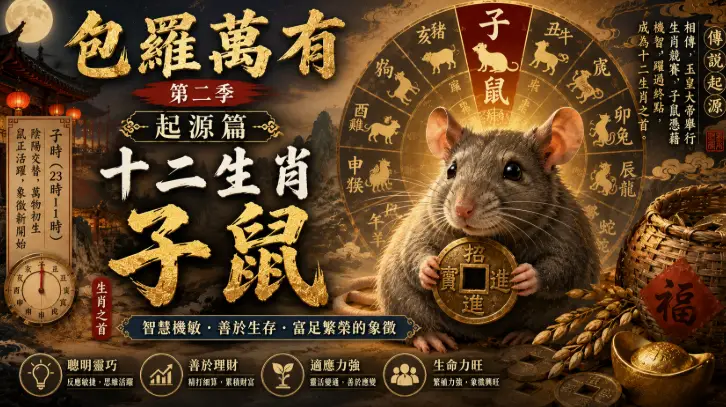
包羅萬有 第二季 起源篇|十二生肖 子鼠的傳說與文化象徵 | Origins Series Season 2 | The Rat in the Chinese Zodiac and Its Ancient Symbolism
子鼠作為十二生肖之首,自古充滿神秘色彩。牠象徵智慧、機敏與生存能力,也反映古人對自然與生命循環的理解。從民間傳說到生肖文化,子鼠一直擁有特殊地位。
As the first animal of the Chinese Zodiac, the Rat carries deep symbolic meaning in Chinese culture. Associated with intelligence, adaptability, and survival, the Rat reflects ancient beliefs about nature, fortune, and the rhythm of life across generations.
中文
子鼠是十二生肖中的第一位,在中國傳統文化中擁有極為特殊的地位。根據民間傳說,玉皇大帝舉行生肖競賽時,老鼠憑藉機智與靈活,成功奪得第一名。故事中,老鼠原本與牛一同行動,在接近終點時突然跳到牛頭前方,因此成為十二生肖之首。這個故事流傳千百年,不但成為中國最著名的生肖神話之一,也讓老鼠在文化上被賦予智慧、反應敏捷與善於生存的象徵意義。雖然老鼠在現代社會經常被視為害獸,但在古代農耕社會中,人們對老鼠其實抱有複雜觀感。一方面,老鼠會偷食糧食;另一方面,牠們繁殖力強、適應能力高,代表生命力旺盛與繁榮。因此古人常把老鼠視為財富與生育能力的象徵。部分地方民俗甚至認為家中出現老鼠,代表糧倉充足與家庭興旺。在中國古代曆法中,「子」是十二地支之首,同時對應一天之中的子時,也就是晚上十一時至凌晨一時。古人認為這段時間陰陽交替、萬物開始轉變,而老鼠正好在深夜最為活躍,因此將鼠與子時配對。這種結合不只是時間記錄方法,更反映古代中國人對自然規律與宇宙循環的觀察。生肖鼠後來逐漸發展出豐富文化意義。在民間性格觀念裡,屬鼠的人通常被認為聰明靈巧、適應力強、善於理財,也具有敏銳觀察力。雖然這些說法並沒有科學根據,但多年來已深深融入華人文化之中。不少人會透過生肖分析個性、婚姻與運勢,而生肖鼠也常被形容為具領導能力與創意的人。除了命理文化外,子鼠亦經常出現在中國藝術與文學之中。在剪紙、年畫、石雕與民間工藝裡,老鼠形象經常與金錢、花生、葡萄或穀物一同出現,象徵多子多福與富足豐收。部分地區亦流傳「鼠嫁女」故事,描繪老鼠世界中的婚嫁儀式,反映古代民間社會對動物擬人化的想像。隨着生肖文化流傳海外,子鼠形象亦逐漸成為國際認識中國文化的重要符號之一。尤其在農曆鼠年期間,各地都會推出大量與老鼠相關的節慶裝飾、動畫角色與文創商品。由古代農村到現代城市,生肖鼠一直維持其獨特文化魅力。今天的子鼠,早已不只是傳統曆法中的動物符號,更是一種跨越歷史與地域的文化象徵。牠代表的不只是聰明與生存能力,也承載了中國古代神話、民間信仰與時間哲學。即使經過數千年演變,子鼠依然穩坐十二生肖之首,成為華人文化中最深入人心的經典形象之一。
English Version
The Rat holds the first position in the Chinese Zodiac and remains one of the most symbolic animals in traditional Chinese culture. According to one of the most famous legends in Chinese mythology, the Jade Emperor organized a great race to determine the order of the zodiac animals. The clever Rat travelled alongside the hardworking Ox and, just before reaching the finish line, leapt ahead to claim first place. This story transformed the Rat into a lasting symbol of intelligence, quick thinking, adaptability, and survival. Although rats are often viewed negatively in modern cities, ancient agricultural societies had a far more complicated relationship with them. Rats could damage grain supplies, yet their remarkable ability to survive and reproduce also made them symbols of fertility, prosperity, and abundance. In some traditional beliefs, the presence of rats near granaries suggested that food supplies were plentiful enough to attract them, indirectly representing wealth and success. Within the traditional Chinese system of Earthly Branches, the Rat corresponds to the branch “Zi,” the first position in the twelve-part cycle. Zi also represents the midnight period between 11 p.m. and 1 a.m., a moment believed by ancient philosophers to mark the transition between darkness and the rebirth of energy. Since rats are most active during these quiet nighttime hours, they became naturally associated with this important time period. This connection reflects the ancient Chinese understanding of cosmic balance, natural rhythms, and the cycle of life. Over centuries, the Rat developed rich symbolic meaning within folk traditions and personality beliefs. People born in the Year of the Rat are often described as clever, resourceful, observant, adaptable, and financially wise. While these personality traits belong more to cultural tradition than science, zodiac interpretations remain deeply influential in many Chinese communities today. The Rat is also strongly connected to creativity and leadership in popular zodiac culture. Beyond astrology and fortune-telling, the Rat frequently appears in Chinese art and folklore. Traditional paper cuttings, New Year paintings, sculptures, and decorative crafts often depict rats surrounded by grapes, grains, peanuts, or coins to symbolize fertility, prosperity, and family blessings. Folk stories such as “The Rat’s Wedding” portray rats living in human-like societies with marriage ceremonies and celebrations, reflecting the imaginative storytelling traditions of rural China. As Chinese communities spread around the world, the image of the Rat became one of the most internationally recognized symbols of Chinese heritage. During Lunar New Year celebrations associated with the Year of the Rat, decorations, toys, animation characters, and festive designs inspired by the zodiac animal appear across Asia and beyond. From ancient villages to modern global cities, the Rat continues to evolve while preserving its traditional cultural meaning. Today, the Rat represents far more than the beginning of a calendar cycle. It stands as a symbol of intelligence, resilience, adaptability, and cultural continuity. Through mythology, philosophy, art, and folklore, the Rat has maintained its powerful place at the head of the Chinese Zodiac for thousands of years, remaining one of the most enduring icons in Chinese civilization.