包羅萬有 第二季 起源篇|十二生肖 午馬的自由精神與歷史象徵 | Origins Series Season 2 | The Horse in the Chinese Zodiac and the Spirit of Freedom
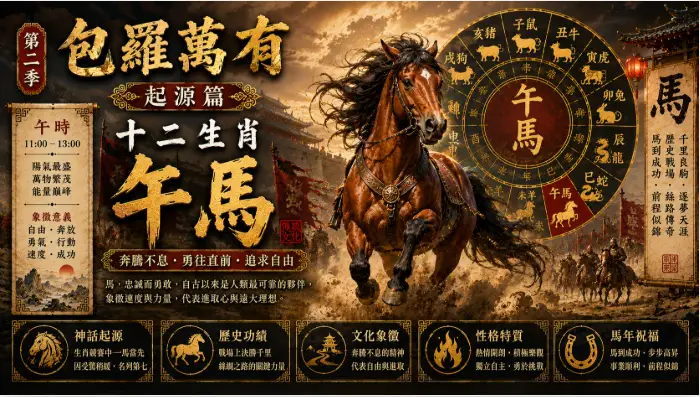
午馬在十二生肖中象徵自由、速度與勇氣。從古代戰場到絲綢之路,馬一直是中國歷史與文明發展的重要力量,也代表人類對遠方與理想的追求。
The Horse symbolizes freedom, speed, and courage in the Chinese Zodiac. From ancient battlefields to legendary trade routes, the Horse has played a vital role in Chinese history while representing humanity’s desire for adventure and progress.
中文版本
午馬是十二生肖中的第七位,在中國文化中象徵奔放、力量與自由精神。自古以來,馬一直是人類最重要的伙伴之一,不論交通、戰爭、農業還是商業交流,都離不開馬匹的協助。在中國歷史長河中,馬不只是動物,更是推動文明發展的重要力量,因此午馬逐漸成為勇氣、速度與進取精神的重要象徵。關於生肖馬的起源,民間流傳玉皇大帝舉辦生肖競賽的故事。傳說中,馬原本一路領先,展現驚人速度與力量,但在最後階段被蛇突然驚嚇,因而稍微停頓,最終成為第七位生肖。雖然未能奪得前列位置,但馬勇往直前、充滿活力的形象,依然深受人們喜愛,也讓午馬成為自由與行動力的代表。在中國古代社會,馬的重要性極高。尤其在戰爭年代,戰馬往往決定軍隊移動速度與戰場勝負,因此歷代王朝都極重視養馬與騎兵發展。漢朝時期著名的汗血寶馬,更被視為稀世神駒,象徵力量與榮耀。除了軍事用途外,馬也是絲綢之路的重要交通工具,協助中國與中亞、西域甚至歐洲之間進行貿易與文化交流。可以說,馬不但改變了交通方式,也推動了文明之間的連結。十二地支中的「午」,對應中午十一時至下午一時。古人認為這段時間陽氣最盛,而馬性格熱烈奔放,因此與午時形成呼應。午時同時代表能量與活力達到高峰,因此午馬也象徵生命力、熱情與不斷前進的精神。這種安排反映古代中國人將自然節奏、時間哲學與動物特性融合的文化智慧。隨着生肖文化流傳,午馬逐漸形成鮮明性格象徵。民間普遍認為屬馬的人熱情開朗、喜愛自由,而且擁有行動力與冒險精神。他們通常不喜歡受到束縛,渴望探索新事物,因此容易給人積極進取的印象。雖然有時顯得急躁或缺乏耐性,但也因此充滿衝勁與創造力。這些生肖性格觀念雖然屬於傳統民俗,但多年來已深深影響華人社會。馬在中國藝術與文化中的地位亦十分重要。歷代畫家尤其喜歡描繪駿馬奔騰場景,其中唐代韓幹與近代徐悲鴻的馬畫最具代表性。奔馬不但展現力量與速度,也象徵民族精神與不屈意志。在中國成語與文學裡,亦有大量與馬相關的詞語,例如「馬到成功」、「龍馬精神」與「一馬當先」,都帶有積極與成功寓意。除了中國以外,馬文化亦廣泛影響蒙古、中亞、日本與韓國等地。每逢馬年,各地都會推出大量與馬相關的新年裝飾、藝術創作與文化活動,象徵成功、進步與好運。今天的午馬,早已超越生肖動物本身。牠代表人類對速度、夢想與自由世界的追求,也象徵勇往直前、不斷突破的精神。從古代草原文明到現代流行文化,馬依然是華人世界中最充滿生命力與動感的傳統象徵之一。
English Version
The Horse is the seventh animal in the Chinese Zodiac and has long symbolized freedom, energy, courage, and ambition in Chinese culture. Throughout history, horses played an essential role in transportation, warfare, exploration, agriculture, and trade. More than simple working animals, horses became powerful symbols of movement, progress, and the unstoppable drive of civilization itself. As a result, the Horse earned a respected place in both Chinese mythology and cultural tradition. According to the traditional zodiac legend, the Jade Emperor organized a great race to determine the order of the zodiac animals. The Horse raced forward with incredible speed and confidence and appeared likely to finish near the front. However, just before crossing the finish line, the Snake suddenly emerged and startled the Horse, causing it to hesitate briefly. This allowed the Snake to take sixth place while the Horse became the seventh zodiac sign. Even so, the Horse’s fearless energy and determination remained central to its symbolic meaning, reinforcing its association with passion, adventure, and perseverance. In ancient Chinese society, horses held enormous practical and political importance. During periods of warfare, strong cavalry forces could determine the success or failure of entire dynasties. Emperors invested heavily in breeding and training horses, and legendary steeds such as the “Heavenly Horses” of the Han Dynasty became symbols of military power and imperial prestige. Horses also played a major role along the Silk Road, carrying goods, travelers, and ideas across Asia and beyond. Through these vast trade networks, horses helped connect China with Central Asia, the Middle East, and Europe, shaping global cultural exchange. Within the traditional Earthly Branch system, the Horse corresponds to the branch “Wu,” representing the hours between 11 a.m. and 1 p.m. Ancient Chinese philosophy considered this the peak of yang energy, when sunlight and vitality reached their strongest point. Because horses are naturally energetic and spirited creatures, they became closely associated with this powerful moment of the day. This symbolic connection reflects how Chinese culture linked animals, natural cycles, and philosophical concepts into a unified understanding of life and time. Over centuries, the Horse also developed strong personality symbolism within zodiac traditions. People born in the Year of the Horse are commonly believed to be energetic, independent, adventurous, and optimistic. They are often described as passionate individuals who dislike restrictions and enjoy pursuing new opportunities. Horse personalities are admired for their enthusiasm, courage, and charisma, although they may sometimes appear impatient or restless. While zodiac personality theories belong to folklore rather than science, they remain deeply influential across many Chinese communities today. Horses occupy an important place in Chinese art, literature, and cultural imagination. Classical painters frequently portrayed galloping horses to symbolize power, momentum, and heroic spirit. Famous artists such as Han Gan of the Tang Dynasty and Xu Beihong in modern China created iconic horse paintings admired throughout the world. Horses also appear in numerous Chinese idioms and proverbs, including phrases meaning “instant success” and “spirited vitality,” further reinforcing their association with achievement and determination. Beyond China, horse culture spread across Mongolia, Central Asia, Korea, and Japan, where horses also became symbols of strength and mobility. During the Year of the Horse, communities around the world celebrate with horse-themed decorations, artwork, performances, and cultural events representing prosperity, speed, and progress. Today, the Horse represents far more than a zodiac animal. It embodies humanity’s desire for freedom, exploration, ambition, and forward movement. From ancient nomadic civilizations to modern popular culture, the Horse continues to inspire admiration as one of the most dynamic and energetic symbols in Chinese civilization.