
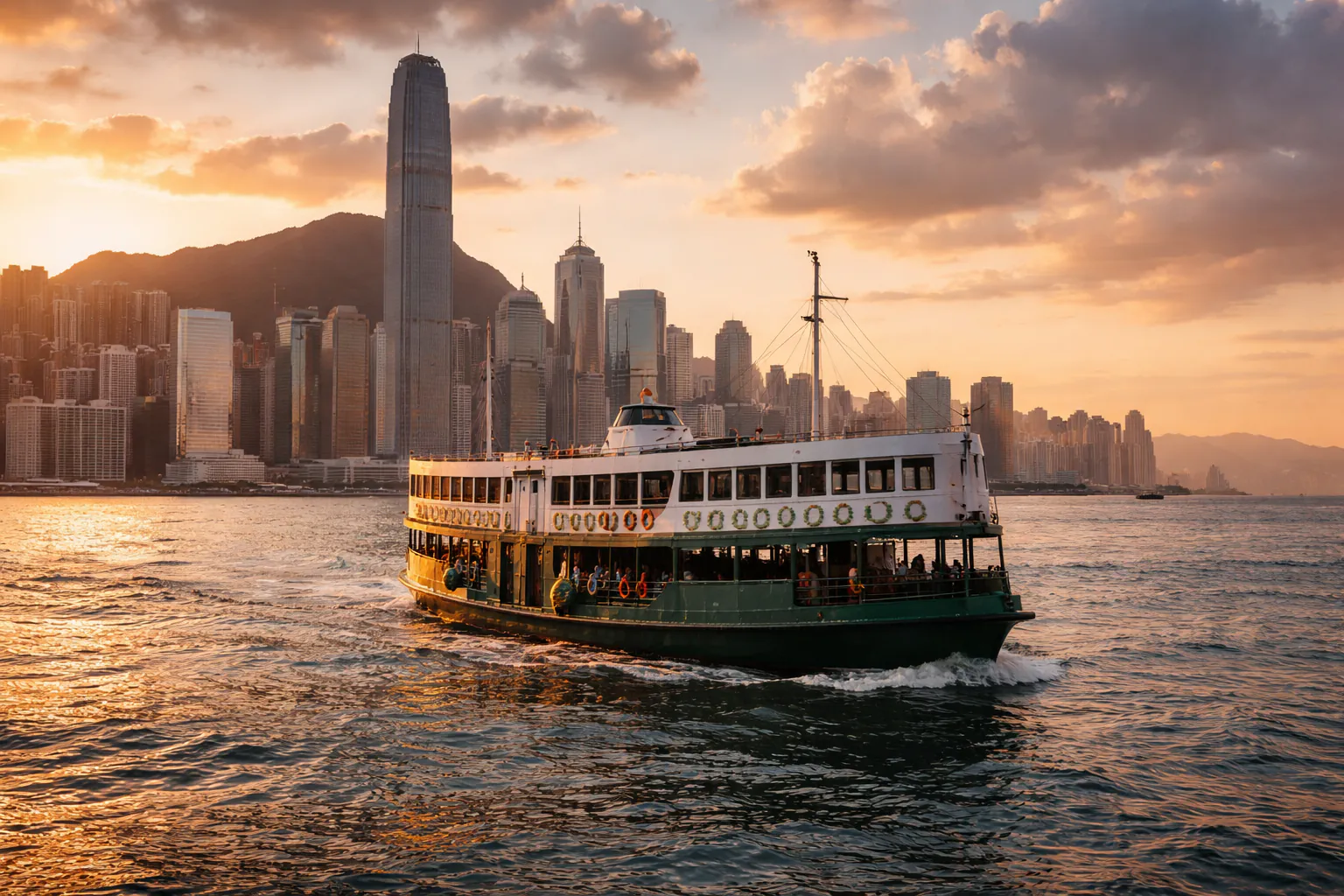
天星小輪的渡海歲月:維港上那段屬於香港人的航程 | Star Ferry Across Victoria Harbour: A Timeless Journey Through Hong Kong | 今日回望 | 第十八章
在香港這座被海港分隔的城市裡,渡海曾經是日常生活的一部分。
在海底隧道與地鐵尚未普及的年代,許多人每天都需要乘船往返港島與九龍。
For generations, the Star Ferry has carried people across Victoria Harbour, connecting not only two shores but also moments in time. More than transportation, it is a quiet ritual woven into daily life. As the city evolves, this simple crossing continues to preserve a sense of continuity, offering a rare pause within Hong Kong’s fast-moving rhythm.
而在這段歷史之中,有一種交通工具陪伴了幾代香港人。
那就是天星小輪。
對很多香港人來說,第一次真正感受到維多利亞港的廣闊,往往是在天星小輪上。當渡輪離開碼頭,船身慢慢駛入海面,城市的景色也隨之展開。
海風迎面而來,兩岸的高樓逐漸後退。
這段短短的航程,成為許多人日常生活的一部分。
天星小輪的歷史可以追溯到十九世紀末。當時香港的城市發展逐漸集中在維多利亞港兩岸,但交通方式仍然有限。為了方便市民往來,渡輪服務逐漸建立。
隨著時間推移,渡輪路線與船隻數量不斷增加。
其中最著名的航線,就是往返尖沙咀與中環的渡海航線。
每天清晨,當城市開始忙碌時,渡輪碼頭也逐漸熱鬧起來。
乘客從不同方向走到碼頭,排隊等待登船。當閘門打開,人群有序地走上渡輪,尋找座位。
船上分為不同座位區域,有室內座位,也有露天位置。
很多人喜歡坐在上層的露天位置。
因為在那裡,可以清楚看到維港兩岸的景色。海面上的船隻、遠處的建築、還有天空的顏色,都構成一幅動態的城市畫面。
當渡輪緩緩前進,港島與九龍的天際線在視野中慢慢移動。
對於每天乘船上下班的人來說,這段航程可能只是例行公事。但對很多第一次乘坐渡輪的人而言,這是一種特別的體驗。
海風吹動頭髮,海浪拍打船身。
城市的聲音在遠處逐漸變得柔和。
在過去的年代,天星小輪不只是交通工具,也是香港城市生活的重要部分。
許多上班族每天都乘坐渡輪通勤。學生也會利用渡輪往返學校與家。
碼頭附近的街道因此變得非常繁忙。
餐廳、報紙檔與小商店集中在碼頭周圍,形成熱鬧的城市空間。
天星小輪同時也見證了香港的變化。
隨著城市發展,海底隧道與地鐵相繼開通,渡海方式逐漸增加。許多乘客開始轉用更快速的交通工具。
然而,即使交通方式變得多樣,天星小輪仍然繼續運行。
對許多人而言,乘坐渡輪已經不只是為了交通。
它更像是一種城市體驗。
在短短幾分鐘的航程裡,人們可以看到維多利亞港最真實的景色。白天時,陽光照射在海面上;夜晚時,兩岸的燈光倒映在水中。
這些畫面成為香港最具代表性的景觀之一。
不少電影與照片都曾經記錄下這些時刻。
在某些傍晚時分,天空呈現淡淡的橙色,渡輪在海面上前進,城市輪廓逐漸被燈光點亮。
這種景象,讓人很容易記住香港。
對很多本地居民而言,天星小輪也承載著個人回憶。
有人記得學生時代每天乘船上學的日子,有人記得與朋友在渡輪甲板上聊天的時光,也有人記得第一次帶家人乘船看夜景。
這些片段,讓渡輪成為生活故事的一部分。
今天的香港已經擁有完善的交通系統,地鐵與巴士可以迅速連接城市不同角落。
但在維多利亞港上,天星小輪仍然每天來回航行。
當渡輪的引擎聲響起,船隻慢慢離開碼頭時,時間似乎也變得稍微慢了一點。
在這段短短的渡海航程裡,人們可以暫時離開繁忙的街道。
看著海面與城市,感受香港最原本的樣子。
那是一段屬於維港的航程。
也是香港歷史中最溫柔的一段交通記憶。
English Version
There are few experiences in Hong Kong as enduring and quietly poetic as crossing Victoria Harbour on the Star Ferry. For over a century, this modest vessel has connected Hong Kong Island and Kowloon, carrying passengers through one of the world’s most iconic waterways. Unlike the city’s towering skyline and constant motion, the ferry offers something different—a moment of stillness within movement, a brief journey that feels both ordinary and deeply meaningful. It is not merely a means of transportation, but a ritual that has accompanied the daily lives of countless residents. The journey itself is simple, almost understated. As the ferry departs from the pier, the gentle hum of the engine blends with the sound of water against the hull. The city begins to unfold in a panoramic view, with skyscrapers rising on either side of the harbour. The shifting light—whether under the brightness of midday or the glow of evening—transforms the scene into something ever-changing yet familiar. Passengers often find themselves drawn to the open deck, where the wind carries a sense of freedom rarely found within the dense urban environment. In those few minutes, the city feels expansive, and time seems to slow. Historically, the Star Ferry has played a vital role in Hong Kong’s development. Before the construction of cross-harbour tunnels and the expansion of the MTR, it was one of the primary means of crossing between the island and the mainland. Workers, students, and families relied on it daily, making it an essential part of the city’s infrastructure. Over time, it became more than a practical necessity—it evolved into a shared experience, a common thread that connected different walks of life. Despite the rapid modernization of Hong Kong, the Star Ferry has retained much of its original character. The design of the vessels, with their green-and-white exterior and wooden seating, reflects a continuity that is increasingly rare. In a city defined by constant change, this consistency offers a sense of grounding. It is a reminder that not all progress requires replacement; sometimes, preservation carries its own value. The ferry stands as a living piece of history, quietly resisting the pressures of uniformity and speed. The cultural significance of the Star Ferry extends beyond its function. It has been featured in films, photographs, and literature, symbolizing the essence of Hong Kong itself. For visitors, it provides an accessible way to experience the city’s beauty from a unique perspective. For locals, it represents familiarity and memory—a connection to routines that may have changed but are not forgotten. The act of boarding the ferry, finding a seat, and watching the city glide by becomes a form of reflection, a pause that contrasts with the urgency of urban life. Yet, like many traditional elements, the Star Ferry faces challenges in a changing world. Faster and more efficient modes of transport have reduced its necessity, and economic pressures continue to shape its future. What remains, however, is its enduring appeal. People continue to choose the ferry not because it is the quickest option, but because it offers something intangible—an experience that cannot be replicated by tunnels or trains. It is a reminder that value is not always measured in speed or efficiency, but in the quality of the journey itself. The crossing of Victoria Harbour on the Star Ferry is ultimately a passage through both space and time. It connects past and present, routine and reflection, movement and stillness. As the city continues to evolve, this simple journey endures as a symbol of continuity, carrying with it the quiet stories of those who have made the crossing before. It is a testament to the idea that even in the most dynamic cities, there are moments that remain unchanged, offering a sense of balance and perspective.