
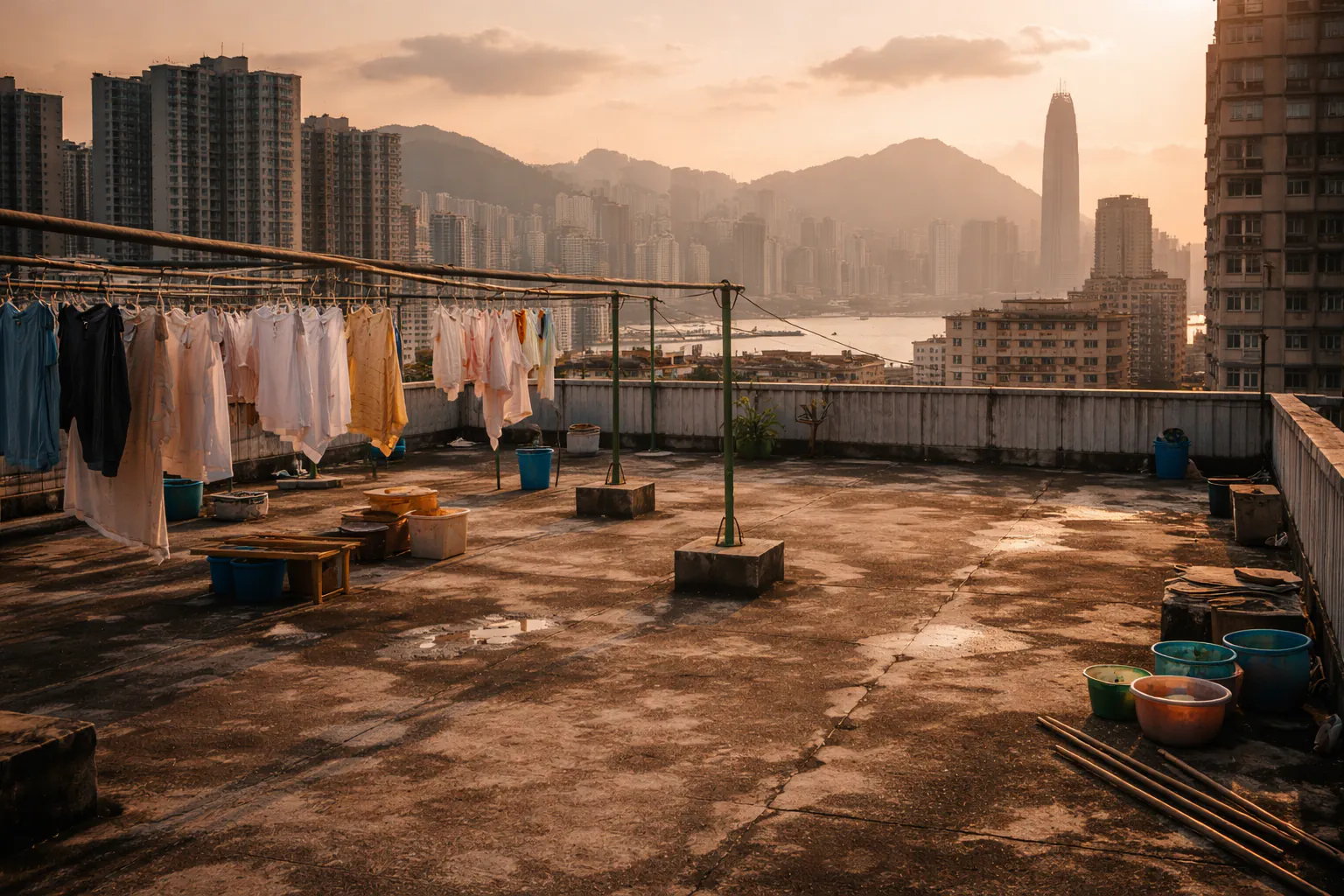
屋邨天台的童年:那些在城市高處度過的香港成長歲月 | Childhood on Hong Kong Rooftops: Estate Skies and the Memory of Growing Up | 今日回望 | 第十三章
在香港這個高樓林立的城市裡,很多人的童年其實是在樓宇之間度過的。
對於在公共屋邨長大的一代人來說,有一個地方曾經承載著許多回憶,那就是屋邨的天台。
Above the dense streets of Hong Kong, estate rooftops once became quiet playgrounds for a generation. These open spaces offered children room to run, imagine, and grow, far from the crowded ground below. In their simplicity, they held laughter, freedom, and moments of childhood that continue to live on in memory.
在今天的香港,很多住宅天台已經不再對居民開放。但在過去的年代,屋邨天台是一個十分普通的生活空間。它沒有豪華設施,也沒有精心設計的花園,只是一片簡單的空地。
然而,就是這樣一個地方,卻成為不少孩子成長的重要場景。
在早期的公共屋邨設計中,天台往往是居民可以使用的地方。有些天台設有晾衣架,有些則完全開放。居民會把衣服拿到天台晾曬,讓海風和陽光自然乾燥。
在天台上,總能看到一排排晾著的衣服。
白色的校服、彩色的毛巾、還有各種床單,在風中輕輕擺動。這些畫面,在許多老屋邨裡都十分常見。
對大人來說,天台是一個曬衣服的地方。但對小朋友而言,天台卻像是一個巨大的遊樂場。
放學之後,很多孩子會跑到天台玩耍。
有人在空地上踢波,有人玩捉迷藏,有人騎著小單車在地面繞圈。有時候,一整群孩子在天台奔跑,笑聲在樓宇之間回蕩。
在那個沒有智能手機與電子遊戲的年代,這些簡單的活動就已經足夠快樂。
屋邨天台同時也是觀察城市的一個特別位置。
站在天台邊緣,可以看到遠處的海、山和城市景色。傍晚時分,天空的顏色逐漸改變,陽光慢慢落下。
對很多孩子而言,這些景色成為童年記憶的一部分。
在某些節日裡,天台更是一個特別的地方。
例如農曆新年期間,很多家庭會到天台看煙花。雖然距離維多利亞港不一定很近,但從高處觀看煙花,仍然令人興奮。
孩子們會在天台上指著遠處的煙花,分享這短暫的熱鬧時刻。
在夏天的夜晚,天台也常常變得熱鬧。
有些居民會把椅子搬到天台乘涼。晚風從海邊吹來,帶走白天的悶熱。街坊之間聊天,小朋友在旁邊跑來跑去。
這樣的畫面,在很多舊屋邨裡都曾經出現。
屋邨天台不只是空間,它也反映了當時的生活方式。
在過去的香港,住宅面積普遍不大。很多家庭的居住空間有限,因此天台成為一個延伸的公共空間。
居民可以在那裡活動、交流,甚至只是靜靜地坐著。
這種共享空間,讓社區關係變得更加緊密。
鄰居之間更容易認識彼此,孩子們也更容易交朋友。
然而,隨著時間推移,屋邨的管理方式逐漸改變。
出於安全考慮,很多天台開始限制居民進入。有些地方加裝圍欄,有些則完全關閉。
城市更新與建築設計的改變,也讓天台逐漸失去原本的功能。
新的住宅大樓往往有不同形式的公共設施,例如會所、花園或遊樂場,但那種簡單開放的天台空間卻變得越來越少。
對於在舊屋邨長大的一代人來說,這樣的改變帶來一些感慨。
因為很多童年的回憶,其實都與那些天台有關。
有人記得第一次學會騎單車是在天台,有人記得與朋友一起追逐玩耍,也有人記得在夏天夜晚躺在地上看天空。
這些畫面看似平凡,但卻十分真實。
在快速發展的城市裡,很多地方都會被新的建築取代。舊街道、舊商店、舊建築慢慢消失。
屋邨天台的生活,也逐漸成為一段過去。
然而,當人們回想起童年時,往往會記得那些簡單而自由的空間。
沒有複雜設施,沒有精心規劃,只是一片可以自由奔跑的地方。
對很多香港人來說,屋邨天台就是這樣的存在。
它曾經在城市的高處,默默地陪伴著一代人的成長。
那些奔跑的腳步聲、風吹動衣服的聲音、還有遠處城市的燈光,都成為記憶的一部分。
即使今天再走過那些地方,可能已經看不到當年的天台,但那段童年的畫面仍然會留在心裡。
在高樓之上,那片曾經屬於孩子們的天空,仍然存在於回憶之中。
English Version
In the vertical landscape of Hong Kong, where space has always been limited, the rooftops of public housing estates once served as unexpected yet vital extensions of daily life. These elevated spaces, often overlooked in architectural design, became informal playgrounds and gathering areas for children growing up in densely populated neighborhoods. Removed from the constant movement of the streets below, rooftops offered a sense of openness that was rare within the city. They provided room to move, to explore, and to imagine, creating an environment where childhood could unfold with a degree of freedom that contrasted sharply with the constraints of urban living. For many children, the rooftop was a place of discovery. It was where games were invented, friendships were strengthened, and time seemed to expand beyond the structure of daily routines. Without the presence of formal play equipment, creativity became the primary tool for engagement. Simple objects—chalk, paper, or found materials—were transformed into elements of play, while the open space itself encouraged movement and interaction. The absence of strict boundaries allowed children to define their own activities, shaping experiences that were both personal and shared. These moments, though ordinary at the time, became deeply embedded in memory, representing a form of childhood that was both communal and self-directed. The rooftop also offered a different perspective on the city. From this elevated position, children could observe the surrounding environment in ways that were not possible at street level. Buildings stretched outward, the sky appeared wider, and the distance created a sense of separation from the immediate pressures of urban life. This perspective fostered a unique relationship with the city—one that combined familiarity with a sense of quiet detachment. It was a space where observation and imagination intersected, allowing children to see their surroundings not just as fixed structures, but as part of a larger, more expansive world. Social interaction played a central role in shaping the rooftop experience. These spaces brought together children from different families and backgrounds, creating opportunities for connection that extended beyond the confines of individual homes. Friendships were formed through shared play, and a sense of community developed naturally through repeated interaction. The rooftop became a common ground where differences were less pronounced, and where collective experiences contributed to a shared identity. In this way, the space functioned not only as a physical environment but also as a social one, reinforcing bonds within the neighborhood. As Hong Kong continued to develop, the use and accessibility of rooftop spaces began to change. Safety regulations, building modifications, and evolving urban planning priorities led to the restriction or repurposing of many rooftops. What were once open and accessible areas became closed or limited in use, reducing their role as informal gathering spaces. This shift reflected broader changes in how urban environments were structured, with increased emphasis on regulation and controlled spaces. While these changes brought improvements in safety and organization, they also altered the nature of childhood experiences within the city. The disappearance of accessible rooftop spaces represents more than the loss of a physical environment. It marks a change in how children interact with their surroundings and with one another. The spontaneous, unstructured play that once defined rooftop life has become less common, replaced by more organized and supervised activities. While these alternatives offer their own benefits, they lack the same sense of openness and independence that characterized earlier experiences. The rooftop, once a space of possibility, has become less central to the narrative of growing up in Hong Kong. Despite this, the memory of rooftop childhood remains vivid for those who experienced it. It is remembered not only as a place, but as a feeling—of freedom, of exploration, and of connection. These memories persist as part of the city’s collective identity, offering insight into a way of life that was shaped by both limitation and creativity. They remind us that even in the most constrained environments, people find ways to create meaningful experiences and connections. Reflecting on childhood on Hong Kong’s rooftops reveals the importance of space in shaping human experience. It highlights how environments influence behavior, relationships, and memory, and how even overlooked areas can hold significant cultural value. These rooftops, though no longer as accessible as they once were, continue to exist in memory as symbols of a particular kind of childhood—one defined by imagination, community, and the quiet freedom found above the city.