
巴士總站的記憶:那些曾經陪伴香港人出門與回家的地方 | Memories of Hong Kong Bus Termini: Departures, Returns, and the Rhythm of Everyday Journeys | 今日回望 | 第十一章
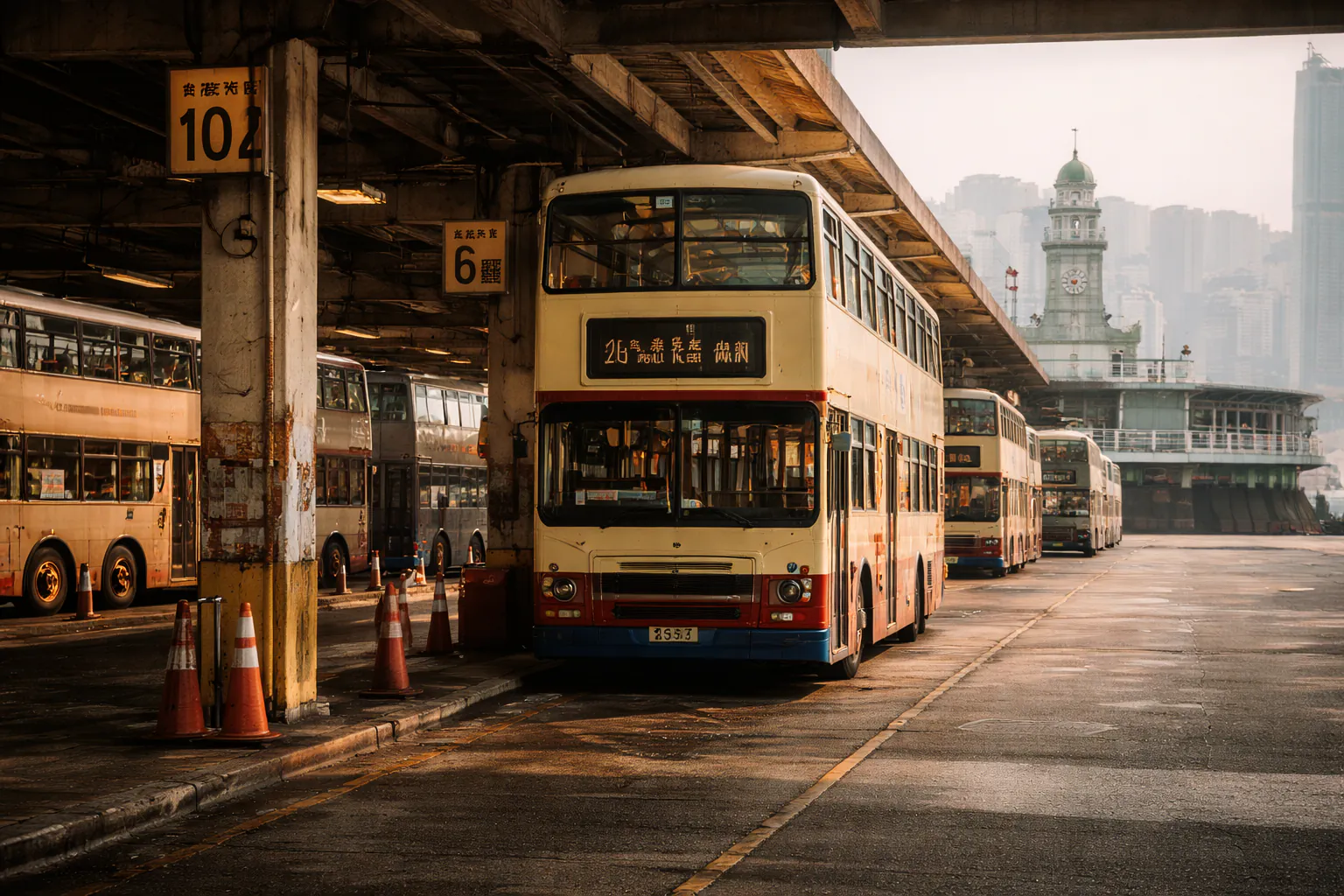
在香港這個節奏快速的城市裡,交通一直是日常生活的重要部分。對許多人來說,每一天的開始與結束,都與巴士有關。而在巴士旅程的起點與終點,總有一個熟悉的地方,那就是巴士總站。
Bus termini in Hong Kong were once more than transport hubs—they were places of departure, return, and quiet routine. From early morning commutes to late-night arrivals, these spaces framed daily life across the city. Within their constant movement, they held moments of waiting, reunion, and the steady rhythm of journeys shared by generations.
今天的巴士總站多數設計整齊,附設候車亭、電子顯示屏和清晰的路線標示。但在很多老香港人的記憶裡,早年的巴士總站其實有著完全不同的樣子。
在過去的年代,巴士總站往往設在城市最繁忙的位置。碼頭旁邊、主要街道盡頭、或者大型商業區附近。每天清晨,當第一班巴士準備開出時,整個總站已經開始忙碌起來。
司機檢查車輛,售票員準備車票,乘客逐漸聚集。空氣裡混合著汽油味、海風味與城市的聲音。
在早期的香港,很多巴士仍然使用紙車票。售票員站在車門旁邊,手上拿著一個小型售票機。乘客上車後,售票員會迅速撕下一張車票,然後按下機器打孔。
這些細小的動作,在當時是每天都能看到的畫面。
巴士總站不只是交通設施,它同時也是一個觀察城市的地方。
早上上班時間,人群急速流動。穿著西裝的上班族、背著書包的學生、提著菜籃的街坊,都在這裡等待巴士。每一條隊伍都有自己的節奏,每一班車都有固定的乘客。
對不少人而言,那條巴士線甚至代表著生活的一部分。
有些人每天都乘坐同一班車,遇見同樣的司機、同樣的乘客。久而久之,即使沒有交談,也會產生一種默契。
巴士總站也見證了許多城市的變化。
在六十至八十年代,香港人口快速增長,新市鎮與大型屋邨陸續出現。為了連接這些地方,巴士路線不斷增加,而巴士總站也逐漸擴展。
有些總站設在碼頭附近,例如維港兩岸的渡輪碼頭。乘客下船後,直接走到巴士總站轉車,前往不同地區。
那時候的交通方式,是一種連接式的城市生活。
渡輪、巴士、小巴,形成一個完整的交通網絡。
很多人仍然記得一些著名的巴士總站。
例如舊中環碼頭巴士總站、尖沙咀碼頭巴士總站、旺角一帶的街邊總站。
這些地方曾經人來人往,是城市的重要節點。
在總站裡,巴士會排成一列列,司機在車上等待發車時間。有時候司機會打開車窗聊天,乘客則站在站牌旁邊等候。
對小朋友來說,巴士總站也是一個充滿新奇的地方。
巨大的雙層巴士、不同顏色的車身、各種路線號碼,都令人好奇。有些孩子甚至會記住每條路線的終點站。
而當巴士緩緩駛出總站,車身轉彎時發出的聲音,也成為城市的一部分。
隨著時間推移,香港的交通系統逐漸現代化。地鐵網絡擴展,新的交通設施出現,許多舊式巴士總站也慢慢被重新規劃。
一些曾經繁忙的總站消失了,有些被搬遷到新的交通樞紐。
新的總站更加整潔,設計更符合現代城市需求。候車空間更舒適,資訊也更清晰。
然而,對一些老香港人來說,舊巴士總站仍然有著難以取代的記憶。
那裡曾經是每天出門的起點,也是回家的最後一站。
很多故事,都發生在這些地方。
有人在總站趕上最後一班車,有人與朋友在站牌下聊天,也有人在雨天裡等待巴士時,與陌生人分享一把傘。
這些看似普通的時刻,構成了城市生活的片段。
巴士總站並不華麗,但它與人們的日常緊密相連。
在香港這樣的城市裡,每一天都有無數人從不同地方出發,又回到自己的家。
而巴士總站,正是這些旅程的交匯點。
當我們回望過去,會發現很多熟悉的地方已經改變。舊街道、舊建築、舊商店,都逐漸消失。
但在記憶裡,那些曾經繁忙的巴士總站仍然存在。
清晨的第一班車、傍晚的下班人潮、夜晚最後一班車離開前的寧靜。
這些畫面,就像城市的一段段片段,被保留在許多人的心中。
或許有一天,我們再次經過那些地方時,已經看不到當年的總站。但只要想起那些日子,仍然能夠感受到當年的節奏。
那是一種屬於香港的生活節奏。
而巴士總站,也曾經在這個城市裡,默默地陪伴著無數人的日常旅程。
English Version
In the structure of Hong Kong’s urban life, bus termini once played a central and often overlooked role, serving as both practical transport hubs and meaningful points of connection within the city. Located at the edges of residential areas, commercial districts, and transport interchanges, these termini marked the beginning and end of countless daily journeys. They were spaces defined by movement, yet within that movement existed patterns of routine and familiarity that shaped how people experienced the city. For many, the bus terminus was not just a place to board or alight, but a recurring part of everyday life that carried emotional and social significance. The environment of a bus terminus was characterized by a steady flow of activity. Buses arrived and departed in continuous cycles, engines idling, doors opening and closing, and passengers moving in coordinated yet individual paths. The sounds of announcements, footsteps, and mechanical motion created a distinct atmosphere that was both functional and rhythmic. Unlike quieter transport spaces, bus termini were often open and integrated with the surrounding streets, allowing the energy of the city to flow through them. This openness contributed to their role as transitional spaces, bridging different parts of the urban landscape. What made these termini memorable was the repetition of experience. Commuters returned to the same platforms day after day, often at the same times, forming routines that became deeply ingrained. Familiar faces appeared regularly—drivers, fellow passengers, and staff—creating a subtle sense of community among people who might never formally interact. A shared nod, a brief glance, or simply the recognition of presence contributed to a feeling of connection within an otherwise transient environment. These small, repeated encounters gave the space a human dimension that extended beyond its practical function. Bus termini also held moments of emotional significance. They were places of departure and return, where people left for work, school, or travel, and where they came back at the end of the day. For some, they marked the beginning of new experiences; for others, they represented routine and stability. The act of waiting—standing in line, watching for an arriving bus, or sitting briefly before a journey—created pauses within the day that allowed for reflection. These moments, though ordinary, became part of the memory associated with the space, linking it to personal experiences and transitions. Historically, the development of bus termini in Hong Kong reflected the city’s expansion and increasing mobility. As new residential areas were established and urban density grew, efficient transport systems became essential. Bus networks extended across the territory, connecting different districts and enabling the movement of large populations. Termini were designed to support this system, providing organized spaces for boarding, scheduling, and coordination. Over time, they became embedded within the infrastructure of the city, shaping patterns of movement and accessibility. As Hong Kong continued to modernize, the design and function of transport hubs evolved. Integrated transport interchanges, enclosed terminals, and advanced scheduling systems introduced greater efficiency and comfort. While these developments improved the overall experience, they also altered the character of traditional bus termini. The open, street-connected spaces gave way to more controlled environments, where movement was streamlined and interaction became more limited. The transformation reflected a broader shift in urban design, emphasizing order and efficiency over spontaneity. Despite these changes, the memory of traditional bus termini remains significant. They are remembered not only as functional spaces but as places where everyday life unfolded in subtle ways. The rhythm of arrivals and departures, the familiarity of routine, and the quiet presence of others created an environment that was both dynamic and grounded. For many, these spaces are associated with specific periods of life—school years, early careers, or long-standing routines—making them deeply personal in their significance. Reflecting on the role of bus termini in Hong Kong offers insight into how movement shapes experience. It highlights the importance of transitional spaces, where people are neither fully at one place nor another, yet are still engaged with their surroundings. These spaces, often overlooked, play a crucial role in connecting different aspects of life, linking home, work, and the spaces in between. In their simplicity and repetition, they become part of the city’s collective memory, carrying the traces of countless journeys taken over time. Ultimately, the story of Hong Kong’s bus termini is one of connection—between places, between people, and between moments in time. Though their physical form may have changed, their significance endures in the memories they hold. They remind us that even the most functional spaces can carry meaning, shaped by the routines and experiences of those who pass through them every day.