
香港造船業 | The Shipbuilding Industry of Hong Kong: Craftsmanship, Industry, and a Vanished Maritime Era | 今日回望 | 第五章
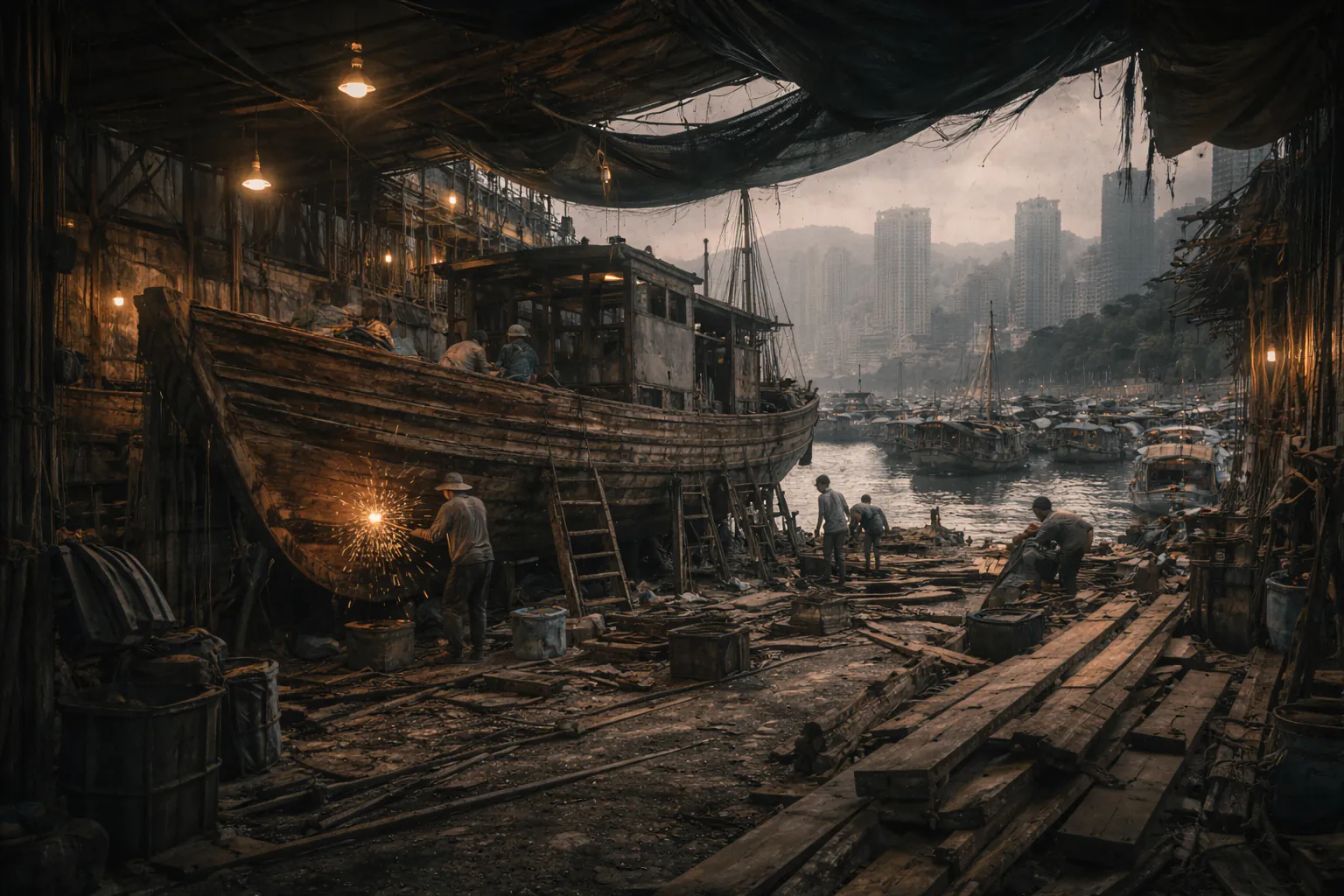
香港的造船業曾經是這座城市的重要產業之一。回顧過去,香港的海岸線不僅僅是自然風光的象徵,更是工業與生活交織的場域。在那個時代,清晨的海邊並非寂靜無聲,而是充滿了工人們的忙碌聲響。船塢內敲擊鐵板的聲音、焊接時火花四濺的畫面,成為了這座城市日常生活的一部分。
Once thriving along Hong Kong’s waterfront, the shipbuilding industry shaped both the economy and identity of the city. From wooden fishing boats to industrial vessels, shipyards were places of skill, labor, and tradition. Though largely gone today, they remain a powerful reminder of a time when craftsmanship and maritime life defined the rhythm of Hong Kong.
20世紀中期,香港的造船業達到鼎盛。由於地理條件優越以及鄰近國際航運路線,香港逐漸成為造船與修船的重要基地。當時,造船廠林立於海岸線,從小型漁船到中型貨輪,甚至軍用船隻,都可以在這裡製造或維修完成。這些船隻不僅服務於本地需求,也出口至海外,為香港帶來了可觀的經濟收益。
造船業的繁榮離不開一代代工人的努力。他們或許並不為人所熟知,但他們的技術與經驗卻是這個產業的核心。他們憑藉感官與手工技藝,精確地焊接每一條接縫,確保每一艘船能夠安全航行於海洋之上。這些工人往往從年輕時便進入行業,經過數十年的累積,成為熟練的技術專家。然而,他們的名字卻很少被記錄在歷史之中,他們的貢獻更多地體現在一艘艘完工的船隻上。
然而,隨著時間推移,香港的經濟結構逐漸轉變。20世紀70年代後期起,香港開始向金融、貿易及服務業轉型,而製造業逐漸外移至鄰近地區。造船業也未能倖免於這一趨勢。土地成本上升、工資增長,以及區域內其他低成本競爭者的出現,使得香港的造船業逐步萎縮。許多曾經繁忙的船塢被迫關閉,原本用於停泊新船的水域被填平,用於興建高樓大廈和道路。
造船業的衰退並非一夜之間發生,而是經歷了一段漫長且漸進的過程。在這個過程中,有些工人選擇轉行,有些則離開了香港海岸。然而,也有一部分人選擇堅守至最後,即使面對著行業逐步萎縮,他們仍然堅持完成自己的工作,直到最後一艘船離開船塢。
今天再回望這段歷史,香港的造船業似乎並未被賦予足夠的重視。它沒有得到隆重的告別,也缺乏官方的致謝。然而,它無疑是香港經濟發展的重要組成部分。它承載著這座城市的一段歷史記憶,也見證了香港從一個依靠勞動密集型產業維生的城市,逐步轉型為國際金融中心的過程。
如今,當我們站在香港的海邊,多數看到的是豪華遊艇、郵輪或風景照,很少有人會想起曾經響徹海岸線的敲擊聲,那些屬於造船廠的日子似乎已經成為遙遠的過去。然而,這段歷史並未真正消失,它以另一種形式存在於城市的集體記憶中,也提醒著我們,香港曾是一個從海上起步的地方。
這段歷史的重要性在於,它告訴我們城市發展並非一條直線,而是充滿了曲折與變遷。造船業的興衰是一個縮影,反映了全球化對地方產業結構的深遠影響。同時,它也提醒我們,在追求經濟增長與現代化的過程中,我們是否應該更加關注那些默默付出的普通人,他們雖然沒有留名青史,但卻是城市真正的建設者。
未來,我們或許可以考慮如何更好地保存和傳承這段歷史記憶。無論是通過設立博物館、舉辦展覽,還是通過教育讓年輕一代了解這段歷史,都將有助於我們更全面地認識和理解香港的發展軌跡。同時,也能讓我們更珍惜當下所擁有的一切,因為每一個繁榮背後,都有無數人默默努力的身影。
總之,香港的造船業雖然已成為過去,但它留下的不僅僅是城市發展的一部分,更是一種精神,一種腳踏實地、用雙手創造未來的精神。這種精神值得被記住,也值得被傳承下去。
English Version
In the earlier chapters of Hong Kong’s development, the shipbuilding industry played a crucial role in shaping the city’s economic and cultural landscape. Situated along coastal areas and sheltered bays, shipyards were once vibrant centers of activity, where skilled craftsmen and laborers worked together to construct and repair a wide range of vessels. These included traditional wooden fishing boats, cargo ships, and later, more modern steel vessels that supported both local livelihoods and international trade. The presence of these shipyards reflected Hong Kong’s deep connection to the sea, a relationship that influenced not only its economy but also its way of life. The process of shipbuilding was labor-intensive and required a high level of expertise. Craftsmen relied on a combination of traditional knowledge and practical experience, often passed down through generations. Wooden boats, in particular, were constructed using techniques that emphasized both durability and flexibility, allowing them to withstand the demands of the sea. Each vessel was carefully shaped, assembled, and finished, with attention given to both function and form. The work environment was physically demanding, involving long hours under the sun, the handling of heavy materials, and the constant coordination among workers. Despite these challenges, there was a strong sense of pride in the craft, as each completed vessel represented the culmination of collective effort and skill. Shipyards were not only places of production but also communities in their own right. Workers formed close bonds through shared labor and daily interaction, creating an environment defined by cooperation and mutual support. The rhythm of the shipyard was marked by the sounds of tools, the movement of materials, and the steady progress of construction. For many families, involvement in the shipbuilding industry spanned generations, embedding it deeply within their identity and way of life. The knowledge associated with the craft was not formally documented but transmitted through hands-on learning, observation, and experience. This created a living tradition that evolved over time while retaining its core principles. As Hong Kong expanded into a major international port, the demand for ships and maritime services increased, further strengthening the importance of the shipbuilding sector. Shipyards adapted to changing needs, incorporating new materials and techniques while maintaining elements of traditional craftsmanship. This period of growth highlighted the industry’s ability to balance innovation with continuity, ensuring its relevance in a rapidly developing environment. However, this prominence was not permanent. With the rise of large-scale industrial shipbuilding facilities in other regions, combined with increasing land costs and urban redevelopment within Hong Kong, local shipyards began to decline. The space required for shipbuilding became less viable in a city where land was increasingly scarce and valuable. Many shipyards were forced to close or relocate, leading to the gradual disappearance of an industry that had once been central to Hong Kong’s maritime identity. What remained were fragments—tools, techniques, and memories—scattered across different communities and historical records. The decline of the shipbuilding industry marked a significant shift in the city’s relationship with the sea. While Hong Kong continued to thrive as a global port and financial center, its direct involvement in the physical construction of vessels diminished. The transformation reflected broader changes in the global economy, where industries moved to locations with lower costs and larger spaces. In this context, Hong Kong’s shipbuilding heritage became part of its past rather than its present, preserved more in memory than in practice. Despite this, the legacy of the shipbuilding industry continues to resonate. It serves as a reminder of the city’s origins as a maritime hub, where craftsmanship and labor played a vital role in its growth. Efforts to document and preserve this heritage highlight its cultural significance, recognizing the contributions of those who worked in the shipyards and the impact they had on the city’s development. The stories of these workers and their craft provide valuable insight into a period when Hong Kong’s identity was closely tied to its coastal and industrial activities. Reflecting on the history of Hong Kong’s shipbuilding industry allows for a deeper appreciation of the city’s transformation. It reveals how industries rise and fall in response to economic and social forces, and how their legacies continue to shape collective memory. The shipyards, once filled with the sounds of construction and collaboration, now exist primarily in recollection. Yet, through these memories, they remain an essential part of Hong Kong’s story, representing a time when the city’s connection to the sea was expressed not only through trade, but through the very act of building the vessels that carried it forward.