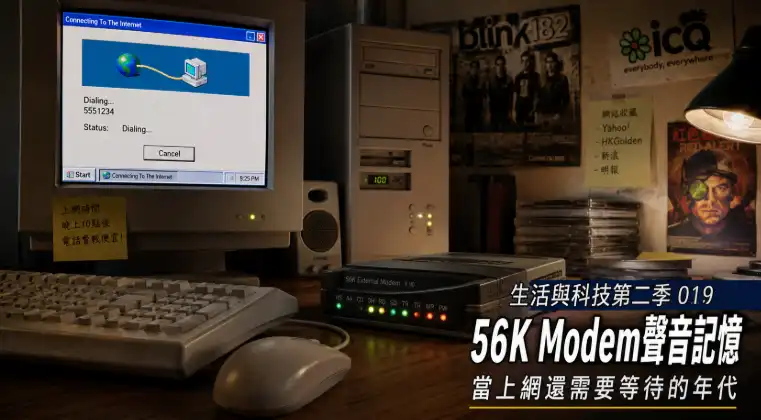
還記得深夜裡那段刺耳又熟悉的56K Modem連線聲嗎?在寬頻與5G普及之前,人們需要等待電話線完成連線,才能真正進入網絡世界。那段聲音不只是科技運作的提示,更是一代人的集體記憶,象徵互聯網剛開始改變生活的年代。
Before fiber internet, smartphones, and instant streaming became ordinary, connecting to the internet was an event on its own. The strange electronic noises of a 56K modem once filled bedrooms, computer rooms, and family living spaces around the world. For many people, those sounds represented excitement, curiosity, and the beginning of a new digital age that slowly transformed everyday life.
中文
56K Modem 的年代,是互聯網剛剛進入家庭的重要時期。對今天習慣高速網絡的人而言,很難想像曾經「上網」需要先佔用電話線。每次準備進入網絡世界之前,用戶都必須打開電腦、等待系統啟動,再按下連線鍵。之後,一連串高低起伏、帶有電子噪音的聲音便會從喇叭傳出。那不是故障,而是 Modem 正在與遠方伺服器進行握手與數據協調。對九十年代與千禧年代初的人來說,那聲音代表著聊天室、ICQ、論壇、Yahoo、MSN Messenger,甚至第一次接觸真正的全球資訊世界。56K Modem 的「56K」代表每秒最高約 56kbps 的數據傳輸速度。以今天標準來看幾乎慢得不可思議,但在當時已經是一種革命。下載一首 MP3 音樂可能需要數十分鐘,一張圖片可能要逐行慢慢顯示,而觀看影片更幾乎是不可能的事情。但正因為速度有限,人們反而對每一次連線更有耐性,也更珍惜能夠接觸資訊的機會。很多家庭甚至規定晚上某個時間才能上網,因為電話線被佔用後,其他人便無法打電話。這種「共享時間」的習慣,也塑造了早期家庭中的科技文化。當年不少人都記得,正在上網時如果有人拿起家中電話,網絡可能會立即斷線。那種突然中斷的感覺,成為不少人的共同回憶。56K Modem 的聲音之所以令人難忘,不只是因為它獨特,更因為它帶有「等待感」。現代科技追求即時、無縫與高速,但在 Modem 年代,用戶必須真正等待世界打開。每次連線成功,都像穿越一道看不見的大門。當時互聯網仍充滿未知,人們會在論壇中發掘新資訊,在聊天室認識陌生人,在個人網站中閱讀來自世界各地的內容。科技尚未被演算法全面控制,網絡世界也保留著較強烈的探索感。很多今天的科技巨頭,也是在那個年代逐漸建立起來。對香港、台灣、日本與世界各地而言,56K Modem 更是一種文化符號。它代表著家用電腦普及化,也象徵資訊時代正式進入普通人的生活。那時的電腦桌面、CRT 顯示器、Windows 95 或 Windows XP 系統,加上撥號上網聲音,共同構成一種獨特的數位復古感。即使今天不少人已經忘記技術細節,但只要再次聽到那段聲音,仍然會立即想起深夜上網、下載檔案、等待聊天室回覆訊息的時光。近年網絡上甚至出現不少「56K Modem ASMR」與懷舊影片,證明人們對這種聲音仍有情感連結。科技產品通常會被新技術快速取代,但真正留下來的,往往是與人類生活結合後形成的記憶。56K Modem 並不是最快、最強的技術,但它卻是很多人第一次接觸數位世界的入口。它讓人類開始習慣電子郵件、網頁搜尋、線上交流,也讓「全球連接」從概念變成現實。今天我們只需數秒便能下載大型影片,甚至能即時進行高畫質視像通話,但當年的撥號聲提醒我們,科技進步並不是突然發生,而是一點一滴累積而成。每一代技術,都有屬於自己的聲音,而56K Modem 的聲音,正是互聯網黎明時代最鮮明的記號。
English Version
The era of the 56K modem marked one of the most important transitions in home technology history. Long before streaming platforms, cloud gaming, and instant downloads became common, connecting to the internet was a slow and deliberate process. Users had to turn on the computer, wait for the operating system to load, and then manually dial into the internet through a modem connected to a telephone line. Moments later, a sequence of robotic screeches, buzzing tones, and digital static would fill the room. That strange sound was not an error. It was the modem negotiating with a remote server, translating digital information into signals that could travel through analog phone lines. For millions of people growing up during the 1990s and early 2000s, that sound became the gateway to a completely new world. The number “56K” referred to the maximum theoretical download speed of roughly 56 kilobits per second. By modern standards, the speed feels unbelievably slow, yet at the time it represented cutting-edge technology. Downloading a single song could take a long time, loading photos often happened line by line, and video playback was extremely limited. But because internet access was slower and less constant, people experienced the online world differently. There was anticipation before every connection. Users valued the time they spent online because it felt limited and special. Families often shared one computer and one internet connection. Since the modem used the home telephone line, nobody could make or receive calls while someone was online. Many people still remember hearing someone pick up the phone in another room, followed by the sudden collapse of the internet connection. These small frustrations became part of everyday digital life during the early internet age. The emotional power of the 56K modem sound comes from more than nostalgia. It represents a period when the internet still felt mysterious and open. Users explored forums, fan websites, online communities, and chat rooms with genuine curiosity. Search engines were simpler, websites felt more personal, and the web had not yet become fully shaped by recommendation algorithms and social media feeds. Every connection felt like opening a hidden door to the wider world. For many young users, the modem became their first experience with global communication, online friendships, and digital culture. In places across Asia, Europe, and North America, the 56K modem also symbolized the arrival of the information age into ordinary households. The sound of dial-up internet existed alongside CRT monitors, Windows 95 desktops, floppy disks, early computer games, and bulky beige computers. Together, they created a visual and audio identity that defined an important chapter in technology history. Even people who no longer remember the technical details can instantly recognize the sound today. A short recording of a dial-up modem is often enough to trigger memories of late-night browsing sessions, downloading software, or waiting patiently for websites to load. Interestingly, the sound has recently returned online as a form of digital nostalgia. Videos featuring classic modem connection noises continue to attract viewers who miss the slower, more human feeling of the early internet era. Modern technology focuses heavily on speed, convenience, and seamless access, but the modem era reminds us that technology once required patience and imagination. The internet was not always immediate. There was a time when connecting online felt meaningful because users were fully aware of the process happening behind the scenes. Although the 56K modem has long been replaced by broadband, Wi-Fi, and fiber networks, its sound remains culturally significant. It represents the beginning of home internet culture and the moment when digital communication started becoming part of everyday life. Many modern online habits, from email and messaging to online communities and digital entertainment, can trace their roots back to that era. Technology continues to evolve rapidly, but certain sounds remain permanently connected to human memory. The voice of the 56K modem is one of those rare sounds. It is not remembered because it was beautiful, but because it announced the arrival of a new digital age.
總結
56K Modem 的聲音,記錄了互聯網剛剛走進家庭的年代。它提醒人們,科技不只是速度與效率,更是每一代人共同經歷的生活記憶。即使今天已進入高速網絡時代,那段撥號聲仍然代表著數位世界的起點。
Conclusion
The sound of the 56K modem captured the moment when the internet first entered everyday homes. More than outdated technology, it became a shared memory of discovery, patience, and curiosity. Even in today’s high-speed digital world, that connection tone still represents the beginning of the modern online era.