《山海經 046(神獸篇)》當康 | The Auspicious Dangkang of the Classic of Mountains and Seas
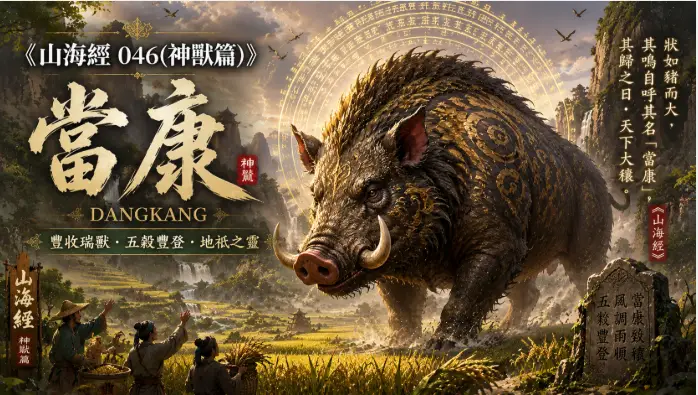
當康是《山海經》中象徵豐收與祥瑞的神獸,外形似巨豬,鳴聲如同呼喊自己的名字。古人相信當康現身之地,五穀豐登、百姓安樂,因此牠被視為帶來富饒與和平的重要瑞獸。
Dangkang is a mythical creature from the Classic of Mountains and Seas associated with abundance, prosperity, and peace. Resembling a massive wild boar, the beast was believed to appear before seasons of great harvest. In ancient folklore, its arrival symbolized fertile lands, flourishing crops, and harmony among people.
中文版本
群山深處常瀰漫著淡淡霧氣,古老森林被晨光染成金色。相傳每逢大地即將迎來豐收之年,山谷之中便會傳出低沉而奇異的叫聲,那聲音如同「當康、當康」迴盪天地。人們知道,那是神獸當康正在甦醒。牠擁有巨大如山的身軀,外貌近似野豬,黑褐色皮毛覆蓋全身,背脊高聳如岩丘,四足踏過大地時甚至能讓山林微微震動。
《山海經》中記載,當康是一種能帶來穀物豐收的瑞獸。古代百姓極為敬畏牠,因為只要當康現身,便意味著風調雨順、田地富饒。每當長年飢荒或乾旱結束後,人們偶爾會在遠方山野看見巨大獸影穿越濃霧,隨後大地便開始降下甘霖,枯黃農田重新恢復生機。因此,在許多部族的傳說裡,當康不只是野獸,更像是掌管土地生命力的神靈。
據說當康居住於極少人能抵達的深山秘境,那裡溪流清澈、草木繁盛,四季都充滿濃厚靈氣。山谷之中遍布巨大古木,而當康便在其中漫步。牠雖然外貌龐大兇猛,但性情卻並不殘暴。當牠穿越森林時,鳥群會跟隨其後,野獸也不會逃離。古人相信,當康身上帶有某種能讓萬物平靜的力量,因此牠所經過的地方,土地總會變得更加肥沃。
然而,當康並不會輕易在人類面前現身。傳說只有在天下安定、人們敬畏自然之時,牠才會從山林深處走出。如果戰亂頻繁、百姓貪婪無度,當康便會消失於群山之間,豐收也會隨之遠去。古代祭祀土地神時,常有人模仿當康的叫聲,希望藉此祈求來年五穀豐登。某些地方甚至將巨大的野豬雕像視為當康化身,用來守護農田與村落。
曾有古老故事記載,一座村莊因連年暴雨而無法耕種,百姓飢餓困苦。就在冬季結束之夜,村民忽然聽見山中傳來低沉鳴叫。第二天清晨,一道龐大獸影出現在霧氣之中。那正是當康。牠沿著乾裂田地緩慢行走,巨大的蹄印留在泥土之上。奇妙的是,數日後原本枯死的土地竟重新長出綠芽,河流也恢復清澈。當年秋季,村莊迎來前所未有的大豐收,人們於是相信當康真正擁有喚醒大地生命的神力。
在中國古代文化裡,豬常被視為富足與家庭安穩的象徵,而當康則進一步被神格化為守護農耕文明的瑞獸。牠提醒人們,大地的恩賜來自於與自然共存,而非無止境索取。古人因此相信,只要尊重山林河川、珍惜土地資源,當康終有一天會再次現身。
千百年後,當康依然存在於東方神話與幻想文化之中。牠的形象出現在古籍插畫、奇幻小說、動畫與遊戲裡,成為象徵富饒與和平的神秘巨獸。那迴盪山谷的低沉鳴聲,至今仍像遠古大地的呼喚,提醒人們不要忘記自然與生命最原始的連結。
English Version
Deep within forgotten mountain ranges, ancient forests glow beneath golden morning light while mist drifts silently between towering trees. Legends say that before a year of great abundance arrives, a strange cry echoes through the valleys. The sound resembles the words “Dangkang, Dangkang,” rolling across cliffs and rivers like thunder from the earth itself. Hearing this call meant only one thing—the sacred beast had awakened once again.
According to myth, Dangkang resembled an enormous boar with a body powerful enough to shake the ground beneath its feet. Thick dark fur covered its mountain-like frame, and its glowing eyes reflected the spirit of untamed wilderness. Yet despite its intimidating appearance, the creature was not feared as a monster. Ancient people believed it carried blessings tied to fertile lands, peaceful seasons, and overflowing harvests. Wherever Dangkang wandered, crops flourished and rivers flowed with renewed vitality.
Within the world of the Classic of Mountains and Seas, Dangkang became known as a divine guardian of agriculture. Villagers prayed for signs of the creature during times of drought or famine. Stories tell of farmers catching glimpses of a colossal shadow moving through the mist-covered hills shortly before rainfall returned to dry lands. Soon afterward, dead fields would bloom green again, and entire communities would recover from hardship. Because of these tales, the beast came to symbolize the fragile bond between humanity and the natural world.
Dangkang was said to dwell in hidden valleys unreachable by ordinary travelers. These sacred lands overflowed with spiritual energy, crystal rivers, and towering ancient trees untouched by war or greed. The beast roamed peacefully among birds and wild animals, and no creature fled from its presence. Unlike violent mythical monsters, Dangkang represented harmony. Ancient folklore described it as a living embodiment of the earth’s generosity and balance.
But the sacred beast did not appear freely before mankind. Legends warned that Dangkang would vanish whenever kingdoms fell into chaos or people abused the land for selfish gain. Only during times of peace and respect toward nature would the beast emerge from the mountains. In farming rituals, villagers sometimes imitated its mysterious cry while offering prayers for fertile soil and successful harvests. Massive boar statues placed near farmlands were believed to carry the creature’s blessing and protect villages from famine.
One famous story tells of a settlement devastated by years of flooding and crop failure. Hunger spread across the region, and many believed the land itself had died. Then one winter night, a deep roar echoed from the distant mountains. At dawn, villagers saw an enormous figure walking slowly through the fog-covered fields. It was Dangkang. The beast crossed the barren earth, leaving giant footprints pressed into the mud. Days later, fresh green shoots began appearing where its feet had touched the ground. Rivers cleared, crops returned, and by autumn the village experienced the greatest harvest in its history. From that moment forward, the people believed Dangkang possessed the power to awaken life itself.
In ancient Chinese culture, boars and pigs often symbolized prosperity, stability, and family fortune. Dangkang transformed these meanings into something divine—a mythical protector of civilization and survival. Its legend served as a reminder that abundance could only exist when humanity respected the balance of nature instead of exploiting it endlessly.
Even today, Dangkang remains a fascinating creature within mythology, fantasy fiction, games, and modern art inspired by Chinese legends. Though centuries have passed, the image of the colossal beast wandering through misty mountains continues to evoke ideas of prosperity, peace, and the enduring spirit of the living earth.