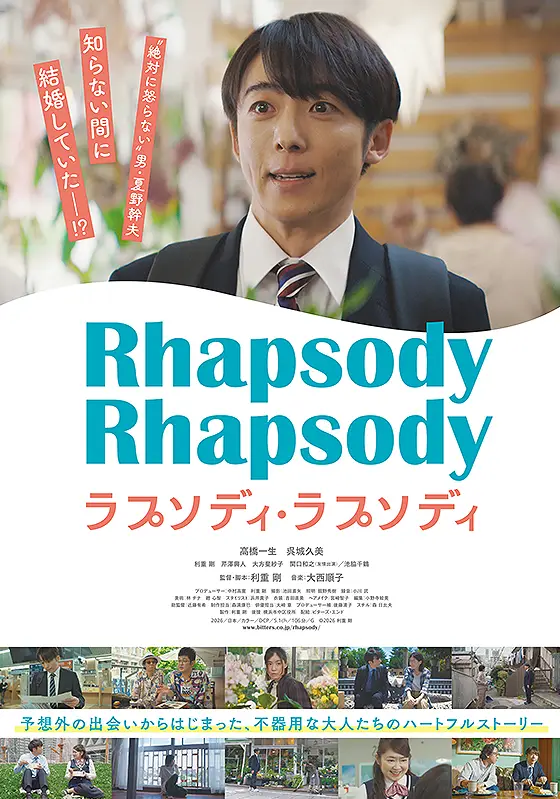
《ラプソディ・ラプソディ》是一部帶著輕盈幽默與淡淡哀愁的人生電影,由演員兼導演利重剛時隔多年再度執導長篇作品,並邀來高橋一生主演。電影以一場荒謬又不可思議的婚姻作為開端,描寫一名總是逃避人際關係的男子,在命運惡作劇般的安排下,被迫重新面對自己的人生與情感。作品以細膩節奏描繪現代人的孤獨感,在溫柔與荒誕之間游走,呈現出一種獨特的日式生活電影氣質。
Rhapsody Rhapsody is a quiet yet emotionally layered Japanese drama directed by Go Shigemori, marking his return to feature filmmaking after many years. Starring Issei Takahashi, the film begins with an absurd discovery that gradually unfolds into a tender reflection on loneliness, emotional distance, and the strange ways human connection enters our lives. Blending deadpan humor with understated melancholy, the story captures the fragile emotional rhythm of people drifting through modern urban life while searching for warmth they never knew they needed.
電影內容
《ラプソディ・ラプソディ》以極具黑色幽默的設定展開,一名性格溫吞、幾乎從不對人發怒的男子夏野幹夫,在更新護照時意外發現自己的戶籍上竟然多了一名妻子。這個從未見過的女人「繁子」,像幽靈般突然闖進他的生命,也讓他原本平靜而封閉的日常徹底失衡。電影沒有急於製造懸疑感,而是以緩慢且近乎生活流的方式,讓觀眾跟隨幹夫一步步接近這名陌生女子。隨著故事展開,幹夫開始穿梭於城市角落,在花店、小巷與沉默的空間之中,逐漸拼湊出繁子的輪廓。繁子並非典型浪漫電影中的神秘女子,她笨拙、衝動、總是把事情搞砸,甚至帶著某種破壞性的氣質,但也正因如此,她成為幹夫生命中從未出現過的「意外」。電影最動人的地方,在於它並沒有將兩人的關係描寫成傳統愛情,而更像兩個孤獨靈魂彼此碰撞後產生的微弱火光。幹夫長年逃避社交,習慣獨自生活,他看似平靜,其實內心早已與世界保持距離;繁子則像一股失控的能量,闖進別人的秩序之中,卻也讓停滯的人生重新流動起來。導演利重剛以極度克制的方式處理角色之間的情感,不刻意煽情,也避免戲劇化衝突,而是透過大量日常細節、停頓與空白,呈現人物內心那些無法說出口的情緒。整部電影瀰漫著濃厚的都市孤獨感,角色彷彿都被困在自己的世界裡,即使身處人群,也難以真正理解彼此。然而電影並不悲觀,它反而透過荒謬的相遇提醒觀眾,人與人之間最重要的改變,往往來自那些毫無預兆的瞬間。呉城久美飾演的繁子帶有近乎童話人物般的奇特魅力,她既讓人困惑,也令人無法忽視,而高橋一生則以細膩含蓄的演技,演出一個壓抑多年、逐漸重新感受到情感溫度的男人。電影整體節奏安靜,卻充滿情緒流動,加上世界級爵士鋼琴家大西順子的音樂點綴,使作品散發出宛如夜晚城市般孤獨又浪漫的氣息。這不是一部追求劇情高潮的電影,而是一段關於人生偏離軌道後,重新理解自我與他人的溫柔旅程。
English Version
Rhapsody Rhapsody opens with a premise that feels almost surreal: a quiet, emotionally withdrawn man discovers that he has somehow been legally married to a woman he has never met. Instead of turning this revelation into a conventional mystery, the film moves gently through the emotional aftermath of the discovery, focusing less on answers and more on the transformation it triggers within the protagonist. Mikio Natsuno has spent most of his life avoiding emotional entanglements. He exists in routines, silence, and emotional distance, carefully maintaining a life where nothing unpredictable can hurt him. But the sudden appearance of a wife listed in his family registry shatters that fragile sense of control. His search for Shigeko slowly leads him through small urban spaces filled with quiet melancholy: flower shops, narrow streets, empty rooms, and fleeting encounters. When he finally meets her, she is nothing like he imagined. Shigeko is chaotic, impulsive, awkward, and strangely destructive. She breaks things, disrupts conversations, and seems unable to fit into the ordinary structure of society. Yet beneath that unpredictability lies a lonely soul searching for connection in her own imperfect way. The film avoids romantic clichés and instead presents the relationship as a gradual emotional awakening between two isolated individuals. Their bond is not built through dramatic declarations or cinematic passion, but through subtle gestures, silence, and the slow recognition of each other’s wounds. Director Go Shigemori creates a restrained emotional atmosphere where pauses often carry more meaning than dialogue. Everyday moments become emotionally charged, revealing how disconnected modern people can become from themselves and others. The city itself feels emotionally distant, filled with people moving past one another without truly seeing each other. Yet within that loneliness, the film discovers small traces of hope. Shigeko enters Mikio’s life like an uncontrollable force, disrupting the emotional numbness he has accepted for years. Rather than healing him directly, she forces him to confront the emptiness he had carefully hidden beneath routine and politeness. Issei Takahashi delivers an understated and deeply human performance, capturing the vulnerability of a man slowly rediscovering emotional warmth. Meanwhile, Kumi Gushiro gives Shigeko an unpredictable charm that feels both whimsical and deeply tragic. The film’s jazz-infused score by Junko Onishi adds another emotional layer, creating a nocturnal atmosphere filled with tenderness and quiet sorrow. Rather than relying on dramatic twists, the story lingers in emotional ambiguity, allowing viewers to reflect on the strange accidents that alter our lives forever. Rhapsody Rhapsody ultimately becomes a meditation on loneliness, identity, and the possibility that even the most accidental encounters can reshape the direction of a person’s existence.
影片簡介(預告片/片段)
一場莫名其妙的婚姻,讓孤獨男子的人生逐漸偏離原本軌道。
A mysterious marriage changes the life of a lonely man in unexpected ways.
電影資料
導演:利重剛
類型:劇情、人生、黑色幽默
製片公司:日本電影製作團隊
上映年份:2026
主要演員
高橋一生
呉城久美
芹澤興人
池脇千鶴
總結
《ラプソディ・ラプソディ》並不是一部強調戲劇衝突的作品,它更像是一首屬於孤獨者的城市夜曲。電影透過荒謬的設定與細膩的人物描寫,探討人與人之間難以言喻的距離感,也讓觀眾重新思考,真正改變人生的,也許從來不是宏大的事件,而是一場突如其來的相遇。對喜歡日式生活電影、人物情感與安靜節奏作品的觀眾而言,這是一部帶著餘韻與溫度的電影。
Conclusion
Rhapsody Rhapsody is less interested in dramatic storytelling than in emotional texture and human fragility. Through its surreal premise and restrained storytelling, the film quietly explores isolation, emotional avoidance, and the unpredictable nature of connection. It is a reflective urban drama filled with silence, awkward tenderness, and understated beauty. For audiences drawn to intimate character studies and contemplative Japanese cinema, the film offers a deeply human experience that lingers long after it ends.