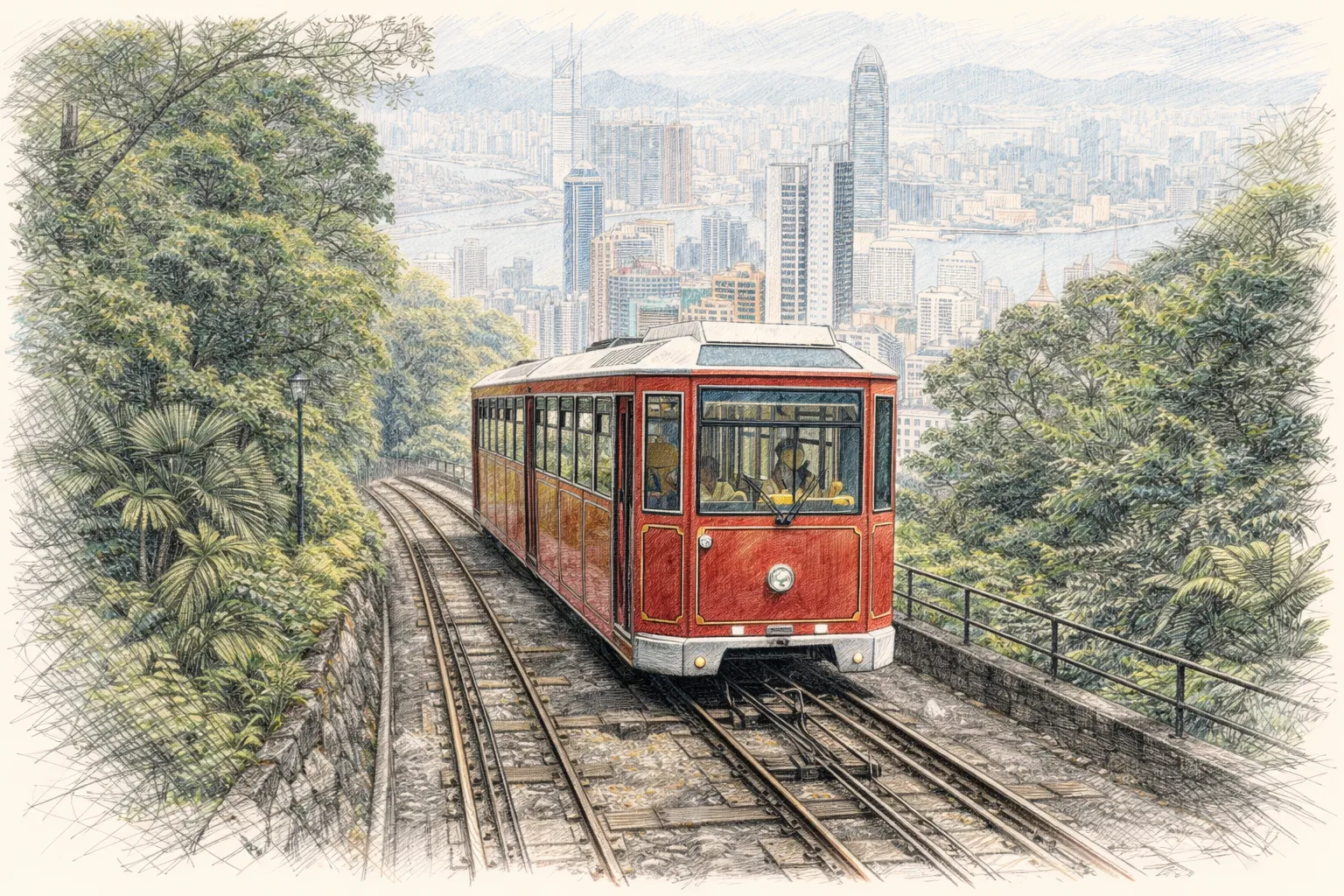
香港的山頂纜車,作為一個歷史悠久且具有象徵意義的交通工具,早已超越了單純的運輸功能,成為一種獨特的城市體驗。這段旅程並非以速度取勝,而是以其緩慢而穩定的節奏,以及從不同視角出發的觀察方式,為乘客提供了一個重新審視城市的機會。對於生活在繁忙都市中的人們而言,纜車的存在像是一個短暫的停頓,讓人們能夠抽離日常生活的喧囂,進行片刻的沉思與自我對話。
纜車的設計與運行方式本身就蘊含著深刻的哲理意涵。當纜車緩緩爬升時,城市景觀逐漸展開,視野中的建築物與街道因角度的改變而產生扭曲與重塑。這一過程提醒乘客,城市並非只有一種觀看方式。我們習慣於在地面上仰望高樓,追逐目標與未來,但纜車提供了一種不同的觀看角度,迫使我們從另一個維度重新審視周遭的一切。這種視角轉換,不僅讓人感受到城市結構的多樣性,也激發了對自身與環境關係的重新思考。
纜車運行的速度緩慢而穩定,這樣的節奏為乘客創造了一個難得的沉默空間。在現代都市生活中,人們的時間往往被各種訊息、任務和壓力填滿,很少有機會靜下心來進行反思。而在纜車上,乘客不需要急於交談或處理訊息,可以安靜地坐著,感受車廂的上升與城市景觀的變化。這段短暫的旅程,為人們提供了一個心理上的空間,使他們能夠暫時抽離日常生活,重新審視自己的內心世界。
每位乘客登上纜車的理由可能各不相同。有些人是出於好奇,有些人則希望欣賞壯麗的夜景或尋求一個高度上的逃離。然而,不論原因如何,纜車始終沿著既定軌道運行,不偏不倚,也不急不躁。這種穩定性與可預測性,成為都市生活的一種象徵——在快速變化與高度競爭的環境中,一種持續且穩定的節奏顯得尤為珍貴。纜車告訴我們,有時候生活不需要過於複雜或追求極致,只需保持簡單與穩定,就能找到屬於自己的節奏。
纜車旅程中最引人注目的部分,莫過於視角的轉換。在地面上,我們習慣從下而上地仰望城市,欣賞其高樓大廈、燈光璀璨以及象徵未來的建築。然而,在纜車上,這一切被顛倒過來,我們開始以俯瞰的方式重新審視城市。從高處望去,城市的結構、秩序以及各種元素之間的關聯變得更加清晰。同時,我們也會意識到自己的渺小,以及整座城市在運行中的宏大與複雜性。這種視角上的轉變,不僅讓我們更全面地了解城市,也促使我們反思自身在整體中的定位。
值得注意的是,纜車所提供的安靜氛圍並非自然界的寧靜,而是一種介於喧囂與沉靜之間的抽離感。雖然纜車仍然在城市之中運行,但它創造了一個心理上的距離,使乘客得以暫時遠離日常生活中的繁忙與壓力。這種抽離感,不僅僅是身體高度上的改變,更是一種心理上的調整。它讓人們有機會重新審視自己的生活方式、價值觀以及與外界環境之間的關係。
當纜車到達山頂時,乘客走出車廂,重新踏上平地,回歸熟悉的都市節奏。剛才那段上升旅程,就像是一個短暫的停頓,被允許存在,但很快又被日常生活所掩蓋。然而,這段旅程的價值並不因此而減少。它提醒著我們,在忙碌的生活中,我們需要偶爾停下腳步,用不同的方式看待周遭的一切。有時候,緩慢地向上攀升,不一定是為了看得更遠,而是為了暫時離開原本的位置,以便更清楚地理解自己與環境之間的關聯。
當纜車再次向下滑行時,城市景觀恢復直立,人們回到原本熟悉的世界。然而,那段旅程已經在心中留下了深刻的印記。乘客或許會意識到,他們曾經用另一個角度看待過這座城市,而這種經驗或許微不足道,但卻足以改變他們對都市生活的一些思考。這段旅程所帶來的不僅僅是視覺上的享受,更是一種精神上的啟發。
山頂纜車作為一個不斷運行的象徵,它提醒我們,在繁忙的都市生活中,我們應該學會偶爾停下腳步,用不同的方式重新審視周遭的一切。它不僅僅是一種交通工具,更是一場儀式,一次心靈上的短暫升華。在這段旅程中,人們得以重新找到內心的平衡,並在返回日常生活後,以更清晰、更寬廣的視角看待世界。正因如此,山頂纜車成為了香港這座城市不可或缺的一部分,也成為了都市人心靈深處的一片淨土。
English Version
In a city where movement is often understood in terms of speed, efficiency, and connectivity, the Peak Tram introduces a different dimension to urban experience, one that is defined not only by transportation but by perspective, elevation, and the act of seeing, transforming a simple journey into a gradual reorientation of how the city is perceived. As the tram ascends from the dense urban environment of Central toward the higher elevations of Victoria Peak, the relationship between observer and city begins to shift, where vertical movement replaces horizontal flow and where the familiar streets below slowly reorganize into a broader visual composition. Buildings that once dominated eye level become part of a layered landscape, and the density that defines Hong Kong transforms into patterns of structure, light, and form that can only be fully appreciated from above. This change in perspective alters not only what is seen but how it is understood, allowing passengers to experience the city as both an immediate environment and a larger system simultaneously. The steep incline of the track, combined with the visual distortion created by the angle of ascent, further enhances this experience, creating a sensation that is both physical and perceptual, where gravity, motion, and vision interact to produce a unique awareness of space. Unlike underground systems that remove the city from view or surface transport that immerses passengers within it, the Peak Tram occupies a position between these extremes, offering a continuous visual connection while gradually increasing distance, allowing the city to reveal itself in stages rather than all at once. The journey becomes a transition not only between locations but between modes of perception, where details give way to patterns and where proximity is replaced by overview. Historically, the Peak Tram represents one of the earliest forms of mechanized transport in Hong Kong, originally serving practical needs while simultaneously introducing new ways of experiencing elevation and space, and its continued operation reflects an ability to remain relevant by offering something beyond efficiency alone. In contemporary contexts, the tram is often associated with tourism and leisure, yet its significance extends further, functioning as a cultural and experiential link between different layers of the city, where everyday urban life and panoramic observation intersect. The experience of looking out from the tram, whether through windows or from the upper viewing points at the Peak, reinforces the idea that cities can be understood differently depending on position, where shifting vantage points reveal relationships that are not visible from within the streets. This awareness contributes to a more complex understanding of urban space, highlighting how scale, distance, and elevation shape perception. The contrast between the fast-paced environment below and the slower, more deliberate ascent of the tram creates a temporal shift that allows for reflection, where the journey itself becomes an opportunity to observe rather than simply move. The Peak Tram thus occupies a unique position within the broader transportation network, functioning as both infrastructure and experience, where movement serves not only a practical purpose but also an interpretive one. In a broader sense, it illustrates how cities are not only places to be navigated but also to be seen and understood from multiple perspectives, where changes in position can reveal new meanings and connections. Ultimately, the Peak Tram is more than a route to a destination; it is a mechanism for altering perception, demonstrating that the way a city is viewed can be as important as how it is traversed, and that by shifting perspective, individuals can gain a deeper awareness of the complexity, structure, and beauty of the urban environment.