
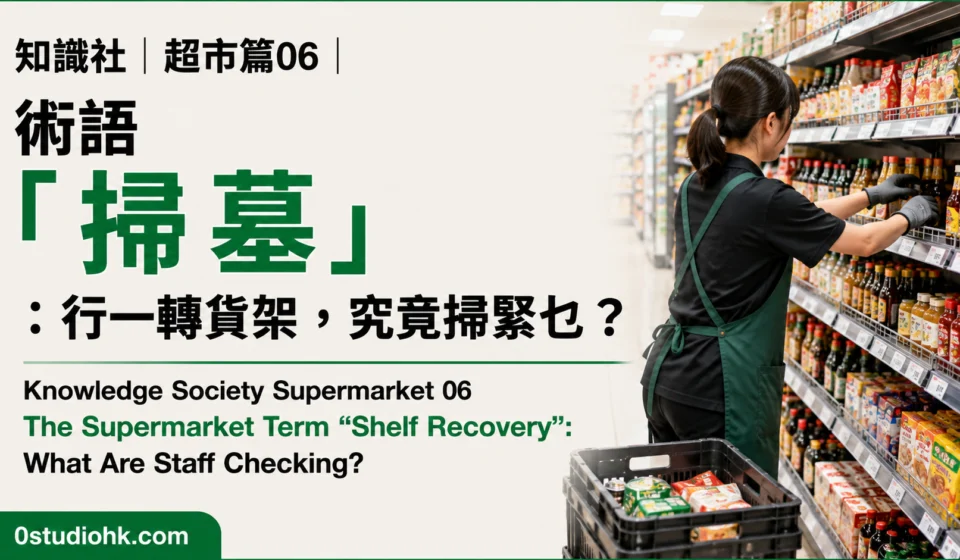
知識社|超市篇06|術語「掃墓」:行一轉貨架,究竟掃緊乜? | Knowledge Society Supermarket 06 | The Supermarket Term “Shelf Recovery”: What Are Staff Checking?

超市員工有時會講「掃墓」,唔係真係去掃墓,而係形容逐區巡貨架、整理貨品、檢查錯位同空位。行一轉睇似簡單,其實係維持貨架整齊同購物體驗的重要工作。
In supermarket language, “sweeping the aisles” can describe a routine check of the shelves and surrounding area. Staff look for misplaced products, empty spaces, untidy displays and other problems, helping the store stay ready for shoppers throughout the day.
中文版本
「掃墓」呢個講法非常有香港現場黑話嘅味道,不過要先講清楚:佢並唔係一個國際統一嘅正式零售術語,而係比較適合用作本地超市工作環境入面嘅形象化講法。所謂「掃墓」,可以理解為理貨員或者店員逐區行一轉,望下自己負責嘅貨架有冇問題。點解叫「掃墓」?最有趣嘅地方就係佢有一種「逐格巡查」嘅感覺——唔係行過去望一眼就算,而係由一邊開始,慢慢掃過整個區域,將見到嘅問題逐一處理。貨品歪咗,要整理;包裝轉咗面,要轉正;貨品被顧客放錯地方,要搬返去;貨架有空位,就要判斷係真正缺貨,定係貨品其實仲喺後面;如果有貨,就可能要補返上架。正式零售語言入面,最接近嘅概念包括 facing、fronting、zoning、recovery、straightening 等,不同公司叫法可以唔同。 其中「facing」通常係將貨品拉到貨架前面,令產品正面朝向顧客;「recovery」或者「zoning」則可以涵蓋更廣泛嘅店舖整理工作。 所以,如果一個理貨員話:「我去掃墓先。」未必代表只係將貨品向前拉,而可能係要由頭到尾巡一次自己負責嘅區域。第一樣要睇嘅,通常係貨品有冇「亂」。顧客每日都會從貨架拎貨,拎完之後未必會將旁邊產品重新整理。有時一罐罐頭被拉出嚟,旁邊幾罐就會向後退;一包零食被抽走,前排就會出現一個空洞;有人改變主意,又可能將貨品放咗去另一個品牌旁邊。單一件睇落唔嚴重,但一日累積幾百次顧客取貨之後,貨架就會慢慢變得凌亂。於是理貨員需要不停「恢復」貨架。其次係「面」。零售業講 facing,唔只係貨品有冇放喺貨架,而係顧客第一眼見到嘅產品正面數量同排列。 一個貨架可能仲有大量存貨,但如果所有貨品都縮咗入後面,顧客望過去仍然會覺得「好似冇貨」。相反,將前排貨品拉齊、標籤向外,貨架就會顯得更加完整。呢個亦解釋點解「掃墓」唔一定等於「補貨」。補貨係將貨品由後倉或者其他存貨位置帶到貨架;掃墓則可能係先檢查現場,睇下究竟邊度需要補、邊度只需要整理。研究零售貨架管理亦將 facing、貨架位置、庫存數量同補貨視為互相關聯但唔完全相同嘅工作。 再落去,就係「錯位」。超市貨架有自己嘅位置邏輯,每種產品都有應該出現嘅地方。但顧客買嘢時未必會一直記住貨品原本放喺邊。有時顧客將一件飲品放到零食區,一盒餅乾放到另一條走廊,或者拎咗貨之後改變主意,隨手放返附近。呢啲貨品如果冇人處理,就會變成之前講過嘅「棄嬰」。所以「掃墓」其中一個作用,就係將呢啲錯位貨品重新帶返「屋企」。仲有一樣容易被忽略嘅工作:檢查貨架係咪真係缺貨。見到一個空位,唔代表後倉一定冇貨。有可能貨品已經賣晒,亦有可能只係貨品被推到後面,甚至有貨品被放咗去其他地方。真正有經驗嘅理貨員,唔會單靠「見到空位」就下結論,而係會配合現場情況、庫存同補貨流程去判斷。對顧客嚟講,一個整齊貨架可能只係「睇落舒服」;但對超市而言,貨架其實係一個持續變動嘅銷售介面。每一次顧客拎貨,都可能改變貨架狀態;每一次補貨,又會重新排列商品;每一次「掃墓」,就係將呢個已經被顧客使用過嘅空間重新整理,準備迎接下一批顧客。所以下次有人講「去掃墓」,唔好以為真係去掃墓。 佢可能只係拎住一個購物籃或者工作工具,由第一格貨架開始,一路行到最後一格,將歪貨、空位、錯位、面向同需要補貨嘅地方逐一處理。呢種工作冇乜戲劇性,但正正係超市每日運作最基本、最重要嘅功夫之一。貨架整齊唔係自己變整齊,而係有人不停「掃」出嚟。
English Version
“掃墓” is best treated as an informal Hong Kong-style supermarket expression rather than a standard international retail term. In practical terms, it can describe the routine of walking through a designated section of the store and checking the shelves for anything that needs attention. The closest established English retail concepts include facing, fronting, zoning, recovery and straightening, although their exact meanings and usage vary between retailers. The idea is simple: walk through the area, identify problems and restore the shelves to a clean and sale-ready condition. A supermarket shelf changes constantly during the day. Customers remove products, move items around, leave gaps and sometimes return products to completely different locations. A shelf that looked perfect in the morning can therefore look noticeably different after several hours of shopping. This is where shelf recovery becomes important. One of the most familiar tasks is facing. Staff bring products forward to the edge of the shelf and turn the packaging so that the front is clearly visible to shoppers. Facing can also refer to the number of visible product fronts allocated to a particular SKU, which affects how much visual space the product occupies. Imagine a shelf containing twenty packets of cereal. There may still be plenty of stock, but if most of the packets have been pushed towards the back, the shelf can look surprisingly empty. Pulling the products forward creates a fuller appearance and makes it easier for shoppers to identify what is available. However, a full shelf recovery involves more than simply pulling products forward. Staff may notice that a product is sitting in the wrong location, perhaps because a shopper changed their mind and left it on a neighbouring shelf. That item needs to be returned to its proper position. Other products may have fallen over, turned sideways or become difficult to reach. These small problems are corrected during the same walk through the area. The worker may also find empty shelf spaces. But an empty space does not automatically mean the product is out of stock. The item may still be available in the back room, on another shelf or somewhere nearby. Retail shelf planning treats shelf position, facings, stock quantity and replenishment as related but distinct operational considerations. This is why experienced staff do not necessarily treat every empty space in the same way. They first determine what has happened and then decide whether the shelf needs replenishment, rearrangement or simply better facing. The work is also closely connected to customer behaviour. Every time a shopper takes a product, the front row changes. Every time somebody compares two brands and puts one back in a different place, another small correction may be required. During a busy day, hundreds of these tiny changes can accumulate. What looks like a messy shelf at the end of the day may therefore be the result of countless individual customer actions rather than poor work by the staff. Retail workers use different words for the recovery process depending on the company. Some call it facing, while others use recovery, zoning, blocking or straightening. The terminology changes, but the basic objective remains similar: make the store easier to shop and return the sales floor to the standard expected by the retailer. This is also why “sweeping the section” is a useful way to understand the informal expression “掃墓”. The worker is effectively scanning the entire area for small problems that need correcting. There may be no dramatic incident and no obvious achievement at the end. The result is simply a shelf that looks right again. Customers may not notice the work at all—and that is partly the point. A well-recovered shelf should feel normal, organised and easy to shop. The products are visible, the labels face forward, misplaced items have been removed, gaps have been assessed and stock has been replenished where necessary. In other words, the work makes the supermarket look as though nothing unusual has happened. Next time you see a member of staff walking slowly along a supermarket aisle and touching almost every section of the shelf, they may not simply be “looking around”. They may be carrying out a complete recovery check. What shoppers see as a neat shelf is often the result of repeated maintenance throughout the day. The informal expression “掃墓” captures that idea in a particularly memorable way: start at one end, work through the area and deal with whatever has gone wrong. The shelf may look ordinary afterwards, but someone has done the work to make it look that way.
總評
「掃墓」雖然係幾生動嘅現場講法,但背後其實係一套細緻嘅貨架巡查與整理工作。由歪貨、錯位到空位、面向,每一格都可能有嘢要處理。
“掃墓” may sound humorous, but the work behind it is serious retail maintenance. From misplaced products and empty gaps to facing and replenishment, staff are constantly restoring shelves so customers can shop easily.