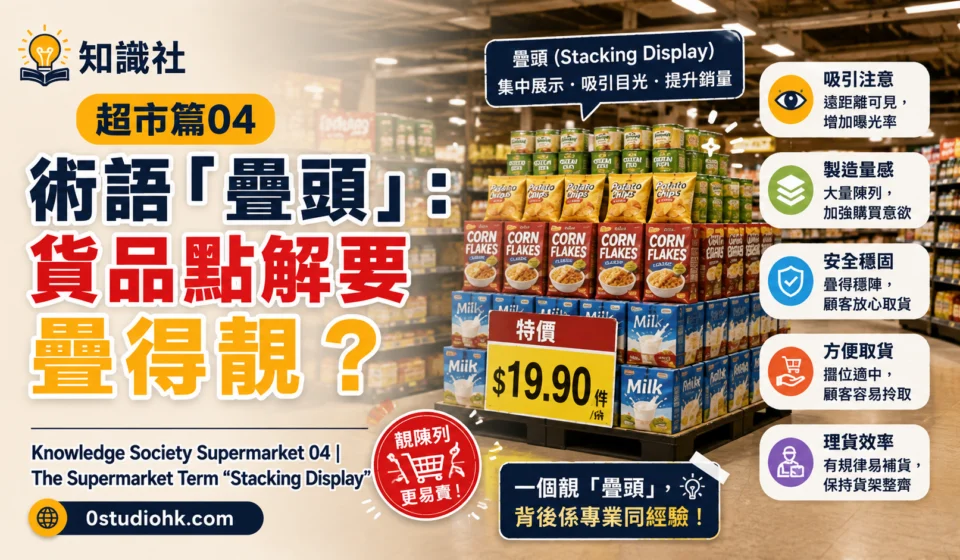
知識社|超市篇04|術語「疊頭」:貨品點解要疊得靚? | Knowledge Society Supermarket 04 | The Supermarket Term “Stacking Display”
行超市見到一堆堆整齊排列、向上疊起嘅貨品,你可能只覺得「擺得幾靚」。但對零售員工嚟講,點樣疊、疊幾高、點樣保持整齊安全,都係貨品陳列工作。今集認識「疊頭」呢個現場術語。
When you see products carefully stacked into a neat display, it may simply look attractive to a shopper. For supermarket staff, however, stacking products involves presentation, stability, accessibility and sales strategy. This episode looks at the retail idea commonly described on the shop floor as “疊頭.”
中文版本
「疊頭」呢個詞,並唔係所有超市都使用嘅正式統一行業術語,唔同公司、門店甚至唔同地區,叫法都可能唔一樣;有些零售資料較常見嘅正式用語係「堆頭」,即係將商品集中堆放,形成一個較突出嘅陳列或促銷位置。 如果用香港超市現場比較容易理解嘅方式去講,「疊頭」可以理解為將貨品有規律咁一層層疊起,形成一個有份量、有高度、容易吸引顧客注意嘅商品陳列。最簡單嘅例子,就係超市入口附近見到幾箱飲品、紙巾、零食或者節日食品,唔係全部放入普通貨架,而係集中放喺一個位置,再將貨品整齊疊高。顧客一行入去,就算本身冇打算買,遠遠都可能已經見到呢一堆貨。呢種陳列最重要嘅其中一個效果,就係製造「量感」。當同一款貨品大量集中出現,顧客第一眼會感覺產品充足,亦容易將呢個位置同「特價」、「推廣」或者「熱門商品」聯繫起來。零售陳列資料亦指出,堆頭通常用於促銷區,可以利用卡板、鐵籃或周轉箱等方式集中堆放商品。 不過,疊頭唔係單純「越高越好」。如果只係不停向上疊,表面上可能好有氣勢,但如果顧客伸手拎貨時一碰就倒,反而會造成危險。商品陳列其中一個基本原則,就係貨品要容易看見、容易取出,同時要保持穩固;相關陳列資料亦特別提到,疊加商品必須穩妥,唔可以令顧客覺得容易打翻或者打碎。 所以一個真正做得好嘅疊頭,唔係單純追求高度,而係要平衡「好睇、好賣、好拎、安全」。例如罐裝飲品可以用較整齊嘅方式一層層排列,紙巾、廁紙等輕身商品亦可以形成較大面積嘅展示;但如果貨品本身重量較重、包裝容易變形,或者外箱唔夠穩固,疊得太高就可能增加風險。對理貨員嚟講,疊頭其實亦係一項幾講經驗嘅工作。首先要睇貨品本身嘅尺寸、重量同包裝,再決定底層放幾多、上面點樣逐層收窄;同時亦要考慮顧客會從邊一面取貨。因為顧客拎走前面或者上面嘅貨之後,原本整齊嘅疊頭會慢慢出現空位,如果唔及時整理,個疊頭就會由「整齊」變成「歪斜」。所以理貨員經常要做嘅工作之一,就係將貨品重新整理,令陳列保持完整。一般超市術語中,「理貨」本身就包括將凌亂商品整理整齊,而「拉排面」則係將貨品向前移,使貨架保持充盈。 呢度就可以睇到,疊頭同普通貨架陳列其實有一個幾大分別。普通貨架主要係方便顧客逐件揀選,同時有效利用貨架空間;疊頭就更加強調「遠距離可見」、「大量感」同「促銷效果」。有時候一個疊頭甚至會直接放喺主通道、入口或者顧客經過率高嘅地方,目的就係令商品未行到貨架之前已經進入顧客視線。 但對超市員工而言,疊頭亦代表另一種工作壓力:貨品越受歡迎,顧客拎得越快,理貨員就越需要頻繁整理。如果一個促銷疊頭一日有大量銷售,上午仲整整齊齊,下午可能已經變成東歪西倒。於是「疊頭」其實唔係一次性工作,而係由建立、補貨、整理到最後拆除促銷陳列嘅一整套流程。更有趣嘅係,顧客可能只係覺得「呢度好多貨」,但理貨員眼中見到嘅就係另一回事:貨品數量、排列方向、穩定程度、價錢牌位置、通道空間,同埋顧客取貨後剩低嘅空位。原來一個簡單嘅「疊頭」,背後已經包含咗零售陳列、顧客心理、安全同營運效率。所以下次你見到超市入口有一大堆貨品整齊疊高,可以唔妨留意一下:佢係咪疊得夠穩?顧客拎貨方唔方便?價格牌係咪清楚?貨品少咗之後有冇即時補返?如果全部都做到,其實嗰個疊頭就唔只係「一堆貨」,而係理貨員將商品變成一個可以吸引顧客、方便購物,同時安全運作嘅零售展示。
English Version
The term “stacking display” is not a universal formal retail term. Different supermarket companies and store teams may use different expressions, while “stack display” or “promotional pile” is more commonly documented in general supermarket terminology. In practical supermarket language, however, the idea is easy to understand: products are deliberately stacked in layers to create a large, visible and attractive display. Think about the large displays you often see near a supermarket entrance. Cases of drinks, boxes of tissues, snacks or seasonal products may be placed together instead of being spread across ordinary shelves. The products are stacked carefully so that customers can see them from a distance. The purpose is not simply to save shelf space. A large stack creates visual impact and gives shoppers a strong sense of abundance. When dozens of identical products appear together, customers may naturally interpret the display as a promotion, a popular item or something worth noticing. Promotional displays are commonly used to concentrate products in high-visibility areas and attract shoppers’ attention. But good stacking is not simply a matter of making the pile as high as possible. Stability is critical. A display that looks impressive but becomes unstable when a customer removes one item is not a successful display. Retail display principles emphasise that stacked products should remain secure and should be easy for customers to reach without creating a risk of products falling over. This means supermarket staff have to balance several things at once: appearance, accessibility, stability, safety and sales potential. Different products require different approaches. Lightweight packages can often be stacked higher, while heavy cartons or products with weak packaging need more careful arrangements. The shape and strength of the packaging also determine how many layers can safely be built. Customer behaviour matters too. A display may look perfect when it is first created, but shoppers gradually remove products from the front, middle or top. Empty spaces then appear, the shape becomes uneven and the display can quickly lose its original appearance. This is where the work of the supermarket staff becomes important. Retail workers regularly straighten products, replenish stock and restore the display so that it remains full and attractive. In standard supermarket terminology, merchandising work includes organising products neatly, while “pulling the facing” means moving products forward to keep the shelf looking full. A stacking display is slightly different from an ordinary shelf. A normal shelf is mainly designed for organised product selection and efficient use of shelf space. A promotional stack puts much greater emphasis on visibility, volume and immediate attention. That is why these displays are often placed near entrances, main aisles or other areas with heavy customer traffic. There is also a hidden operational cost. The more successful a display becomes, the faster customers may take products from it. A promotional stack can look perfect in the morning and become uneven only a few hours later. Staff then have to rebuild it, add more products and make sure that price signs remain visible. What customers see as “a big pile of products” may therefore represent repeated work throughout the day. A well-managed stacking display is not created once and forgotten. It is a continuing process involving setup, replenishment, straightening, safety checks and eventually removal when the promotion ends. This is why the idea is more interesting than it first appears. A supermarket display is not simply about putting products somewhere. It is about creating a visual message. A large, neat stack can tell customers that a product is available in quantity, easy to find and perhaps worth considering. At the same time, it must remain safe and convenient to shop from. Next time you see a large supermarket display, take a closer look. Is it stable? Can customers easily reach the products? Is the price clearly displayed? Does the display remain tidy after several products have been removed? If the answer is yes, what looks like a simple pile of goods is actually the result of careful retail work. Behind that “stacking display” are merchandising skills, customer psychology, product handling and day-to-day store operations.
總評
「疊頭」睇落只係將貨品一層層疊起,但真正做好,要兼顧吸引力、穩定性、安全、取貨方便同補貨效率。一個靚疊頭,其實係理貨員嘅現場功夫。
A good stacking display is much more than a tall pile of products. It has to balance visibility, stability, safety, accessibility and replenishment. What looks simple to shoppers often reflects careful merchandising work behind the scenes.