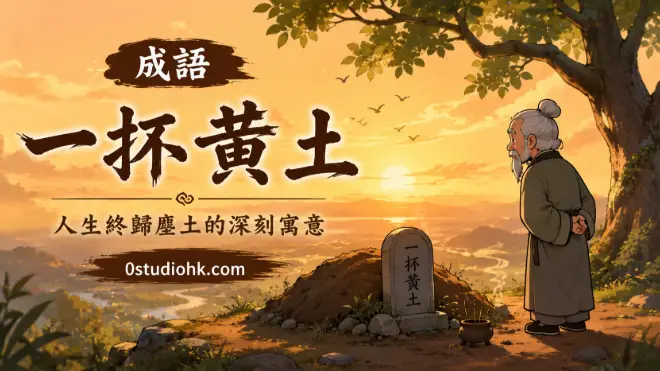
成語「一抔黃土」意思與典故:人生終歸塵土的深刻寓意 | The Meaning of “Yi Pou Huang Tu”: A Chinese Idiom Reflecting Life’s Final Return
「一抔黃土」是充滿人生哲理的中國成語,形容人死後歸於塵土,也比喻墳墓或生命最終的歸宿。它蘊含古人對生命、榮辱與無常的思考,提醒人們珍惜當下,不必過度執著於名利與得失。
“Yi Pou Huang Tu” is a traditional Chinese idiom symbolizing the final resting place of life. It reminds us that wealth, status, and achievements eventually fade, while a meaningful life leaves the deepest legacy.
中文
「一抔黃土」中的「抔」是古代計量土塊的小單位,意思是一捧泥土,因此「一抔黃土」字面意思就是一小捧黃土。古人常用它來比喻墳墓,也象徵人生最終歸於塵土。這個成語源自古代文學作品,後來逐漸成為形容生命終點的重要詞語。它並非單純描寫死亡,而是藉由黃土提醒世人,無論富貴貧賤、功名利祿,最終都會回歸自然,人人平等。正因如此,「一抔黃土」帶有濃厚的人生哲理,鼓勵人們不要過度沉迷於短暫的榮耀,而應重視品德、親情與對社會的貢獻。在文學作品中,這個成語經常用來抒發對歷史人物、英雄豪傑或親人的追思,也表達人生無常與歲月流逝的感慨。現代中文裡,「一抔黃土」除了指墓地,也可象徵生命終將結束,提醒人們珍惜眼前的人與事,把握有限的時間,活出真正有價值的人生。它沒有悲觀消極的意味,反而透過對生命有限性的體悟,引導人們思考什麼才是真正值得留下的東西,因此至今仍是富有文化內涵與哲學意味的重要成語。
English Version
The idiom “Yi Pou Huang Tu” literally means “a handful of yellow earth.” In ancient China, the word “pou” referred to a small amount of soil held in one’s hands. Over time, the expression came to symbolize a grave or the final resting place of every human life. Rather than focusing only on death, the idiom conveys a deeper philosophical message: regardless of wealth, power, or social status, everyone eventually returns to the earth. Because of this symbolism, the phrase is frequently used in literature, history, and poetry to express reflections on mortality and the passing of time. It encourages people to value kindness, integrity, and meaningful relationships instead of temporary success or material possessions. In Chinese culture, remembering that life is finite is not considered pessimistic but rather a way to inspire gratitude and wiser choices. Modern writers still use “Yi Pou Huang Tu” when discussing historical figures, family ancestors, or the impermanence of life. It serves as a gentle reminder that what truly endures is not fame or fortune but the influence we leave on others. By recognizing the inevitable return to the earth, people are encouraged to live with humility, compassion, and purpose, making every moment count.
小故事:
很久以前,有一位富商一生追求財富,擁有無數田地、商舖和珍寶。他相信,只要擁有更多金銀,就能獲得真正的幸福。一天,他經過山上的古墓,遇見一位正在掃墓的老人。老人望著眼前簡單的小土堆,平靜地說:「無論生前多麼富有,最後都只剩下一抔黃土。」富商聽後只是笑了笑,並沒有放在心上。多年後,一場大火燒毀了他的商號,大部分財產化為灰燼。他失去一切,只能重新開始。某日,他再次來到那座古墓,想起老人曾說過的話,終於明白人生真正珍貴的不是財富,而是陪伴自己的家人、誠信待人的品格,以及曾經幫助過別人的善行。從那天起,他將更多時間投入公益,照顧鄉里,也教育子孫珍惜生命而不是炫耀財富。當他晚年回首一生時,不再為失去的金銀感到遺憾,反而因自己留下的善意而感到滿足。他常對年輕人說:「終有一天,我們都會化作一抔黃土,但善行與品德,卻能長留在人們心中。」
English Version
Long ago, there lived a wealthy merchant whose greatest ambition was to accumulate more land, gold, and treasures than anyone else. He believed that success could be measured only by the size of his fortune. One afternoon, while traveling through the countryside, he passed an old cemetery where an elderly man was quietly tending a simple grave. Looking at the small mound of earth, the old man softly remarked, “In the end, every life becomes only a handful of soil.” The merchant smiled politely but paid little attention to the words. Years later, disaster struck. A massive fire destroyed his warehouses, and nearly all of his wealth disappeared overnight. Forced to rebuild his life from nothing, he remembered the old man’s quiet wisdom. He realized that the people who remained beside him—his family, loyal friends, and neighbors—were worth far more than any treasure. As time passed, he devoted himself to helping his community, supporting schools, and caring for those in need. His reputation eventually rested not on his riches but on his generosity and kindness. When people later spoke of his life, they remembered his character rather than his fortune. Looking back in old age, he often told younger generations that everyone ultimately returns to the earth, but compassion, honesty, and good deeds continue living in the hearts of others. That understanding became the greatest wealth he ever possessed.
結語
「一抔黃土」提醒人們,人生雖然有限,但生命的價值並不在於擁有多少,而在於留下什麼。珍惜每一天、善待身邊的人、堅持正直與善良,才是真正能超越歲月、流傳後世的人生財富。
English Version
“Yi Pou Huang Tu” reminds us that life is temporary, but our character and actions can leave a lasting legacy. While possessions eventually disappear, kindness, integrity, and love continue to influence future generations.