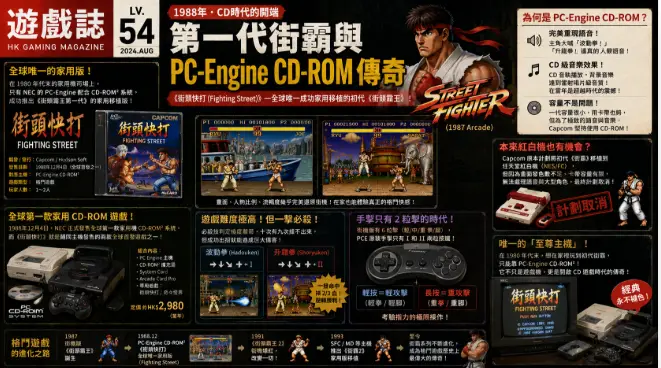
在《街頭霸王2》風靡全球之前,初代《街頭霸王》早已為格鬥遊戲奠下基礎。而在家用主機世界裡,當年只有PC-Engine CD-ROM能夠體驗這部傳奇作品。
Long before Street Fighter II became a worldwide phenomenon, the original Street Fighter laid the groundwork for the fighting game genre. For home players of the era, one machine stood alone as the gateway to this arcade classic.
中文
今天提起《街頭霸王》,大部分玩家首先想到的都是《街頭霸王2》及其後無數版本,但真正開創系列歷史的其實是1987年誕生的《街頭霸王》第一代。這款街機作品首次讓玩家操作隆與拳,透過波動拳、升龍拳等必殺技與世界各地對手決戰。雖然以今天眼光來看,遊戲系統仍然相當原始,但在當年卻是一項革命性作品。然而令人意外的是,這款後來成為經典的作品,在家用主機市場上卻擁有非常特殊的歷史。當時市面上的紅白機、Master System等主機雖然普及,但受限於硬體能力,難以完整重現街機版本的大型角色、豐富語音以及流暢動畫。就在這個背景下,NEC與Hudson Soft聯手推出的PC-Engine CD-ROM系統成為唯一解答。1988年,全球首款家用遊戲機CD-ROM擴充設備正式誕生,而《街頭快打》正是最早隨系統推出的重要作品之一。由於版權與市場因素,遊戲改以《Fighting Street》名義推出,但內容依然是玩家熟悉的初代《街頭霸王》。這款作品不單是系列首次登上家用平台,更見證了CD-ROM時代的開始。事實上,以遊戲容量來說,《街頭霸王》完全可以使用傳統卡帶發行,但製作團隊選擇CD-ROM的原因並非容量,而是聲音表現。透過CD音軌技術,遊戲成功收錄接近街機等級的人聲與背景音樂。當主角使出波動拳並大喊招式名稱時,玩家第一次在家中電視聽到接近唱片級音質的效果,那種震撼遠遠超越當時任何卡帶遊戲。對不少玩家而言,這是第一次感受到次世代遊戲的魅力。然而,《街頭快打》同時也是一款充滿爭議的作品。遊戲中的必殺技輸入判定極其嚴格,許多玩家往往花費大量時間仍無法穩定使出波動拳或升龍拳。偏偏這些招式威力又異常驚人,一旦成功命中便能大幅削減對手體力,因此遊戲經常演變成雙方拼命搖動控制器,希望幸運地使出必殺技的場面。此外,街機原作採用六鍵操作,但PC-Engine原裝手掣只有兩個按鈕,開發團隊只能利用不同按壓方式模擬攻擊強弱,令操作體驗更加獨特。儘管如此,當年的玩家依然樂此不疲。能夠在家中體驗街機名作,本身已經是一種奢侈享受。更重要的是,《街頭快打》與PC-Engine CD-ROM共同展示了未來遊戲產業的方向。多年後,CD-ROM成為主流媒體,而語音、動畫與高品質音樂也逐漸成為遊戲標準配置。回顧歷史,PC-Engine CD-ROM或許不是最暢銷的主機,但它卻是第一代《街頭霸王》唯一的家用歸宿,也因此成為不少老玩家心中難以取代的傳奇。
English Version
When gamers talk about the Street Fighter franchise today, the conversation almost always begins with Street Fighter II. Yet before that global sensation transformed arcades forever, there was the original Street Fighter, released in 1987. The game introduced Ryu, Ken, and the iconic special moves that would later define an entire genre. While primitive by modern standards, it represented a groundbreaking step forward in competitive gaming. Surprisingly, the journey of this arcade pioneer into the home market was anything but ordinary. During the late 1980s, most home systems relied on cartridge technology. Machines such as the NES and other contemporary consoles lacked the resources needed to recreate the arcade experience faithfully. Character sprites were large, audio requirements were demanding, and memory limitations presented serious obstacles. As a result, the original Street Fighter never achieved widespread home conversion success. One platform, however, stood apart from the rest. NEC’s PC-Engine CD-ROM system arrived as a technological marvel, introducing optical media to the home console market. Among its earliest showcase titles was Fighting Street, the home adaptation of Street Fighter. Released under a different name, the game became one of the first demonstrations of what CD-ROM technology could offer. The choice of CD-ROM was not simply about storage space. Instead, it was about delivering an experience that cartridges could not easily replicate. Voice samples, richer music, and superior audio quality helped create a level of immersion that felt futuristic for the era. Hearing special move calls through home speakers with near-CD quality sound left a lasting impression on players. Yet the game itself was famously challenging. Special move inputs required extraordinary precision, making techniques such as the Hadouken and Shoryuken difficult to perform consistently. Ironically, those same attacks were incredibly powerful, often deciding a match the moment they connected. This created a unique and sometimes chaotic style of play where victory could hinge on successfully executing a single move. Control limitations added another layer of complexity. The arcade machine featured six buttons, while the standard PC-Engine controller offered only two. Developers devised creative solutions to simulate different attack strengths, resulting in an experience unlike any later Street Fighter title. Despite these shortcomings, Fighting Street became a landmark release. More than a game, it represented a glimpse into the future of home entertainment. CD audio, voice acting, and enhanced presentation would eventually become industry standards, but players of the PC-Engine experienced these innovations years before they became commonplace. Today, the system may not be remembered as the dominant console of its generation, but its role in preserving the original Street Fighter gives it a special place in gaming history. For many enthusiasts, the combination of Fighting Street and the PC-Engine CD-ROM remains one of the most fascinating stories from the dawn of the CD gaming era.