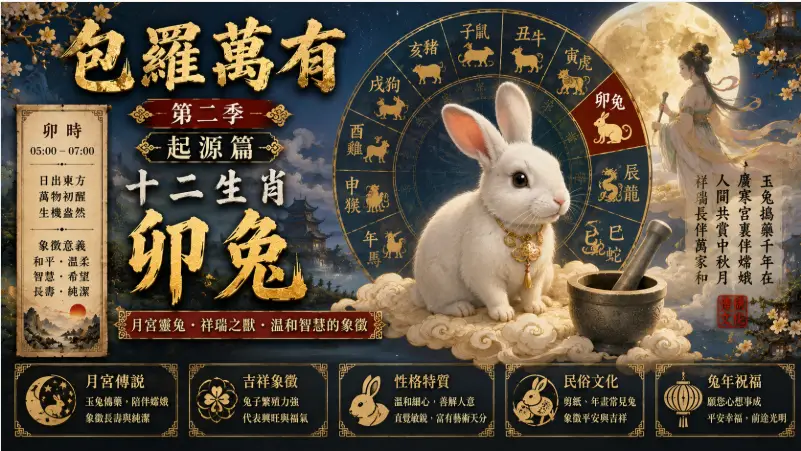
包羅萬有 第二季 起源篇|十二生肖 卯兔的月宮傳說與祥和象徵 | Origins Series Season 2 | The Rabbit in the Chinese Zodiac and the Legend of the Moon
卯兔在十二生肖中象徵溫柔、智慧與祥和。從月宮玉兔傳說到民間文化,兔子一直代表純潔與希望,也反映中國古代對自然與生命節奏的浪漫想像。
The Rabbit symbolizes peace, elegance, and intelligence in the Chinese Zodiac. From the legendary Jade Rabbit on the Moon to traditional folklore, the Rabbit has long represented harmony, gentleness, and the poetic imagination of ancient Chinese culture.
卯兔是十二生肖中的第四位,在中國文化中一直象徵溫柔、善良與靈巧。相比虎與龍等充滿威勢的生肖,兔子的形象更偏向祥和與安靜,因此深受古人喜愛。在中國古代神話裡,兔子與月亮有密切關係,其中最著名的便是「玉兔搗藥」傳說。相傳月宮中的玉兔長年陪伴嫦娥,在廣寒宮中搗製長生不老藥,因此兔子逐漸成為純潔、長壽與神秘的象徵。每逢中秋節,人們賞月時經常會聯想到月宮中的玉兔,這種形象也深深影響中國文學與藝術數千年。關於生肖兔的起源,民間同樣流傳玉皇大帝舉辦生肖競賽的故事。兔子雖然不像虎豹般強壯,但憑藉敏捷與機智成功抵達終點,因此成為十二生肖之一。故事中的兔子不依靠力量取勝,而是靠靈活與判斷力完成挑戰,這也讓卯兔被視為智慧與應變能力的代表。在古代農耕社會裡,兔子因繁殖力強,也象徵生命力與家庭興旺。部分民俗甚至將兔子視為吉祥動物,認為牠能帶來平安與福氣。十二地支中的「卯」,對應清晨五時至七時,也就是太陽剛升起、天地逐漸明亮的時間。古人觀察到兔子經常在黎明時分活動,因此將兔與卯時結合。這種安排不只是時間系統的一部分,也反映古人對自然規律與動物習性的細緻觀察。卯時同時象徵萬物甦醒與生機開始,因此兔子亦帶有春天與希望的象徵意義。隨着生肖文化發展,卯兔逐漸形成鮮明性格象徵。民間普遍認為屬兔的人溫柔細心、善解人意,而且具有優雅氣質與敏銳直覺。他們通常不喜衝突,重視和平與穩定,同時擁有良好審美與藝術天分。雖然有時顯得過於敏感,但也因此更能理解別人感受。這些生肖性格觀念雖然屬於傳統文化,但多年來已成為華人社會的重要生活話題。兔子在中國藝術與文學中的形象亦十分普遍。從古代壁畫、陶瓷到年畫與剪紙,兔子常與月亮、桂花樹與嫦娥共同出現,營造出富有詩意的東方幻想世界。在道教與民間傳說中,玉兔甚至被視為仙界靈獸之一,具有神聖與超凡地位。除了中國以外,兔子文化在日本、韓國與越南等地亦相當流行,不同地區甚至發展出各自的月兔傳說。每逢兔年,各地都會推出大量兔子主題的節慶裝飾與文創商品,使生肖兔成為最受歡迎的生肖之一。今天的卯兔,早已不只是十二生肖中的動物角色。牠代表人類對和平、美感與純真世界的想像,也承載中國古代神話與浪漫文化精神。從月宮傳說到現代流行文化,兔子的形象依然充滿魅力,成為華人世界中最溫暖而優雅的傳統象徵之一。
English Version
The Rabbit is the fourth animal in the Chinese Zodiac and has long symbolized gentleness, intelligence, elegance, and peace in Chinese culture. Unlike more aggressive zodiac creatures such as the Tiger or Dragon, the Rabbit represents calmness and harmony, making it one of the most beloved animals in traditional folklore. Among the most famous legends connected to the Rabbit is the story of the Jade Rabbit living on the Moon. According to ancient mythology, the Jade Rabbit accompanies Chang’e, the Moon Goddess, in the celestial palace where it endlessly pounds the elixir of immortality. This legendary image transformed the Rabbit into a symbol of purity, longevity, mystery, and spiritual beauty. During the Mid-Autumn Festival, generations of families have gazed at the moon while imagining the Jade Rabbit among the shadows, embedding the Rabbit deeply into Chinese art, poetry, and cultural imagination. Like the other zodiac animals, the Rabbit is also connected to the famous race organized by the Jade Emperor to determine the zodiac order. Although smaller and physically weaker than many competitors, the Rabbit succeeded through agility, cleverness, and quick decision-making. Rather than relying on brute strength, the Rabbit used intelligence and adaptability to overcome obstacles, reinforcing its symbolic association with wisdom and survival. In ancient agricultural society, rabbits were also linked to fertility and abundance because of their rapid reproduction, further strengthening their role as symbols of prosperity and family blessings. Within the traditional Chinese Earthly Branch system, the Rabbit corresponds to the branch “Mao,” representing the early morning hours between 5 a.m. and 7 a.m. Ancient observers noticed that rabbits were especially active during dawn when sunlight slowly illuminated the earth. As a result, the Rabbit became associated with renewal, awakening life, and the arrival of spring. This pairing reflects the ancient Chinese habit of linking animal behavior with cosmic rhythms and seasonal cycles. Over time, the Rabbit developed strong personality symbolism within zodiac traditions. People born in the Year of the Rabbit are commonly believed to be kind, graceful, thoughtful, artistic, and emotionally sensitive. They are often admired for their diplomacy, calm temperament, and refined taste. While sometimes viewed as overly cautious or sensitive, Rabbit personalities are generally associated with compassion and emotional intelligence. Though based on folklore rather than science, these zodiac interpretations remain highly influential in many Chinese communities today. The Rabbit also occupies an important place in Chinese art and literature. Traditional paintings, ceramics, paper cuttings, and decorative crafts frequently portray rabbits alongside the moon, osmanthus trees, and celestial landscapes, creating dreamlike scenes filled with poetic symbolism. In Taoist mythology and folk religion, the Jade Rabbit is often treated as a sacred spiritual creature connected to immortality and the heavens. Beyond China, rabbit legends also spread throughout East Asia, inspiring different moon rabbit traditions in Japan, Korea, and Vietnam. During the Year of the Rabbit, festive decorations, cultural events, and creative designs celebrating the animal appear around the world. Today, the Rabbit represents far more than a zodiac sign. It embodies humanity’s longing for peace, beauty, innocence, and spiritual harmony. From ancient moon legends to modern popular culture, the Rabbit continues to captivate imaginations across generations, remaining one of the most elegant and cherished symbols in Chinese civilization.