
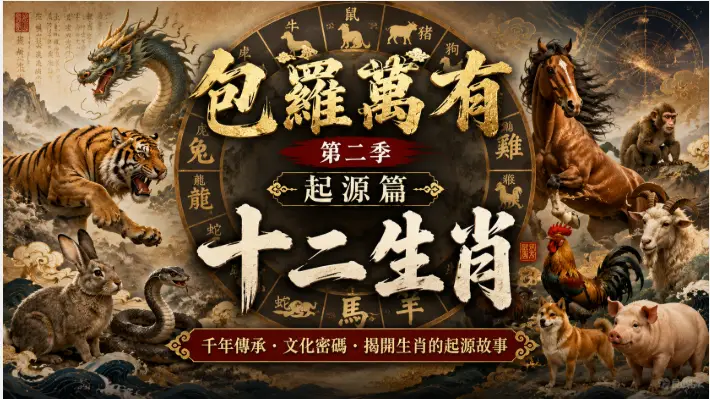
包羅萬有 第二季 起源篇|十二生肖的起源與中國千年文化密碼 | Origins Series Season 2 | The Origins of the Chinese Zodiac and Its Ancient Cultural Meaning
十二生肖不只是年份代表,更深深影響華人文化、民間信仰與性格觀念。從古代天文曆法到民間傳說,十二生肖流傳數千年,成為東方文化中最具代表性的象徵之一。
The Chinese Zodiac is far more than a cycle of animals marking the years. Rooted in astronomy, folklore, and ancient philosophy, the twelve zodiac animals have shaped traditions, beliefs, and cultural identity across generations throughout Chinese history.
中文
十二生肖是中國古代文化中最具代表性的符號之一,至今仍深深影響華人社會的節慶、命理、婚嫁與民間信仰。所謂十二生肖,就是以十二種動物配合十二地支形成循環紀年,包括鼠、牛、虎、兔、龍、蛇、馬、羊、猴、雞、狗與豬。這套系統不只是記錄年份的方法,更反映古人對自然、宇宙與人生規律的理解。關於十二生肖的起源,民間流傳最廣的說法,是玉皇大帝舉行動物競賽,最先到達天庭的十二種動物便成為生肖排序。機智的老鼠利用牛渡河而取得第一名,而龍雖然神力強大,卻因途中救人而只能排名第五。這些故事雖然帶有神話色彩,但也反映中國古代社會對智慧、勤勞、勇氣與忠誠等價值觀的重視。歷史學者普遍認為,十二生肖真正形成的時間,大約在先秦至漢代之間。當時中國古人已建立天干地支曆法,用來記錄時間、季節與農業循環。由於一般百姓難以記住複雜文字,於是以動物配對地支,讓民眾更容易記憶年份與時間。這種方式不但簡單,也讓生肖逐漸融入民間生活。十二生肖中的動物,大多與古代農耕社會密切相關。例如牛代表耕作與勤奮,馬象徵交通與戰爭,雞則負責報曉提醒作息。即使是神話中的龍,也象徵風雨與皇權。透過這些動物形象,可以看到中國古代社會與自然環境之間的密切關係。生肖文化後來逐漸發展成一套完整民俗系統,人們相信不同生肖代表不同性格與命運。例如屬虎的人被認為勇敢果斷,屬兔的人則溫和細膩,屬龍的人充滿領導氣質。雖然這些性格說法並沒有科學根據,但多年來已成為華人社會的重要文化習慣。每逢農曆新年,人們都會以當年生肖作為節慶主題,從揮春、年畫到燈飾與賀年商品,都充滿生肖元素。生肖文化亦隨華人移民傳播到世界各地,在東南亞、日本、韓國甚至西方社會都能看到其影響力。不同地區亦發展出屬於自己的生肖版本與故事。例如越南以貓取代兔,而部分民族則擁有不同動物排序。這說明生肖文化在漫長歷史中不斷演變,同時保留核心精神。今天的十二生肖,早已超越單純曆法功能,成為全球華人共同文化記憶的一部分。無論是在電影、動畫、文創設計還是社交媒體中,生肖依然擁有巨大吸引力。從古代農耕文明到現代流行文化,十二生肖跨越千年,依舊維繫著人們對傳統與身份的認同,也讓世界看見中國文化獨特而深遠的魅力。
English Version
The Chinese Zodiac is one of the oldest and most recognizable cultural systems in Chinese civilization. For centuries, the twelve zodiac animals have influenced calendars, folklore, traditional beliefs, fortune-telling practices, festivals, and even personal identity across Chinese communities worldwide. The zodiac consists of twelve animals arranged in a repeating cycle: Rat, Ox, Tiger, Rabbit, Dragon, Snake, Horse, Goat, Monkey, Rooster, Dog, and Pig. More than a simple method of counting years, this system reflects how ancient Chinese society understood time, nature, and cosmic order. One of the most famous legends surrounding the zodiac tells of a grand race organized by the Jade Emperor. According to the story, the first twelve animals to arrive at the heavenly gate would earn a place in the zodiac cycle. The clever Rat secured first place by riding on the Ox before jumping ahead at the last moment, while the mighty Dragon, despite its supernatural power, finished later after stopping to help villagers suffering from drought. These myths became symbolic stories about intelligence, loyalty, kindness, and perseverance. Historians generally believe that the zodiac system gradually developed between the pre-Qin and Han dynasties alongside the ancient Heavenly Stems and Earthly Branches calendar system. Since complicated written calendars were difficult for ordinary people to memorize, animals were matched to the twelve Earthly Branches to create a simpler and more relatable method of tracking years and time. This practical system eventually evolved into an important cultural tradition deeply woven into daily life. Many zodiac animals were closely connected to ancient agricultural society. The Ox symbolized hard work and farming, the Horse represented transportation and military strength, while the Rooster acted as a natural alarm clock announcing the sunrise. Even the mythical Dragon reflected humanity’s dependence on rain, storms, and natural forces. Through these animals, the zodiac became a mirror of the relationship between humans and the natural world. Over time, the Chinese Zodiac expanded beyond timekeeping and became associated with personality traits and destiny. People born in the Year of the Tiger are often considered brave and confident, while those born in the Year of the Rabbit are viewed as gentle and thoughtful. Individuals born in the Year of the Dragon are frequently associated with ambition and leadership. Although these interpretations are cultural beliefs rather than scientific facts, they remain deeply rooted in Chinese society and continue to influence social customs, matchmaking traditions, and festive celebrations. During Lunar New Year celebrations, the zodiac animal of the year becomes a major cultural symbol appearing on decorations, red envelopes, lanterns, artwork, souvenirs, and public events. As Chinese communities migrated around the world, zodiac traditions spread across Asia and beyond, influencing neighbouring cultures such as those in Vietnam, Korea, and Japan. Some regions even adapted the zodiac with local variations, such as replacing the Rabbit with the Cat in Vietnamese tradition. These regional differences reveal how the zodiac evolved across centuries while preserving its cultural essence. Today, the Chinese Zodiac remains a powerful symbol of Chinese identity and heritage. From ancient farming villages to modern films, digital art, fashion, and global pop culture, the twelve zodiac animals continue to inspire fascination across generations. Their enduring popularity reflects not only the strength of traditional Chinese culture, but also humanity’s timeless desire to connect stories, nature, and identity through shared symbols.