西蒙·玻利華(Simón Bolívar)與大哥倫比亞:南美解放者如何改變拉丁美洲歷史 | Simón Bolívar and Gran Colombia: The Liberator Who Reshaped South America | 世界名人錄
西蒙·玻利華被譽為南美洲最偉大的革命領袖之一,他以堅定意志帶領多個殖民地擺脫西班牙統治,並建立短暫而影響深遠的大哥倫比亞共和國。他的理想不只是獨立,更希望拉丁美洲能團結成強大的聯邦國家,改變整個南美歷史進程。
Simón Bolívar remains one of the most influential revolutionary leaders in world history. Known as “The Liberator,” he led independence movements across northern South America and inspired the dream of a united Latin American republic called Gran Colombia. His military campaigns, political vision, and enduring legacy continue to shape the identity of many modern nations.
中文
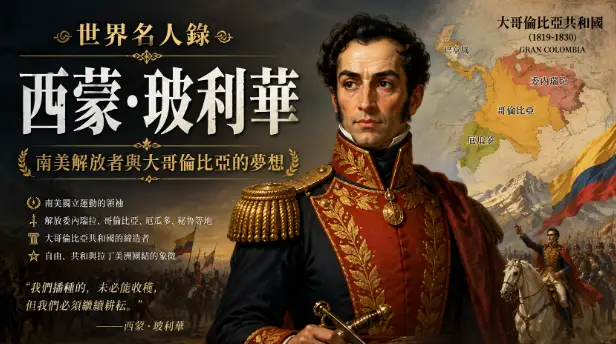
西蒙·玻利華出生於1783年的委內瑞拉加拉加斯,出身富裕的克里奧爾家族。雖然成長於殖民時代的上流社會,但他從年輕時期便接觸到歐洲啟蒙思想,包括自由、共和與民族自主等理念。法國大革命與拿破崙崛起深深影響了他的政治觀念,也逐漸讓他產生推翻西班牙殖民統治的想法。1804年拿破崙加冕時,玻利華曾親身在歐洲見證歷史巨變,他開始相信拉丁美洲同樣能夠建立屬於自己的共和國。回到南美後,西班牙帝國因拿破崙入侵而陷入混亂,殖民地人民對宗主國的不滿快速升高。1810年,委內瑞拉爆發革命,玻利華正式投入獨立運動。他不僅擁有卓越軍事才能,也具備極強的演說能力,很快成為革命陣營的重要領袖。雖然早期革命數度失敗,但玻利華並未放棄。他曾流亡牙買加與海地,在當地撰寫著名的《牙買加書簡》,提出拉丁美洲未來應走向統一與共和制度的理想。海地政府後來提供武器與支援,成為他重新發動革命的重要力量。1819年是玻利華人生的重要轉折點。他率領軍隊翻越安地斯山脈,以極為艱苦的行軍方式突襲西班牙軍隊,最終在博亞卡戰役獲得關鍵勝利,成功解放新格拉納達,也就是今日的哥倫比亞地區。這場戰役被視為南美獨立戰爭的重要里程碑。隨後玻利華陸續解放委內瑞拉、厄瓜多與秘魯等地,並協助建立玻利維亞共和國,該國國名更直接以他命名,以紀念其革命貢獻。玻利華最大的政治理想,是建立名為「大哥倫比亞」的聯邦共和國。這個國家於1819年成立,版圖涵蓋今日哥倫比亞、委內瑞拉、巴拿馬與厄瓜多等地區。他希望透過統一的政府與軍事力量,避免拉丁美洲重新遭受外國勢力控制。然而,大哥倫比亞內部很快出現嚴重矛盾。地方勢力、區域利益與政治理念差異不斷擴大,加上交通困難與經濟問題,使聯邦制度難以穩定運作。玻利華晚年不得不面對分裂危機,甚至遭遇暗殺威脅。他原本期待建立像美國般強大的聯邦國家,但現實中的南美各省卻更傾向地方自治。1830年,大哥倫比亞正式瓦解,同年玻利華因肺病去世,享年47歲。臨終前,他曾感嘆自己「耕耘於大海」,表達對政治現實的失望。然而,即使大哥倫比亞未能長久存在,玻利華仍然成為整個拉丁美洲自由精神的重要象徵。今日的委內瑞拉、哥倫比亞、厄瓜多、秘魯、玻利維亞與巴拿馬等國,都將他視為民族英雄。大量城市、街道、雕像與貨幣均以玻利華命名。他的思想也深深影響後來的拉丁美洲政治運動,包括民族主義、反殖民主義與區域團結理念。歷史學家普遍認為,玻利華不只是軍事領袖,更是一位具有理想主義色彩的政治革命家。他一生都在追求自由與統一,但同時也面臨現實政治的殘酷挑戰。大哥倫比亞雖然短暫,卻成為拉丁美洲聯盟夢想的重要起點,也讓西蒙·玻利華成為世界近代史上最具代表性的解放者之一。
English Version
Simón Bolívar was born in Caracas in 1783 into a wealthy Creole family during the height of Spanish colonial rule in South America. Despite his privileged upbringing, he became deeply influenced by Enlightenment philosophy, especially ideas surrounding liberty, republican government, and national sovereignty. During his travels in Europe, Bolívar witnessed the political upheaval created by the French Revolution and the rise of Napoleon Bonaparte. These experiences convinced him that Spanish America could also break free from imperial control and create independent republics. When Napoleon invaded Spain in the early nineteenth century, political instability weakened the Spanish Empire and opened opportunities for colonial resistance across Latin America. Bolívar quickly emerged as one of the leading voices of revolution in Venezuela. Early independence efforts faced repeated military defeats, forcing him into exile in Jamaica and later Haiti. While abroad, he wrote the famous “Letter from Jamaica,” outlining his vision for an independent and united Latin America. Haiti’s revolutionary government provided him with weapons, funding, and support, allowing him to resume the struggle against Spanish forces. Bolívar’s greatest military achievement came in 1819 when he led his army across the harsh Andes Mountains in a daring campaign that surprised Spanish troops in New Granada. The victory at the Battle of Boyacá became a turning point in the South American wars of independence. From there, Bolívar continued liberating territories across northern and western South America, including present-day Colombia, Venezuela, Ecuador, Peru, and Bolivia. His influence was so significant that the newly independent nation of Bolivia was named in his honor. Beyond military success, Bolívar pursued an ambitious political dream: the creation of Gran Colombia, a vast republic uniting several former Spanish colonies into a single federation. Established in 1819, Gran Colombia included modern Colombia, Venezuela, Ecuador, and Panama. Bolívar believed that only a strong and united Latin America could resist foreign intervention and maintain long-term stability. However, the project soon encountered major obstacles. Regional rivalries, political disagreements, economic difficulties, and geographic barriers weakened the central government. Different provinces preferred local autonomy rather than centralized rule from Bogotá. Bolívar struggled to balance democratic ideals with the need for political order, and critics increasingly accused him of authoritarian tendencies. Assassination attempts and political rebellions further destabilized the young republic. By 1830, Gran Colombia collapsed into separate nations. In the same year, Bolívar died from illness at the age of forty-seven. Although deeply disappointed by the failure of his union project, his reputation as “The Liberator” endured throughout Latin America. Today, Bolívar remains one of the continent’s most celebrated historical figures. Countless monuments, plazas, schools, and currencies bear his name, and his image continues to symbolize freedom, anti-colonial resistance, and regional unity. Historians often describe Bolívar as both a visionary and a tragic political figure. He successfully helped liberate much of South America from Spanish rule, yet he was unable to preserve the continental unity he imagined. Even so, the idea of Latin American cooperation that he championed continues to influence politics and diplomacy across the region. Gran Colombia may have existed only briefly, but Bolívar’s dream of a united continent remains one of the most powerful political ideals in Latin American history.