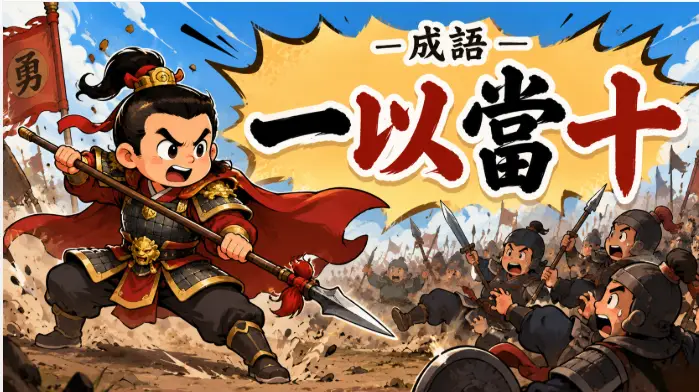
一以當十意思解析|形容能力超群的經典成語 | The Meaning of “One Person Equal to Ten” Explained | 成語
「一以當十」是一個充滿力量感的成語,用來形容一個人能力出眾,可以抵得上十個人的力量或作用。這個成語常見於戰爭、工作、學習與團隊合作之中,不只是讚美個人的實力,也象徵效率、智慧與過人的才能。它展現了人在關鍵時刻突破極限、以少勝多的精神。
The Chinese idiom “一以當十” describes someone so capable that one person can perform the work or achieve the impact of ten others. The phrase is often associated with exceptional ability, courage, efficiency, and leadership. It highlights the power of skill and determination in overcoming overwhelming challenges.
「一以當十」字面上的意思是「一個人可以抵得上十個人」,用來形容某人能力極強、效率極高,或在某方面遠遠超越一般人。這個成語最早常用於軍事場合,形容勇猛善戰的士兵能夠以少敵多,在戰場上發揮驚人的戰鬥力。後來,它的使用範圍逐漸擴大,不再局限於戰爭,而是被廣泛應用於工作、學習與各種競爭情境之中。例如,一位經驗豐富的老師可能能同時處理多項工作,一位優秀的工程師能迅速解決複雜問題,都可以被稱為「一以當十」。這個成語除了稱讚能力,也反映人們對效率與專業的重視。真正能「一以當十」的人,往往不只是靠體力,而是擁有過人的智慧、經驗與判斷力。他們懂得如何在有限時間內發揮最大效果,因此能在困難局面中脫穎而出。然而,這個成語也隱含另一層思考。雖然能力強大令人敬佩,但如果所有責任都集中在少數人身上,也可能造成巨大壓力。因此,一個健康的團隊不應只依賴單一人物,而應讓更多人成長與分擔責任。從人生角度來看,「一以當十」更像是一種精神象徵,代表人在面對挑戰時願意全力以赴,不輕易退縮。它鼓勵人們提升實力、培養專業,並在關鍵時刻展現超越平常的能力。這也是這個成語歷久不衰的重要原因,因為它反映了人類對強大實力與突破極限的嚮往。
English Version
The idiom “一以當十” literally means “one person equals ten.” It is used to describe individuals whose abilities, strength, or effectiveness far exceed those of ordinary people. Originally, the phrase was closely connected to warfare, where a highly skilled warrior could defeat multiple enemies alone or inspire an entire army through bravery and leadership. Over time, the idiom expanded beyond military settings and became widely used in education, business, sports, and daily life. In modern society, someone described as “一以當十” may be an employee capable of handling many responsibilities efficiently, a teacher whose influence reaches countless students, or a leader who can guide an organization through crisis with exceptional skill. The expression emphasizes not only physical strength but also intelligence, experience, discipline, and strategic thinking. Truly outstanding individuals often achieve more because they know how to use their time, energy, and knowledge effectively. The idiom therefore reflects admiration for excellence and professional mastery. Yet there is also a deeper lesson hidden within the phrase. While extraordinary people can accomplish remarkable things, relying too heavily on a single individual can create imbalance and pressure. A healthy team or society cannot depend forever on one hero alone. Sustainable success requires cooperation and the development of many capable people. From a broader perspective, “一以當十” symbolizes the human spirit of pushing beyond ordinary limits. It represents courage under pressure, determination during hardship, and the belief that skill and perseverance can overcome disadvantages. This enduring message explains why the idiom continues to remain relevant across generations. People are naturally inspired by stories of individuals who rise above expectations and achieve what once seemed impossible. Through this phrase, Chinese culture celebrates not only strength itself, but also the discipline and dedication required to become truly exceptional.
小故事:
古代有一位年輕將軍,雖然年紀不大,卻十分善於用兵。有一年,邊境突然遭到敵軍入侵,而朝廷派出的援軍還未趕到。城中士兵人數遠少於敵人,百姓都十分恐慌。許多人認為這場戰役根本沒有勝算,但年輕將軍並沒有放棄。他仔細觀察地形後,決定利用山谷與夜色設下埋伏。當敵軍大舉進攻時,他率領少數精兵突然從側翼突襲,同時命士兵在山上敲鼓吶喊,營造出大軍包圍的假象。敵軍一時混亂,以為中了埋伏,開始四散逃跑。短短一夜之間,原本處於劣勢的守軍竟成功守住城池。戰後,朝廷大臣都對這位年輕將軍刮目相看,有人讚嘆說:「此人真可一以當十!」這句話很快流傳開來,成為形容能力超群之人的讚美之詞。後來,那位將軍並沒有因此自滿,反而更加努力訓練士兵。他常說:「真正強大的,不是一人獨勝,而是讓每個人都變得更強。」在他的帶領下,原本弱小的軍隊逐漸成為邊境最精銳的部隊。這個故事也讓後人明白,「一以當十」並不只是天生才能,更來自長期累積的智慧、勇氣與責任感。當一個人願意不斷磨練自己,就有可能在關鍵時刻發揮超乎常人的力量。
English Version
Long ago, there was a young general famous for his intelligence and courage despite his age. One year, enemy forces suddenly invaded the borderlands while reinforcements from the capital were still far away. The defending soldiers were heavily outnumbered, and fear quickly spread among the citizens. Many believed the city would inevitably fall. However, the young general refused to surrender to despair. After carefully studying the surrounding mountains and valleys, he created a bold strategy. Under the cover of darkness, he led a small group of elite soldiers through hidden paths to attack the enemy from the side. At the same time, he ordered troops stationed on nearby hills to beat drums loudly and shout battle cries, creating the illusion that a massive army was surrounding the invaders. Confused and frightened, the enemy troops believed they had fallen into a trap and began retreating in panic. By sunrise, the city had been successfully defended despite overwhelming odds. News of the victory spread rapidly throughout the kingdom. Officials at court praised the young commander, saying, “This man is truly worth ten soldiers by himself.” The phrase soon became famous as a compliment for extraordinary ability and leadership. Yet the general himself remained humble. Rather than relying only on his own talent, he devoted even more effort to training his troops. He often told his soldiers, “True strength is not one person winning alone, but helping everyone become stronger together.” Under his leadership, the once weak army gradually became the strongest force along the frontier. The story reminds people that “一以當十” is not simply about natural talent. Exceptional ability is often built through discipline, wisdom, courage, and a deep sense of responsibility. When people continue improving themselves and refuse to give up under pressure, they may discover strengths far beyond what they once believed possible.
結語
「一以當十」象徵卓越能力與超越常人的實力,也提醒人們真正的強大來自長期努力與智慧累積。在人生與工作中,只要持續提升自己,就有機會在關鍵時刻發揮巨大影響力。
English Version
The idiom “一以當十” represents excellence, determination, and the ability to rise above limitations. It reminds people that extraordinary achievements are often the result of discipline, preparation, and the courage to face challenges with confidence.