一毛不拔意思解析|形容極度吝嗇的經典成語 | The Meaning of “Wouldn’t Give Up Even One Hair” Explained | 成語
「一毛不拔」是一個廣為人知的成語,用來形容人極度吝嗇、自私,連最微小的利益也不願意付出。這個成語雖然帶有幽默感,但背後其實反映了人性中的得失觀念與對金錢的態度。無論在古代還是現代,「一毛不拔」都經常被用來形容過分計較、不願分享的人。
The Chinese idiom “一毛不拔” describes someone so stingy that they refuse to give up even the smallest thing. Though often used humorously, the phrase also reflects deeper ideas about selfishness, generosity, and human attitudes toward wealth and personal gain. It remains a common expression in daily conversation today.
「一毛不拔」字面上的意思是「連一根毛也不願拔下來」,用來形容一個人極度吝嗇,不肯付出任何利益。這個成語源自古代思想故事,其中有人認為即使只是損失自己一根毛髮,也不願意用來幫助天下,因此後世便以「一毛不拔」來形容自私小氣的人。由於「毛」代表極小、幾乎微不足道的東西,所以這個成語更強調一種過度計較的心態。現代生活中,「一毛不拔」常用來形容不願請客、不願捐款、凡事只考慮自身利益的人。例如朋友聚餐時總找藉口不付錢,或企業明明獲利豐厚卻不願改善員工待遇,都可能被批評為「一毛不拔」。然而,這個成語不只是單純批評節省。節儉本身是一種美德,但如果過度到完全缺乏分享與同理心,就容易變成吝嗇與冷漠。真正令人反感的,不是省錢,而是只顧自己、不願幫助別人的態度。從心理角度來看,「一毛不拔」的人往往害怕失去利益,因此凡事斤斤計較,甚至在人際關係中也過分防備。但人與人之間的信任與情感,很多時候正是透過願意付出與分享而建立。如果只是一味守住自己的利益,最後可能失去比金錢更珍貴的人際關係。因此,「一毛不拔」這個成語除了形容吝嗇,也提醒人們平衡得失與人情。真正成熟的人,懂得在適當時候付出,因為有些價值並不能用金錢衡量。
English Version
The idiom “一毛不拔” literally means “not willing to pull out even a single hair.” It is used to describe people who are extremely stingy or selfish, unwilling to sacrifice even the tiniest amount for others. The phrase originates from an ancient philosophical story in which a man claimed he would not give up even one hair from his own body to benefit the world. Over time, this idea evolved into a widely used expression for excessive greed and unwillingness to share. The “hair” in the idiom symbolizes something incredibly small and insignificant, making the phrase especially powerful in describing people who argue over trivial losses. In modern life, “一毛不拔” is often used to criticize people who avoid paying their share at dinners, refuse to help others financially despite having wealth, or always place personal gain above kindness and fairness. However, the idiom is not simply an attack on saving money. Frugality itself can be a positive quality. The problem begins when carefulness with money turns into selfishness and emotional coldness. What people dislike is not reasonable saving, but the unwillingness to contribute anything at all to relationships, communities, or shared responsibilities. Psychologically, those described as “一毛不拔” may fear loss so strongly that they become overly protective of every resource they possess. Yet meaningful human relationships are often built through generosity, trust, and mutual support. Someone who only protects personal interests may eventually lose friendships, respect, and emotional connection. The idiom therefore carries a broader social lesson. Wealth and possessions alone cannot create lasting happiness. Sometimes a small act of giving can strengthen bonds far more valuable than money itself. “一毛不拔” continues to endure in Chinese culture because it humorously yet sharply exposes the dangers of excessive selfishness and reminds people that generosity is an essential part of human connection.
小故事:
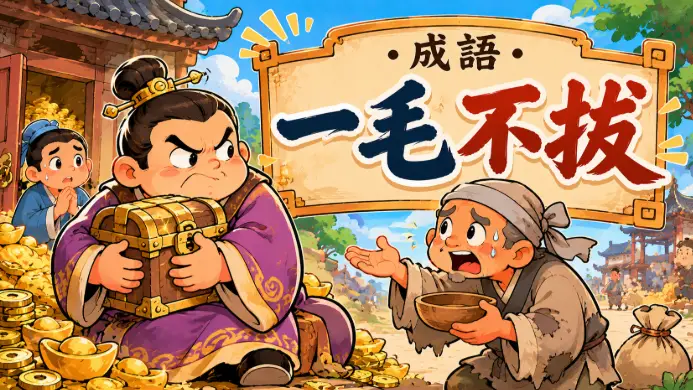
古代有一位富商,家中金銀滿庫,卻以吝嗇聞名全城。他每天穿著舊衣服,吃最簡單的飯菜,即使家僕辛苦工作多年,也很少得到賞錢。有一年冬天,城裡忽然遭遇大雪,許多窮人缺衣少食。地方官員與鄉紳紛紛捐糧救濟,唯獨這位富商始終緊閉大門,不願出一分一毫。百姓私下都說他「一毛不拔」。有一天,一名老乞丐來到他門前討飯,富商不但不給,還命人把乞丐趕走。就在爭吵時,富商最疼愛的小孫子突然病倒,高燒不退。城中大夫看過後都束手無策。後來,一位路過的老醫者願意前來診治,但條件是富商必須先救濟城中的窮人。富商雖然十分不願意,但為了孫子,只好開倉施糧。消息傳開後,許多百姓都十分感激,紛紛幫忙照顧富商一家。幾天後,小孫子的病情也慢慢好轉。經歷這件事後,富商終於明白,財富若只是一味收藏,並不能真正帶來幸福;反而願意分享與幫助別人,才能得到人心與尊重。從此之後,他開始改變態度,不再事事斤斤計較。人們後來談起他年輕時的模樣,仍會笑說:「他以前可是個一毛不拔的人啊!」這個故事也提醒後人,真正的富有,不只是擁有多少財物,更在於是否懂得付出與關懷。
English Version
Long ago, there lived a wealthy merchant known throughout the city for his extreme stinginess. Although his warehouses were filled with gold and silver, he dressed in old clothes, ate the cheapest meals, and rarely rewarded the servants who worked tirelessly for him. One harsh winter, heavy snow struck the region, leaving many poor families hungry and freezing. Local officials and respected citizens donated food and supplies to help those in need, but the merchant kept his gates tightly closed and refused to contribute anything. People quietly mocked him as someone who “wouldn’t give up even one hair.” One day, an elderly beggar approached the merchant’s house asking for food. Instead of offering help, the merchant angrily ordered his servants to drive the man away. During the commotion, however, the merchant’s beloved young grandson suddenly collapsed with a severe fever. Doctors from across the city tried to treat the child, but none could cure him. Eventually, a traveling physician arrived and agreed to help, but only on one condition: the merchant must first open his granaries and provide relief to the suffering townspeople. Reluctantly, the merchant agreed for the sake of his grandson. Soon food was distributed throughout the city, and the grateful villagers began helping the merchant’s family in return. Over the following days, the boy slowly recovered. The experience changed the merchant deeply. He realized that wealth hidden away could not truly bring happiness or security. Respect and kindness from others were far more valuable than piles of gold locked behind doors. From that day forward, he became more generous and stopped obsessing over every small expense. Years later, townspeople still laughed when recalling his younger days, saying, “He used to be the very definition of ‘一毛不拔.’” The story survived because it teaches an important lesson: true richness is measured not only by what a person owns, but also by their willingness to share and care for others.
結語
「一毛不拔」雖然常帶有嘲諷意味,但也讓人反思金錢與人情之間的平衡。懂得珍惜資源固然重要,但若失去分享與關懷之心,再多財富也難以換來真正的尊重與幸福。
English Version
The idiom “一毛不拔” reminds people that excessive selfishness can damage relationships and isolate individuals from others. While careful use of money is wise, generosity and compassion are equally important in creating a meaningful and respected life.