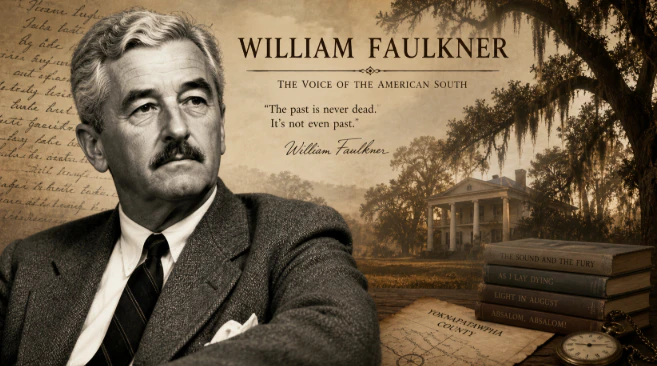
威廉·福克納以獨特敘事與時間結構重塑小說形式,描繪美國南方歷史與人性糾葛,其作品深刻影響現代文學發展。
William Faulkner transformed narrative structure with bold experimentation, capturing the haunted memory of the American South while probing the complexities of human consciousness.
中文
威廉·福克納是二十世紀最具影響力的小說家之一,他出生於美國密西西比州,深受南方文化、歷史與家族傳統影響,這些元素構成他創作的核心背景,他以虛構的「約克納帕塔法縣」為舞台,建立出一個龐大而複雜的文學世界,將奴隸制度、種族矛盾、家族衰落與人性掙扎交織其中,形成獨特的敘事宇宙,他的作品並不追求線性故事,而是以多重視角與時間交錯呈現人物內心,使讀者進入一種近乎心理流動的閱讀體驗,他善於使用意識流手法與非傳統結構,例如在《聲音與憤怒》中透過不同角色的主觀視角重構事件,使時間不再是單一軸線,而是破碎而重疊的存在,這種寫法挑戰了讀者對敘事的理解,同時也提升了文學的藝術層次,福克納筆下的人物往往背負歷史與罪責,他們在過去與現在之間掙扎,反映出南方社會在戰後的心理創傷與價值崩解,他關注的不只是個人命運,更是整個文化體系的衰落與轉型,他的語言風格濃厚而富節奏感,句式長而複雜,常帶有詩性與哲學思考,使作品具有高度辨識度,1949年他獲得諾貝爾文學獎,評審肯定他對現代小說技術的貢獻以及對人類精神的深刻洞察,他在得獎演說中提到作家應關注人類心靈的勇氣與尊嚴,這也成為理解其創作的重要線索,福克納的影響遍及全球,從拉丁美洲魔幻寫實主義到後現代小說皆可見其影子,他的作品雖然閱讀難度較高,但正因如此,才使其具有持久的學術與藝術價值,他不僅書寫南方,更書寫人類共同的記憶與存在困境,使其成為跨越時代的重要文學象徵
English Version
William Faulkner stands as one of the defining voices of twentieth-century literature, rooted deeply in the cultural landscape of Mississippi where he was born, his fictional Yoknapatawpha County became a literary territory as vivid as any real place, allowing him to explore themes of memory, decay, race, and identity within the American South, rather than presenting straightforward plots, Faulkner reshaped storytelling through fragmented timelines and shifting perspectives, inviting readers to experience consciousness as fluid and layered, in works like The Sound and the Fury, events unfold through multiple subjective viewpoints, dissolving the boundaries of chronological time and replacing them with emotional and psychological truth, his characters are often burdened by inherited guilt and haunted by the past, embodying a society struggling to reconcile its history with its present, Faulkner’s prose is dense, rhythmic, and richly textured, marked by long sentences that echo both poetic cadence and philosophical reflection, this stylistic boldness not only distinguishes his voice but also challenges readers to engage more deeply with narrative form, awarded the Nobel Prize in Literature in 1949, he was recognized for his powerful contribution to modern fiction and his profound insight into the human condition, in his acceptance speech, Faulkner emphasized the enduring strength of the human spirit, a theme that resonates throughout his body of work, his influence extends far beyond American literature, shaping global narrative traditions including magical realism and postmodern experimentation, though his writing demands effort, it rewards readers with a layered understanding of time, memory, and identity, Faulkner did not merely document a region, he revealed the universal struggles embedded within it, securing his place as a timeless figure in world literature.