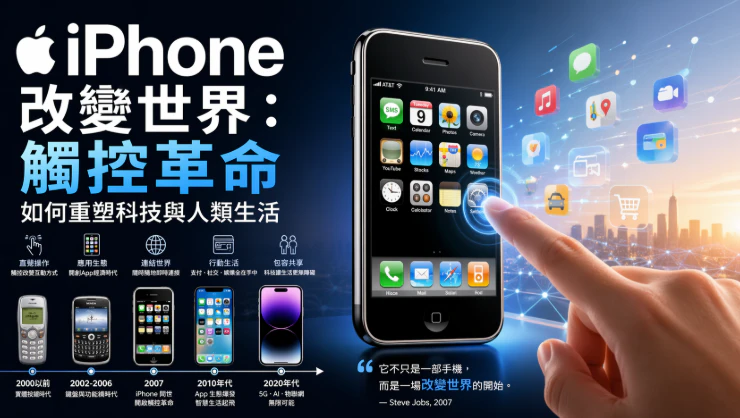
從實體按鍵到全觸控,iPhone引發的觸控革命,不僅改變手機,更重新定義人機互動、數碼生態與全球生活方式。
The iPhone sparked a touchscreen revolution that redefined not only mobile phones but also human-computer interaction, digital ecosystems, and everyday life worldwide.
中文
2007年,Steve Jobs在發布會上展示第一代iPhone時,說出「重新發明手機」這句話,當時聽來像宣傳口號,但事實證明這是一場徹底改變世界的技術革命。在iPhone出現之前,手機設計以實體鍵盤為核心,例如Nokia與BlackBerry主導市場,使用者需要依賴按鍵輸入與有限的操作邏輯,而觸控技術雖然存在,卻不成熟且反應遲緩。iPhone的突破在於將電容式多點觸控技術帶入主流,使手指成為最直覺的操作工具,滑動、縮放、點擊等動作變成自然語言般的互動方式,這種改變不只是硬體革新,更是人機關係的重構。觸控革命的核心,在於把「工具學習人」轉變為「工具適應人」,用戶不再需要理解複雜指令,而是以直覺操作科技設備,這種設計哲學迅速影響整個產業,從手機延伸至平板、筆電甚至公共裝置。隨著iPhone成功,Google推出Android系統全面跟進觸控設計,全球手機市場迅速進入全觸控時代,實體鍵盤幾乎消失,應用程式(App)生態亦隨之爆發,開發者開始為觸控介面設計專屬體驗,從遊戲、社交到電商,整個數碼經濟被重新塑造。觸控革命亦改變了媒體消費方式,人們從閱讀紙本轉向滑動螢幕,從觀看電視轉向短視頻與串流內容,資訊獲取變得即時且碎片化,同時也帶來注意力分散與沉浸式依賴的問題。此外,觸控技術推動了無障礙設計發展,例如手勢操作與語音輔助結合,使更多不同能力的人能夠使用科技產品,這在過去鍵盤時代難以實現。商業模式方面,觸控裝置催生了行動支付、即時通訊與共享經濟,從WhatsApp到各類外賣與叫車平台,生活節奏與城市運作模式都被重新定義。iPhone帶來的不只是產品成功,更是一種設計標準與文化影響,迫使整個科技產業重新思考使用者體驗的重要性。時至今日,觸控已成為數碼世界的基本語言,從自助售票機到智能家居控制面板,無處不在,而這一切的起點,正是當年那部看似簡單卻極具顛覆性的裝置。觸控革命證明,真正改變世界的科技,不只是功能提升,而是重新定義人類與科技之間的互動方式。
English Version
In 2007, when Steve Jobs introduced the first iPhone, he claimed it would “reinvent the phone,” a statement that sounded bold at the time but ultimately proved to be historically accurate. Before the iPhone, the mobile industry was dominated by companies like Nokia and BlackBerry, where devices relied heavily on physical keyboards and rigid input systems, requiring users to adapt to the machine rather than the other way around. Touchscreen technology existed but was limited, unresponsive, and far from intuitive. The iPhone’s breakthrough came from its capacitive multi-touch interface, transforming the human finger into the primary input tool and enabling gestures like swiping, pinching, and tapping to become a universal interaction language. This shift was not merely a hardware upgrade but a complete redefinition of human-computer interaction, where technology began to adapt to human behavior rather than forcing users to learn complex systems. The touchscreen revolution quickly spread across the industry, influencing not only smartphones but also tablets, laptops, kiosks, and even public infrastructure. Following Apple’s success, Google accelerated the development of Android, bringing touchscreen-based interaction to a global scale and effectively eliminating physical keyboards from mainstream devices. At the same time, the App ecosystem flourished, as developers began designing software specifically for touch-based experiences, reshaping industries such as gaming, social media, and e-commerce. The way people consume media also changed dramatically, shifting from traditional formats like print and television to touchscreen-driven digital platforms, where scrolling and tapping replaced page-turning and channel-switching. This transformation enabled instant access to information but also introduced new challenges, including shorter attention spans and increased digital dependency. Furthermore, touchscreen technology played a crucial role in advancing accessibility, combining gestures with voice assistance to make devices usable for a wider range of people, something that was far less achievable in the keyboard-centric era. Economically, the touchscreen revolution fueled the rise of mobile payments, instant messaging, and the sharing economy, with platforms like WhatsApp redefining communication and countless apps transforming transportation, food delivery, and daily services. The impact of the iPhone extended beyond its commercial success; it established a new design philosophy centered on user experience, forcing the entire tech industry to rethink how products should feel, respond, and integrate into human life. Today, touch interaction has become the default language of the digital world, present in everything from ticket machines to smart home systems, and its origins can be traced back to that single revolutionary device. The touchscreen revolution demonstrates that the most transformative technologies are not those that simply add new features, but those that fundamentally change how humans interact with machines and, in doing so, reshape society itself.