
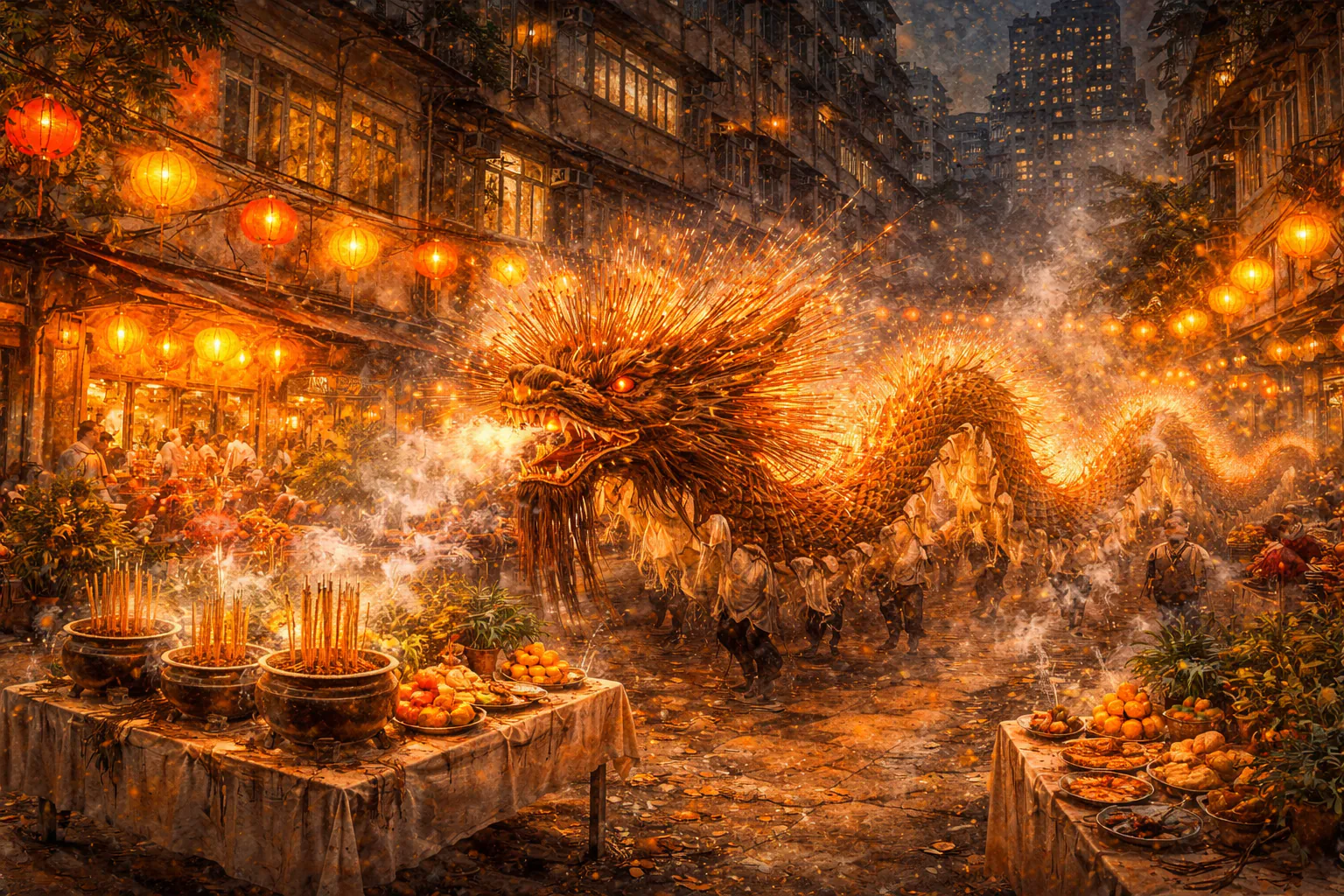
大坑舞火龍的夜色儀式|火光穿過街道的香港中秋傳統|Tai Hang Fire Dragon Dance|Hong Kong Mid-Autumn Festival Night Ritual and Living Tradition | 包羅萬有 第25章
在香港眾多傳統節慶之中,大坑舞火龍是一個極具地方特色的文化儀式。每到中秋節前後,銅鑼灣附近的大坑社區便會出現一條長長的火龍。當夜幕降臨,無數燃燒的香火點亮龍身,火光在街道之間緩緩移動,整個社區彷彿回到古老的年代。
舞火龍的歷史可以追溯到十九世紀末。相傳當時大坑村出現瘟疫,居民為了驅邪祈福,便依照傳統習俗製作龍形並舞動巡遊。村民相信透過火光與香火,可以驅除疾病與災禍,為地方帶來平安。這個儀式後來逐漸成為每年舉行的節慶。
火龍的製作本身就是一項複雜的工藝。龍身通常用稻草與藤條製成,再覆蓋龍鱗裝飾。整條火龍可以長達數十米,需要數十名甚至上百名舞龍者共同操作。當香枝插滿龍身之後,整條龍便像一條燃燒的火龍,在夜色之中閃耀。
舞火龍開始之前,居民會在街道上搭建祭壇,擺放供品與香燭。水果、糕點與傳統食物整齊排列,象徵對神靈的敬意。祭祀儀式完成後,火龍才會正式出動。
當火龍被抬起,鑼鼓聲隨之響起。鼓聲在狹窄的街道之間回蕩,龍身在火光中扭動前行。舞龍者在煙霧與火光之中穿梭,整個場面既熱鬧又壯觀。
大坑的街道本來不算寬闊,但正因為如此,火龍在巷道之間移動時顯得格外震撼。香火燃燒時產生的煙霧在空氣中飄散,火光映照著樓宇與街道。人群站在兩旁觀看,整個社區被節日氣氛包圍。
舞火龍通常持續數晚,尤其在中秋節前後最為熱鬧。每當夜晚降臨,火龍再次出現,沿著固定路線巡遊。這種持續多日的節慶活動,使整個社區都參與其中。
對很多香港人來說,大坑舞火龍是一種充滿記憶的畫面。火光在黑夜中移動,鑼鼓聲在街道回響,煙霧與香氣混合在一起。這些元素構成了節日獨特的氛圍。
隨著城市發展,大坑周圍已經變成繁忙的都市區域,高樓與商場林立。但每年中秋節期間,這個社區仍然保留著古老的儀式。火龍穿過現代城市的街道,讓人們看見歷史與現代交錯的景象。
舞火龍不僅是一場表演,更是一種社區文化。居民共同參與準備與組織,從製作龍身到安排巡遊,每一個環節都需要合作。這種集體參與,使節慶成為社區凝聚力的重要象徵。
如今,大坑舞火龍已被列為香港重要的非物質文化遺產。每年都有大量市民與遊客前來觀看,見證這個獨特的民俗活動。火龍在街道之間穿行的畫面,也成為香港文化的一部分。
當夜深之後,火龍的巡遊逐漸結束。香火慢慢燃盡,煙霧在空氣中散開。街道恢復平靜,但那條在黑夜中燃燒的火龍仍然停留在人們的記憶裡。
大坑舞火龍不只是節日活動,它更像是一段歷史的延續。火光、鼓聲與煙霧共同構成一個古老的儀式,也提醒人們,在繁忙的城市之中,仍然存在著深厚的民間文化。
English Version
As night falls during the Mid-Autumn Festival in Hong Kong, the streets of Tai Hang come alive with one of the city’s most extraordinary and visually striking traditions, the Fire Dragon Dance, a ritual that blends history, community participation, and symbolic meaning into a powerful urban spectacle. Unlike many modern festivals shaped primarily by commercial elements, this event retains a strong connection to its origins, where local residents continue to play an active role in preserving and performing a practice that has been passed down through generations. The fire dragon itself, constructed from straw and covered with thousands of incense sticks, becomes a moving source of light and smoke, weaving through narrow streets and creating an atmosphere that is both intense and mesmerizing. As the incense burns, sparks and glowing embers illuminate the dragon’s body, transforming it into a living stream of fire that contrasts dramatically with the surrounding darkness, turning the neighborhood into a dynamic stage where tradition and movement intersect. The rhythm of drums, the coordinated efforts of performers, and the presence of spectators all contribute to a shared sensory experience, where sound, light, and motion merge into a unified expression of cultural identity. Historically, the Fire Dragon Dance is believed to have originated as a ritual to ward off misfortune and disease, reflecting a time when communities relied on collective action and symbolic practices to seek protection and balance. This deeper meaning continues to resonate today, even as the event attracts visitors from around the world, highlighting the ability of traditional culture to adapt without losing its core significance. In the context of a modern city known for its rapid pace and constant transformation, the persistence of such a ritual offers a rare moment of continuity, allowing both residents and visitors to connect with a living heritage that exists beyond architecture or static displays. The narrow streets of Tai Hang play a crucial role in shaping the experience, as the close proximity between performers and audience creates an immersive environment where the fire dragon feels almost within reach, intensifying the emotional impact and reinforcing the sense of communal participation. Unlike staged performances designed for distant viewing, this event unfolds within everyday urban space, blurring the boundary between performer and observer and turning the entire neighborhood into an active participant in the ritual. The visual intensity of the burning incense, combined with the lingering scent and drifting smoke, engages multiple senses, creating a memory that extends beyond what can be captured through images alone. At the same time, the Fire Dragon Dance highlights the importance of intangible cultural heritage, emphasizing practices that are not preserved in objects but in actions, skills, and collective memory, requiring continuous involvement to remain alive. This aspect makes the tradition particularly meaningful in a globalized world, where rapid development often leads to the loss of local identity. The Mid-Autumn Festival itself, typically associated with moonlight, family gatherings, and quieter forms of celebration, gains a contrasting dimension through this fiery ritual, demonstrating the diversity of ways in which cultural themes can be expressed. Rather than replacing traditional meanings, the Fire Dragon Dance expands them, adding layers of energy, movement, and communal effort to the festival’s narrative. Ultimately, the Tai Hang Fire Dragon Dance is more than a performance or attraction; it is a living expression of resilience, continuity, and shared identity, where the act of carrying light through darkness becomes both a symbolic gesture and a tangible experience, reminding participants and observers alike that culture is not only something to be remembered, but something to be actively lived and continuously recreated within the evolving landscape of the city