太平清醮的祭典與祈福|香港獨特的傳統祭祀文化|Cheung Chau Bun Festival|Rituals, Blessings and Hong Kong’s Unique Island Tradition | 包羅萬有 第23章
在香港的傳統民俗之中,太平清醮是一種極具地方特色的祭祀儀式。它既是宗教活動,也是社群文化的象徵。當祭壇搭起、香火升起,整個地方彷彿回到另一個時代,古老的儀式在城市之中重新展開。
太平清醮源自中國南方的道教傳統。清醮是一種大型的祈福祭典,通常用來祈求地方平安、驅除瘟疫與災禍。人們相信透過法事與祭祀,可以淨化地方的氣場,也為社區帶來安寧。
這種儀式隨著移民傳到香港,在漁村與新界村落逐漸形成地方習俗。當村落遇到疫症、災害或重大變故時,居民便會舉行清醮祭典,以祈求天地神靈保佑。久而久之,這些儀式成為定期舉行的節慶。
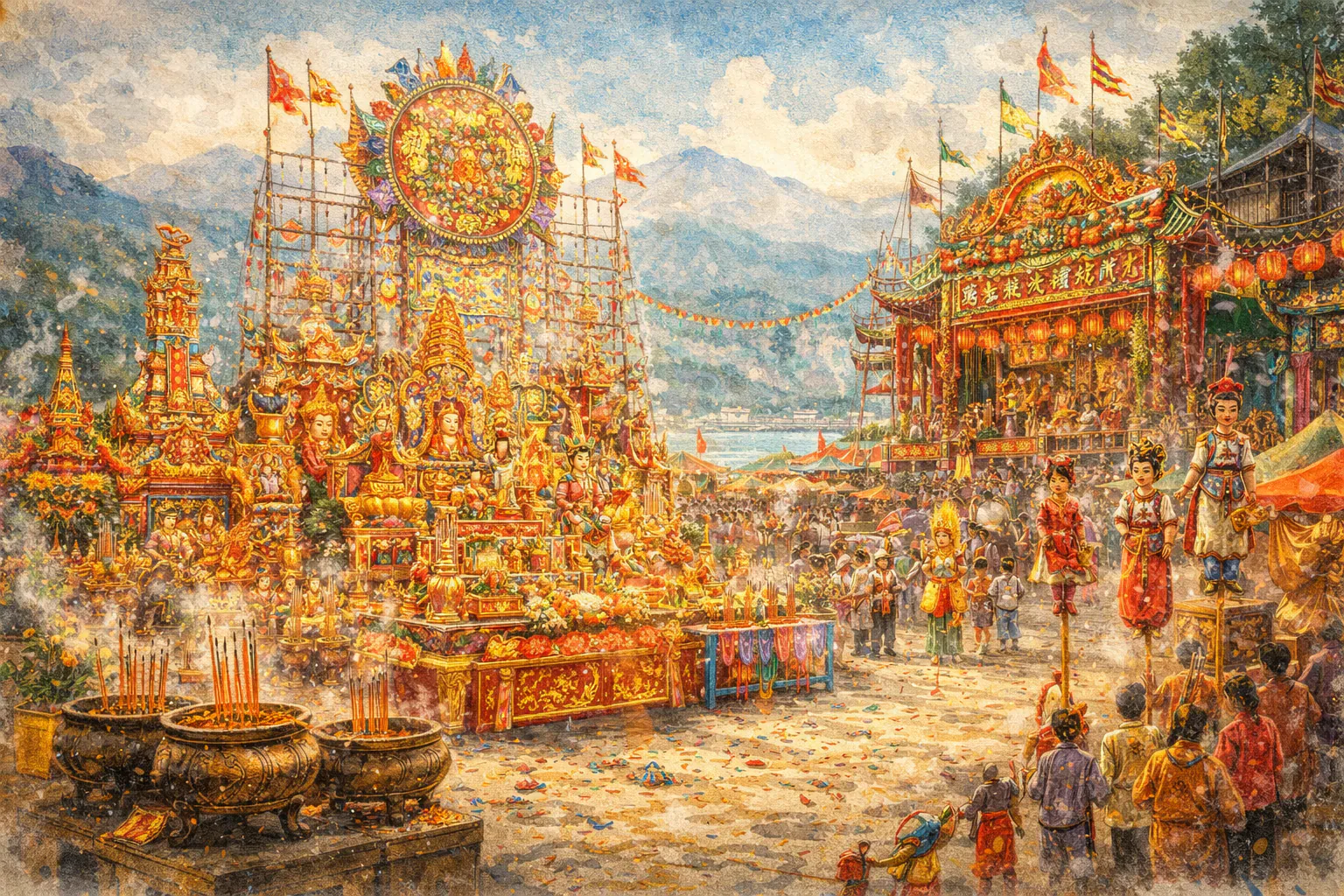
在香港最著名的太平清醮活動,莫過於長洲的清醮。每逢活動舉行,整個島嶼都會變成節日場景。街道掛滿彩旗與燈飾,祭壇與戲棚在空地搭起,人群在街道之間穿梭。
清醮的核心是祭壇儀式。道士在祭壇前誦經作法,焚香與燒符,為地方祈福。儀式通常持續多日,從淨壇、請神到送神,每一個步驟都有固定程序。這些儀式帶著濃厚的宗教意味,也反映了傳統信仰的世界觀。
祭壇往往布置得格外華麗。紙紮裝飾、神像與供品整齊排列,香爐裡插滿長香。煙霧在空氣中慢慢升起,整個空間瀰漫著香火的氣味。這些畫面讓人感覺彷彿走進一場古老的祭典。
除了宗教儀式,太平清醮也包含許多民間活動。戲棚是其中重要的一部分。傳統粵劇會在祭典期間連續上演,演員在舞台上唱戲,觀眾坐在台下欣賞。這種文化形式在香港已有數百年歷史。
另一個令人印象深刻的元素是紙紮祭品。巨大的紙紮樓閣、神像與各種象徵物會在祭典期間展示。這些紙紮作品往往工藝精細,展現出民間工藝的特色。
在長洲清醮之中,還有著名的飄色巡遊。孩童扮演神話人物或歷史角色,被固定在隱藏的支架上,看起來像在空中漂浮。巡遊隊伍穿過街道,吸引大量觀眾。這種獨特的景象,成為香港民俗文化的重要象徵。
太平清醮不僅是宗教儀式,也是一種社區團結的象徵。整個村落或社區會共同籌備祭典,居民分工合作,從搭建祭壇到準備供品,每一個環節都需要集體參與。
在現代城市之中,這樣的大型傳統祭典顯得格外珍貴。高樓與繁忙街道之間,仍然保留著古老信仰與習俗。這些活動讓人們記得城市的歷史,也記得社群的連結。
當夜晚降臨,祭壇的燈光在黑暗中亮起。香火仍然在香爐裡燃燒,道士的誦經聲在空氣中回響。這些聲音讓整個節日帶著一種神秘而莊嚴的氣氛。
太平清醮的存在提醒人們,香港不只是現代都市,也是一個擁有深厚民俗文化的地方。傳統與現代在這裡交錯,形成獨特的城市景象。
當祭典結束,祭壇被慢慢拆除,街道恢復平日的安靜。但那些香火、戲棚與巡遊的畫面,仍然停留在人們的記憶之中。太平清醮不只是一場儀式,它更是一段關於社群、信仰與文化的故事。
English Version
Each year on Cheung Chau Island, one of Hong Kong’s most distinctive and culturally rich festivals unfolds through a series of rituals, performances, and community-driven activities that together form the Cheung Chau Bun Festival, a tradition deeply rooted in history yet continuously evolving within a modern context. Unlike large-scale urban celebrations shaped by commercial influence, this festival retains a strong sense of local identity, where religious beliefs, communal participation, and symbolic practices come together to create an experience that is both spiritually meaningful and visually engaging. Central to the festival are the rituals dedicated to appeasing deities and praying for peace, safety, and prosperity, reflecting a long-standing tradition that originated from efforts to ward off plague and misfortune, demonstrating how collective belief systems once played a vital role in maintaining social stability and emotional reassurance within isolated communities. The ceremonial aspect is expressed through processions, offerings, and performances that transform the island into a temporary sacred space, where everyday life is suspended and replaced by a structured sequence of events guided by tradition and intention. One of the most recognizable features of the festival is the bun towers, large structures covered with white buns that symbolize blessings and abundance, serving both as visual icons and as integral elements of ritual practice. These towers, rising prominently within the festival grounds, represent a connection between the physical and spiritual worlds, embodying wishes for good fortune while reinforcing the communal effort required to construct and maintain them. The highlight event, often associated with widespread attention, is the bun scrambling competition, where participants climb the tower to collect buns, transforming a symbolic structure into a dynamic performance that blends athleticism with tradition. While this event attracts visitors and media coverage, it exists alongside quieter but equally significant practices, such as temple ceremonies and community gatherings, which preserve the festival’s deeper spiritual dimension. The streets of Cheung Chau during the festival become a vibrant network of activity, filled with decorations, temporary installations, and an atmosphere that balances celebration with reverence, allowing both residents and visitors to engage with the tradition in different ways. Costumes, music, and theatrical elements further enrich the experience, with performances that draw from folklore and historical narratives, reinforcing cultural continuity through storytelling and visual expression. Food also plays an essential role, particularly the emphasis on vegetarian offerings during the festival period, reflecting a symbolic act of purification and respect that aligns with the event’s spiritual origins. This dietary shift, observed by many participants, demonstrates how cultural practices extend beyond visible rituals into everyday behavior, shaping the overall experience of the festival. In a broader context, the Cheung Chau Bun Festival represents an important example of intangible cultural heritage, where traditions are preserved not through static display but through active participation, requiring each generation to learn, adapt, and continue the practices that define the community’s identity. Its survival within a rapidly changing city highlights the resilience of local culture and the importance of maintaining connections to historical roots, even as external influences continue to reshape the urban landscape. The island setting itself contributes significantly to the festival’s character, creating a sense of separation from the mainland that allows traditions to flourish within a more contained and cohesive environment, where the boundaries between participants and observers are less defined. Ultimately, the Cheung Chau Bun Festival is more than a seasonal event or tourist attraction; it is a living ritual that reflects the values, beliefs, and collective memory of a community, where acts of worship, celebration, and participation intertwine to create a meaningful and enduring cultural experience that continues to evolve while remaining grounded in its historical origins.