
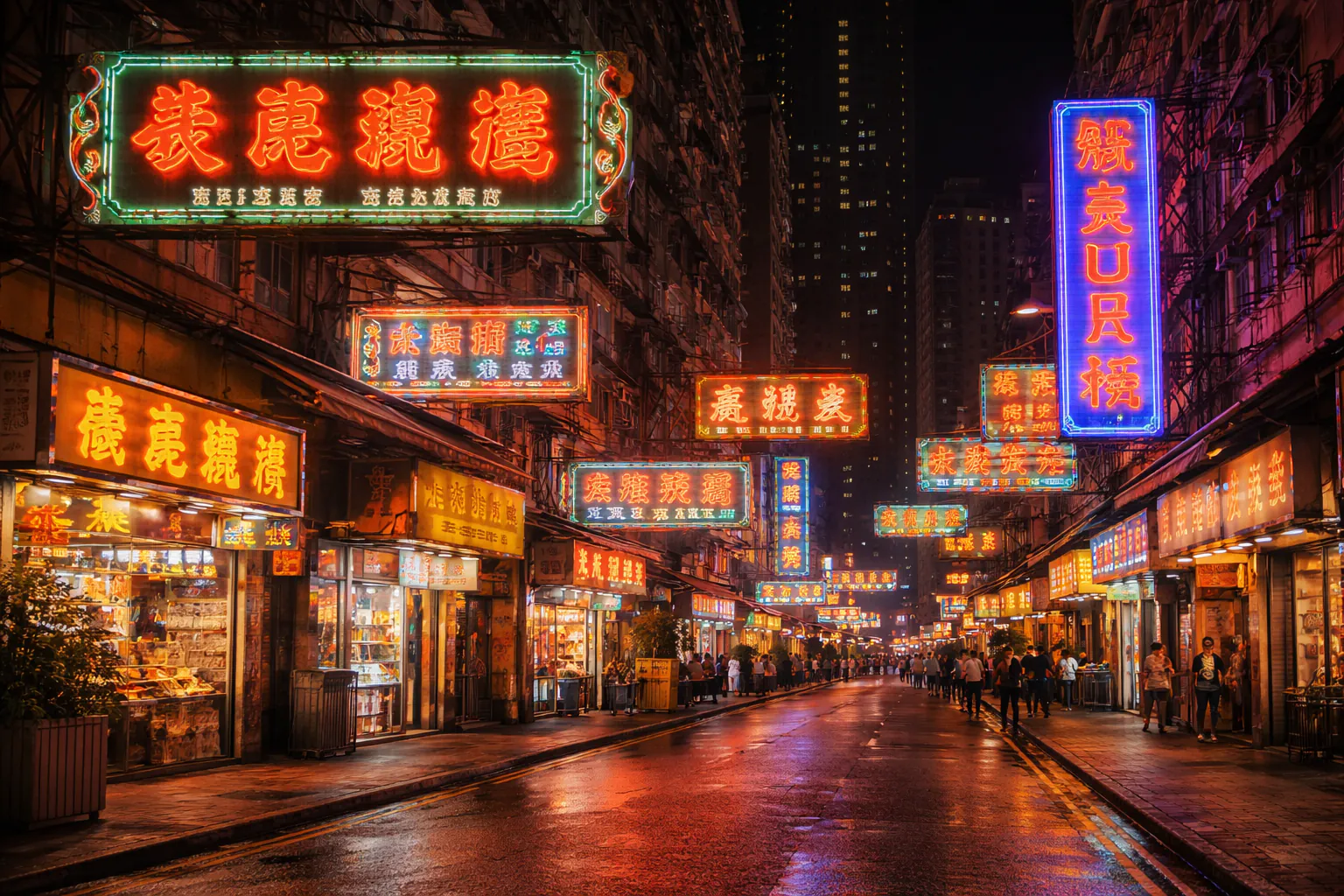
霓虹燈下的香港:曾經照亮城市夜晚的招牌年代 | Hong Kong Beneath Neon Lights: The Vanished Glow That Once Defined a City | 今日回望 |第十六章
在很多舊照片與電影畫面裡,香港的夜晚總是充滿光線。
那些光不是來自大型廣告屏幕,而是一個又一個伸出街道的霓虹燈招牌。
Neon lights once painted Hong Kong’s skyline with vivid color, turning night into a living canvas. These glowing signs were more than advertisements—they were identity, culture, and atmosphere combined. As they gradually disappeared, the city lost not only a visual spectacle but also a piece of its emotional landscape, leaving behind memories illuminated by a fading electric glow.
在過去幾十年的香港街頭,霓虹燈曾經是城市最鮮明的標誌。
當夜幕降臨,街道兩旁的招牌逐漸亮起,整條街就像被彩色光線包圍。
紅色、藍色、綠色與橙色的霓虹燈在夜空中交錯,形成一種獨特的城市景象。
對很多香港人而言,霓虹燈不只是招牌,更是一段時代的象徵。
香港霓虹燈的歷史可以追溯到二十世紀中期。隨著城市經濟快速發展,各種商店與餐館開始在街道兩旁開設。為了吸引顧客,商戶設計出各種大型霓虹招牌。
這些招牌通常伸出建築物外牆,直接面向街道。
當夜晚亮起時,即使在遠處也能看到。
在一些繁忙的街區,例如旺角、油麻地、尖沙咀與灣仔,霓虹燈招牌曾經密集得幾乎覆蓋整條街道。
行人走在街上,抬頭便能看到一排排燈牌。
有些招牌甚至設計成特殊形狀,例如龍、鳳、魚或其他圖案。這些形狀不只是裝飾,也成為店舖的象徵。
例如酒樓、茶餐廳、戲院與珠寶店,都會有自己的霓虹燈設計。
霓虹燈的製作是一門專門技術。
工匠會把玻璃管加熱,然後手工彎曲成不同形狀,再在管內注入氣體。當電流通過時,玻璃管便會發出亮麗的光線。
這些看似簡單的燈牌,其實需要熟練的技術才能完成。
在霓虹燈最盛行的年代,香港有不少專門製作霓虹招牌的工廠與師傅。
他們的作品遍佈城市街頭。
對很多市民而言,霓虹燈是城市夜生活的一部分。
晚上逛街時,街道在燈光照射下顯得格外熱鬧。餐廳門口的招牌閃耀,戲院外的燈牌吸引觀眾。
整個城市彷彿被一層光包圍。
這種景象也經常出現在香港電影之中。
許多電影導演喜歡在霓虹燈下拍攝夜景。雨後的街道反射著彩色燈光,形成具有電影感的畫面。
這些影像讓香港在世界各地留下深刻印象。
在不少外國人眼中,霓虹燈街景就是香港的象徵之一。
然而,隨著時間推移,城市環境與安全規定逐漸改變。
大型伸出式霓虹招牌需要定期維修,否則可能出現安全問題。加上新的 LED 廣告屏幕逐漸流行,傳統霓虹燈的使用開始減少。
許多舊招牌被拆除,街道景象也逐漸改變。
曾經密集的霓虹燈街道,慢慢變得簡潔。
新的招牌通常較小,也較少伸出街道。
這些變化讓城市看起來更加整齊,但也讓舊日的光影逐漸消失。
對很多香港人來說,看到一個熟悉的霓虹招牌被拆下時,總會有一點感慨。
因為那不只是一個燈牌,而是一段城市記憶。
曾經在夜晚閃耀的光,陪伴過無數人的日常生活。
有人在霓虹燈下等朋友,有人在燈光下逛街購物,也有人在這些燈光下度過青春歲月。
這些畫面,構成了香港夜晚的一部分。
今天,在某些街區仍然可以看到少數霓虹招牌。
當夜晚來臨時,那些燈光依然會亮起,提醒人們曾經有一個屬於霓虹燈的年代。
雖然城市不斷改變,但那些光影仍然留在許多人的記憶之中。
當人們回望過去時,往往會想起那些色彩鮮明的夜晚。
在高樓之間,一個又一個霓虹燈招牌亮起。
整個城市被光照亮。
那是香港曾經最迷人的夜景之一。
English Version
There was a time when the night in Hong Kong did not simply fall—it came alive. As daylight faded, the city transformed into a luminous landscape defined by neon lights that stretched across streets, hung above narrow alleys, and reflected off glass and rain-soaked pavement. These signs were not just commercial tools; they were expressions of identity, each crafted with intention and character. Walking through districts like Mong Kok or Nathan Road, one could feel immersed in a sea of color, where red, blue, and green lights intertwined to create a sense of movement even in stillness. The glow was constant, almost rhythmic, as if the city itself was breathing through electricity. Neon signs carried a distinct craftsmanship that set them apart from modern lighting. Each sign was shaped by hand, its glass tubes bent with precision and filled with gases that produced their iconic glow. This process required skill, patience, and an understanding of both design and engineering. As a result, no two signs were exactly alike. They bore subtle imperfections that made them feel alive, as though each one had its own personality. In contrast to the uniformity of LED displays today, neon signs offered a visual richness that could not be easily replicated. They were, in many ways, works of art suspended in public space. Beyond their aesthetic appeal, neon lights played a crucial role in shaping the cultural identity of Hong Kong. They became symbols of a city that never slept, representing energy, opportunity, and constant motion. For residents, these lights were part of everyday life—familiar markers that guided them through the night. For visitors, they created an unforgettable impression, defining the city’s image in films, photographs, and global imagination. The interplay of light and shadow, combined with the density of urban architecture, gave Hong Kong a cinematic quality that felt both intimate and expansive. However, the gradual disappearance of neon signs reflects broader changes within the city. Safety regulations, maintenance costs, and urban redevelopment have all contributed to their decline. Large, hand-crafted signs are increasingly replaced by smaller, more efficient LED panels that prioritize practicality over artistry. While these modern alternatives offer clarity and energy efficiency, they lack the depth and warmth that once defined the city’s nighttime character. The transition is subtle but profound, altering not just how the city looks, but how it feels. The fading of neon lights also signals a shift in how public space is experienced. Where once there was a layered visual environment filled with overlapping signs and glowing reflections, there is now a cleaner, more controlled aesthetic. This change can be seen as part of a broader movement toward modernization and standardization, where individuality gives way to uniformity. Yet, in this process, something intangible is lost—the sense of wonder that came from walking beneath a sky of electric color. Despite their decline, neon lights continue to exist in memory and cultural representation. They are preserved in photographs, films, and personal recollections, serving as reminders of a different era. Efforts to conserve and restore some of these signs highlight their significance not just as decorative elements, but as cultural heritage. They tell stories of a city shaped by commerce, creativity, and resilience, capturing moments that might otherwise fade into obscurity. The legacy of Hong Kong’s neon lights is not confined to the past. It lives on in the way people remember the city and in the ongoing dialogue about preservation and progress. As new technologies continue to redefine urban landscapes, the story of neon lights offers a valuable perspective on what it means to evolve without losing identity. The glow may no longer dominate the skyline, but it endures in memory—soft, flickering, and unforgettable