
香港碗仔翅的年代:街頭濃湯與庶民味道的集體記憶 | The Era of Hong Kong Cart Noodles: Street Broth and the Collective Taste of the Working Class | 今日回望 | 第28章
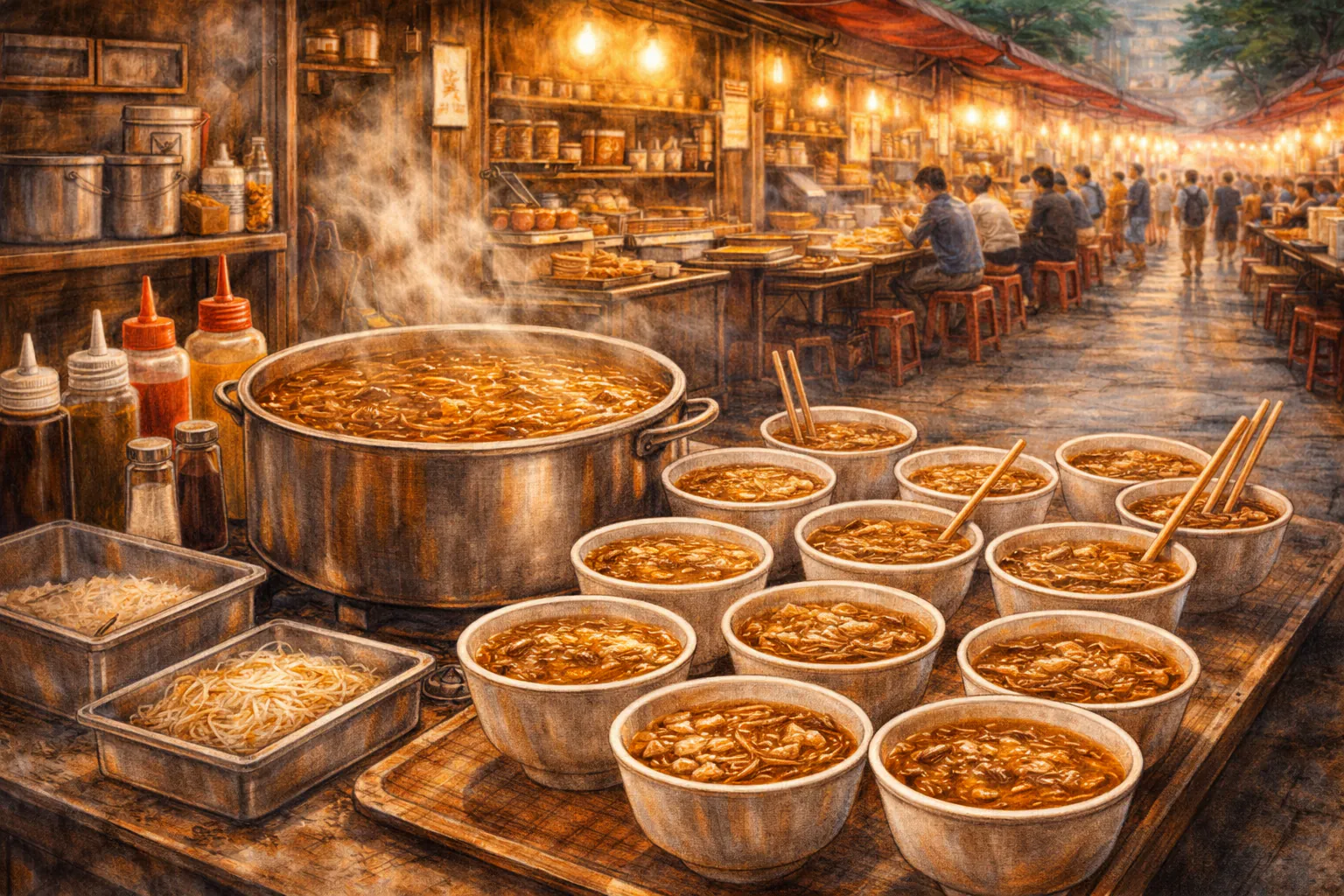
在香港街頭小食文化中,碗仔翅曾是最受歡迎的小食之一。濃稠的湯汁配上粉絲、木耳與配料,再加入醋與胡椒粉,一碗熱騰騰的小食往往只需幾塊錢。無論是在夜市、街角小販,還是熱鬧商場附近,碗仔翅總能吸引食客排隊購買。對不少香港人來說,這不只是街頭小食,更是一段屬於城市的生活記憶。回望香港碗仔翅的年代,那些冒着熱氣的小碗與街頭香味,仍然深深留在香港人的集體回憶之中。
On the streets of old Hong Kong, cart noodles carried more than flavor—they carried stories of survival, choice, and community. With simmering pots of rich broth and rows of humble ingredients, these roadside stalls offered affordable meals tailored to each individual. In their simplicity, they reflected the resilience and warmth of everyday life, becoming an enduring symbol of grassroots culture and shared memory.
在香港眾多街頭小食之中,碗仔翅是一種充滿特色的傳統食品。雖然名字中帶有「翅」字,但實際上大多數碗仔翅並沒有真正的魚翅,而是用粉絲等材料製作而成。
碗仔翅的出現,與香港早年的飲食文化有密切關係。魚翅曾經是高級酒樓的名貴食材,一般市民難以負擔。然而,一些小販受到魚翅羹的啟發,開始製作價格較低的街頭版本,於是碗仔翅逐漸出現在街頭。
這種小食通常盛在小碗或紙碗中,因此被稱為「碗仔翅」。湯底多以高湯與澱粉勾芡製成,再加入粉絲、木耳、雞絲或其他配料。
煮好的碗仔翅呈現濃稠狀態,顏色微深。食用時,顧客通常會加入少量醋與胡椒粉,使味道更加豐富。
在香港的街頭,小販會把碗仔翅放在大鍋中慢慢加熱。湯面冒着熱氣,香味吸引不少行人停下腳步。
碗仔翅的價格通常十分親民,因此深受學生與基層市民歡迎。在過去,一碗碗仔翅只需很少的錢,便能帶來滿足的味道。
許多香港人的記憶中,都有在夜市或街角吃碗仔翅的經驗。朋友一起逛街時,常常會買一碗熱騰騰的碗仔翅,一邊聊天一邊慢慢享用。
碗仔翅的味道濃郁,尤其適合在寒冷或夜晚食用。熱湯入口後帶來暖意,使人感到十分舒適。
在一些夜市與街頭小食集中地,碗仔翅往往與魚蛋、燒賣、煎釀三寶等小食一起售賣。這些攤檔形成香港獨特的街頭飲食景象。
隨着時間推移,碗仔翅的配料也有所變化。有些小販加入蟹肉、冬菇或其他食材,使味道更加豐富。
然而,無論配料如何改變,碗仔翅的核心仍然是那碗濃稠而熱騰騰的湯。簡單卻令人滿足的味道,是它長久受歡迎的原因。
隨着城市發展與街頭小販數量減少,傳統碗仔翅攤檔逐漸變少。不少小食轉移到固定店舖或熟食市場。
即使如此,碗仔翅依然是香港街頭文化的重要部分。許多小食店仍然提供這道經典小食,讓人們可以繼續品嚐熟悉的味道。
對很多香港人來說,碗仔翅不只是食物,而是一種城市記憶。那些夜晚街燈下的小攤檔、冒着熱氣的湯碗與忙碌的小販,都是生活的一部分。
近年來,香港街頭小食逐漸受到外地遊客關注。碗仔翅也成為不少旅客想要嘗試的特色小食之一。
回望香港碗仔翅的年代,可以看到城市最樸實的一面。那些簡單的小碗與熱氣騰騰的湯,陪伴了無數人的日常生活。
在香港人的記憶中,一碗碗仔翅可能只是小食,但它卻承載着許多故事。那些街角的香味與熱鬧人群,構成了城市最真實的畫面。
即使時代改變,碗仔翅依然在香港街頭散發香氣。這種簡單的小食,也因此成為香港飲食文化中難以取代的一部分。
English Version
In the bustling streets of Hong Kong’s past, cart noodles were more than just a quick meal—they were a reflection of the city’s adaptability and spirit. Known locally as “che zai min,” these humble noodle stalls appeared in narrow lanes, busy intersections, and crowded neighborhoods, serving steaming bowls of soup customized to each customer’s taste. Unlike fixed menus in restaurants, cart noodles offered a flexible, almost personal dining experience. Customers would select from a variety of ingredients—fish balls, beef brisket, pig skin, radish, and more—creating a bowl that suited both their appetite and their budget. This element of choice, simple yet meaningful, gave people a sense of control in a fast-moving and often demanding city. The broth, constantly simmering in large metal pots, was the heart of the stall. Its aroma spread through the streets, inviting passersby to pause, even if only for a few minutes. Vendors worked with practiced efficiency, assembling bowls quickly while maintaining a rhythm that matched the pace of urban life. Despite the speed, there was always a human touch—brief conversations, familiar greetings, and the quiet recognition between vendor and regular customer. These interactions, though fleeting, formed a subtle layer of connection that defined the experience of eating cart noodles. The origins of cart noodles are deeply rooted in Hong Kong’s post-war era, when economic hardship shaped daily life. For many working-class families, affordability was essential, and cart noodles provided a practical solution. The ability to choose inexpensive ingredients meant that even those with limited means could enjoy a warm, satisfying meal. Over time, this necessity evolved into a cultural icon, representing not just survival, but creativity and resilience. Each bowl told a story—not only of personal preference, but of a city learning to make the most out of limited resources. As Hong Kong continued to modernize, the presence of street-side noodle carts began to decline. Health regulations, urban redevelopment, and rising costs gradually pushed these informal businesses out of public spaces. In their place, fixed shops and franchised eateries emerged, offering cleaner environments and standardized menus. While these changes brought convenience and consistency, they also altered the essence of the experience. The spontaneity of choosing ingredients from a moving cart, the intimacy of eating on the street, and the authenticity of the environment became increasingly rare. Yet, the memory of cart noodles remains deeply embedded in Hong Kong’s cultural identity. For many, it is not just about the taste of the broth or the texture of the noodles, but about the atmosphere that surrounded them. It is the image of steam rising into the evening air, of people standing shoulder to shoulder, of a city that found warmth in its simplest moments. Even today, some traditional shops attempt to preserve this legacy, recreating the flavors and offering a glimpse into the past. However, what cannot be fully replicated is the context—the streets, the sounds, and the shared experience that once defined cart noodle culture. In remembering the era of cart noodles, we are reminded that food is never just about sustenance. It is about place, time, and connection. It is about how ordinary moments can become meaningful through repetition and shared experience. The story of Hong Kong’s cart noodles is ultimately a story of people—of their struggles, their ingenuity, and their ability to find comfort in the most unassuming corners of life.