
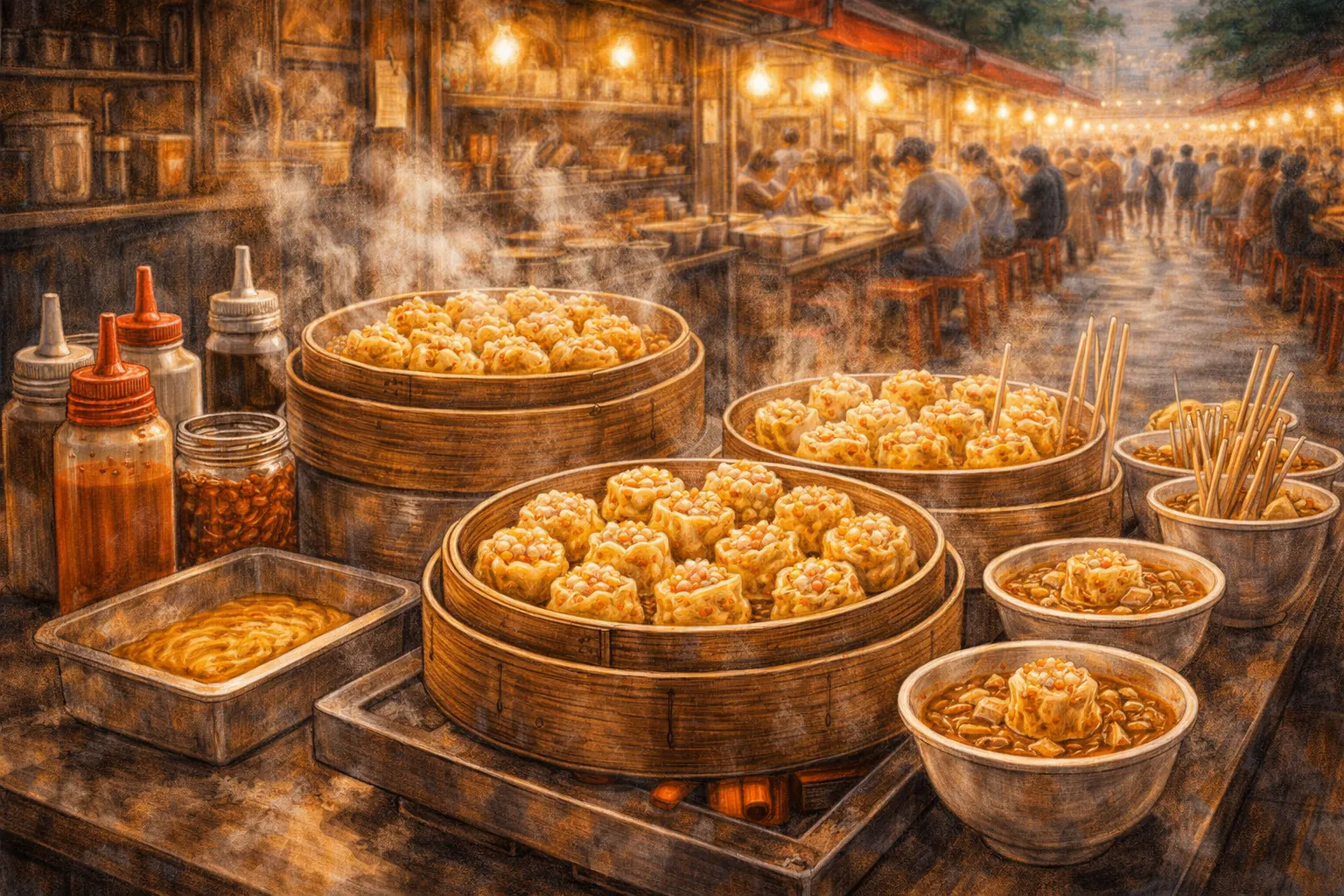
香港燒賣檔的年代:街角蒸氣與庶民味道的集體記憶 | The Era of Hong Kong Siu Mai Stalls: Street Steam and the Collective Taste of Everyday Life | 今日回望 | 第29章
在香港街頭小食文化中,燒賣檔一直是最常見的風景之一。與酒樓精緻的點心不同,街頭燒賣通常以魚肉或豬肉製成,蒸好後配上醬油或辣椒油,用竹籤串起便能邊走邊吃。學生放學後、上班族下班途中,常常會在街角燒賣檔前停下腳步,買上一串熱騰騰的小食。這種簡單而平民化的味道,陪伴了幾代香港人成長。回望香港燒賣檔的年代,那些蒸籠冒出的熱氣與街頭香味,仍然留在城市的集體記憶之中。
In the memory of Hong Kong’s streets, few things are as vivid as the sight of steaming siu mai carts at busy corners. These humble stalls were more than quick bites; they were part of daily rhythm, community interaction, and the sensory identity of the city. Through rising steam and simple flavors, they captured a way of life that quietly shaped generations and still lingers in collective memory.
在香港繁忙的街道上,有一種小食幾乎隨處可見,那就是燒賣。無論是在學校附近、商業區街角,還是在夜市小販攤檔,燒賣檔總能吸引不少食客停下腳步。
燒賣原本是廣東點心文化的一部分,在酒樓與茶樓中已有悠久歷史。然而,在香港街頭,人們逐漸發展出另一種平民版本的燒賣,成為街頭小食文化的重要代表。
街頭燒賣與酒樓燒賣最大的不同,在於材料與做法。酒樓燒賣通常以豬肉與蝦製成,外形精緻,而街頭燒賣則多以魚肉漿或混合肉製作,形狀較簡單,但味道同樣濃郁。
小販通常把燒賣放在蒸籠中加熱,蒸氣不斷從籠中冒出,散發出誘人的香味。顧客只需用竹籤串起幾顆燒賣,再淋上醬油或辣椒醬,便可以一邊走一邊享用。
這種方便又便宜的小食,很快成為學生與年輕人最喜愛的街頭食品之一。在放學時間,學校附近的燒賣檔往往排滿等待購買的學生。
燒賣檔的攤位通常非常簡單,一個蒸籠、一張小桌子,再配上幾瓶調味料,就可以開始營業。儘管設備簡單,但攤檔周圍總是充滿熱鬧氣氛。
對很多香港人來說,燒賣檔是童年記憶的一部分。放學後與同學一起買燒賣,一邊聊天一邊吃,是學生時代最平常的畫面。
燒賣之所以受歡迎,也因為價格十分親民。在過去,一串燒賣只需很少的錢,因此幾乎人人都能負擔。
除了學生之外,上班族在下班途中也常常會買一串燒賣作為小食。這種邊走邊吃的方式,使燒賣成為香港街頭文化的一部分。
在一些夜市與街頭小食集中地,燒賣檔通常與魚蛋、碗仔翅與煎釀三寶等攤檔並排。這些攤檔形成香港獨特的街頭飲食景象。
隨着時間推移,燒賣的口味也逐漸出現變化。有些小販會加入咖喱汁、沙嗲醬或其他調味,使味道更加多樣。
然而,無論口味如何改變,燒賣檔最吸引人的仍然是那股蒸氣與香味。當蒸籠打開時,熱氣與香味一起飄散,讓人食慾大開。
隨着城市發展與街頭小販數量減少,傳統燒賣檔逐漸減少。不少小販被要求搬入固定店舖或熟食市場。
儘管如此,燒賣依然是香港最受歡迎的小食之一。許多小食店與街頭店舖仍然繼續售賣燒賣,讓人們可以品嚐這種熟悉的味道。
對許多香港人來說,燒賣的味道代表着日常生活。那些蒸籠冒出的熱氣、竹籤串起的小食與街頭人群,都是城市生活的一部分。
近年來,香港街頭小食逐漸受到外地遊客關注。燒賣也成為不少旅客想要嘗試的特色食品之一。
回望香港燒賣檔的年代,可以看到城市最樸實的一面。那些簡單的攤檔與熱騰騰的蒸籠,陪伴了無數人的生活。
在香港人的記憶中,一串燒賣也許只是小食,但它卻連結着許多關於城市的回憶。那些街角的香味與熱鬧人群,構成了香港最真實的生活畫面。
即使城市不斷改變,燒賣依然在香港街頭散發香氣。這種簡單的小食,也因此成為香港飲食文化中難以取代的一部分。
English Version
There was a time in Hong Kong when the aroma of siu mai drifted through nearly every neighborhood, carried by the soft clouds of steam rising from small metal carts stationed along pavements and alleyways. These siu mai stalls were not designed to impress, nor did they seek attention through decoration or branding. Instead, they existed as a natural extension of the street itself—practical, immediate, and deeply woven into everyday life. For many, they represented the simplest form of comfort food, accessible at any hour and shared among strangers who briefly became part of the same moment. The siu mai itself was uncomplicated: small, springy dumplings served with soy sauce, chili oil, or sweet sauce, skewered on thin sticks for easy eating. Yet, what made these stalls unforgettable was not just the taste, but the atmosphere surrounding them. People gathered casually, office workers on short breaks, students after school, taxi drivers pausing between fares, and elderly residents taking slow evening walks. Conversations overlapped with the hiss of steam, coins exchanged hands quickly, and the rhythm of the city continued without pause. These stalls reflected a version of Hong Kong that was fast but not detached, crowded yet intimate. They did not belong to any one person; they belonged to the street. The vendors, often working long hours, became familiar faces within their neighborhoods. Regular customers knew their routines, their timing, and sometimes even their personal stories. In return, the vendors remembered preferences—extra sauce, less chili, or a quick serving for someone in a hurry. This quiet understanding formed a subtle bond between people who might otherwise remain strangers. As the city modernized, these siu mai stalls began to fade. Regulations, rising rents, and changing urban planning gradually pushed them out of public spaces. Convenience stores and chain snack shops emerged, offering standardized products in controlled environments. While these newer alternatives provided consistency and hygiene, they lacked the spontaneous charm and human connection that defined the original street stalls. The disappearance of siu mai carts was not sudden but gradual, almost unnoticeable at first, like a familiar sound slowly fading into silence. Yet, for those who grew up with them, their absence is deeply felt. What remains today is not just nostalgia for a type of food, but for a way of living where the boundary between public and personal space was more fluid. The street was not merely a place of transit; it was a place of interaction, where small rituals like buying a few pieces of siu mai could anchor a person’s day. In remembering these stalls, we are also remembering a city that valued immediacy, warmth, and informal connection. The legacy of Hong Kong’s siu mai stalls lives on in memory, in stories, and occasionally in the rare surviving carts that still operate against the odds. They remind us that culture is not always found in grand institutions or official heritage sites. Sometimes, it exists in the most ordinary corners, carried in the steam of a simple snack and shared among people who may never meet again, yet briefly belong to the same moment.