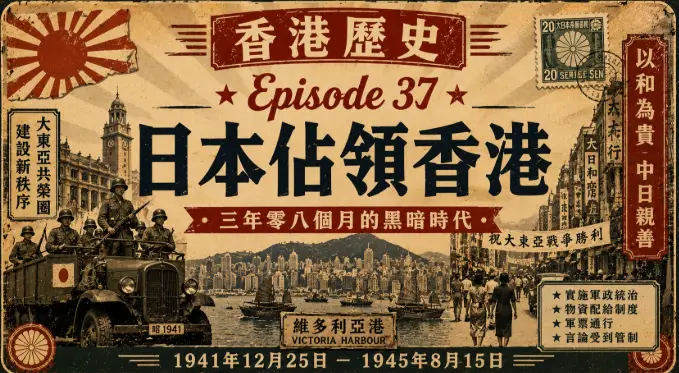
1941年香港淪陷後,日本正式開始統治香港。這段被稱為「三年零八個月」的歲月,城市陷入飢餓、恐懼與動盪之中,也成為香港歷史最沉重的時代之一。
After Hong Kong surrendered in December 1941, the city entered a harsh period under Japanese occupation. For three years and eight months, daily life was shaped by fear, shortages, and uncertainty, leaving lasting scars on generations who lived through the war.
中文
1941年12月25日,香港總督楊慕琦正式向日軍投降,香港自此進入日本統治時期。這一天被香港人稱為「黑色聖誕」,象徵英國殖民地時代的短暫終結,也揭開三年零八個月艱難歲月的開始。日軍接管香港後,立即建立軍事統治制度,社會秩序與市民生活在短時間內出現巨大改變。原本繁忙的國際港口迅速失去昔日景象,大量商店停業,銀行與企業運作陷入混亂,經濟幾乎停頓。日本政府試圖將香港納入其大東亞共榮圈體系,推行日語教育與日本文化,同時強化軍事控制。戰爭期間,香港市民首先面對的是糧食短缺問題。由於海上運輸中斷,加上物資被日軍優先徵用,米糧、食油與日用品供應急速減少。政府開始實施配給制度,但大部分市民仍難以獲得足夠食物。街上開始出現飢餓與營養不良情況,許多人只能依靠番薯葉、樹皮甚至野草維生。當時人口由戰前超過一百五十萬急跌至不足六十萬,大量居民選擇離開香港返回中國內地,希望逃避飢荒與戰亂。日本軍政府亦實施嚴格治安與思想控制。報紙與電台受到審查,市民不能自由發表言論。部分學校被迫改用日語教材,街道名稱與公共標誌亦開始出現日文。香港貨幣制度亦被改變,日本軍票取代港幣成為主要流通貨幣。不過由於軍票不穩定,導致物價急速上升,黑市交易逐漸普遍。市民需要用金飾、手錶與其他貴重物品交換糧食,生活極為艱苦。另一方面,戰爭亦令醫療與公共衛生惡化。藥物短缺、食水不足與衛生條件下降,引發霍亂、瘧疾與其他傳染病。醫院資源嚴重不足,不少病人無法得到治療。部分地區更因長期缺乏食物而出現大量死亡個案。對很多香港家庭而言,日本統治時期不只是戰爭,更是一場漫長的生存考驗。除了經濟與生活困難,市民亦長期生活於恐懼之中。日軍憲兵隊權力極大,懷疑反抗人士可能遭到拘捕與拷問。部分香港居民秘密協助中國抗日力量,亦有人加入東江縱隊等游擊隊,在新界與廣東地區進行情報與救援工作。這些地下抗日活動雖然危險,但亦反映當時香港人對抗戰的支持。戰爭後期,盟軍開始加強對日本的反攻,香港亦不時受到空襲影響。市民在飢餓與戰火之間掙扎,希望戰爭早日結束。1945年8月,日本宣布投降,香港終於結束長達三年零八個月的日治時期。英國軍隊重新接管香港,街道再次升起英國國旗。雖然戰爭結束,但香港已遭受巨大破壞。人口、經濟與城市建設都需要重新恢復。然而這段日治時期亦深深影響香港人的集體記憶。飢餓、逃亡、黑市、軍票與戰時恐懼,成為一代人難以忘記的經歷。日本佔領香港的歲月,不只是戰爭歷史的一部分,更是香港人在逆境中求生與重建的重要篇章。
English Version
Following the surrender of Hong Kong on Christmas Day in 1941, the city entered one of the harshest periods in its modern history. Japanese military authorities took control of the colony and rapidly transformed everyday life under wartime occupation. Streets once crowded with international merchants and harbor traffic became quieter as businesses collapsed, foreign trade disappeared, and fear spread throughout the population. For many residents, survival became the only priority. Japanese rule over Hong Kong lasted for three years and eight months, a phrase that later became deeply embedded in local historical memory. During this time, the occupying government attempted to integrate Hong Kong into Japan’s broader wartime vision for East Asia. Administrative systems were reorganized, Japanese cultural influence increased, and strict military control shaped public life. Schools introduced Japanese language instruction, official notices appeared in Japanese, and propaganda promoted loyalty to the empire. At the same time, censorship limited access to outside information, leaving residents isolated from global events. The most immediate crisis for ordinary civilians was food scarcity. Wartime shipping routes had collapsed, imported supplies nearly vanished, and military forces claimed priority over remaining resources. Rice, cooking oil, medicine, and daily necessities became increasingly difficult to obtain. The occupation authorities introduced rationing systems, but shortages remained severe. Long queues formed outside distribution centers while black markets expanded across the city. Families traded jewelry, furniture, and personal belongings in exchange for food. Malnutrition spread rapidly, especially among children and the elderly. Some residents survived on wild plants or improvised substitutes rarely considered edible before the war. As conditions worsened, Hong Kong’s population dropped dramatically. Hundreds of thousands fled to mainland China hoping to escape starvation and military rule. Those who remained endured overcrowding, inflation, and constant uncertainty. The Japanese military currency imposed during the occupation quickly lost value, causing prices to soar and further destabilizing daily life. Medical care also deteriorated sharply. Hospitals struggled without adequate medicine or equipment, while poor sanitation increased the spread of disease. Cholera, malaria, and other illnesses became major threats in overcrowded districts lacking proper food and clean water. Fear shaped nearly every aspect of life. Japanese military police held broad powers to arrest suspected resistance members or anyone accused of disloyalty. Interrogations and punishments created a climate of intimidation across the colony. Despite these dangers, resistance activities continued throughout the occupation. Some Hong Kong residents secretly supported Chinese anti-Japanese forces by transporting supplies, gathering intelligence, or assisting escaped prisoners of war. Guerrilla groups operating near the New Territories and Guangdong region carried out raids and rescue operations despite enormous risks. As the Pacific War gradually turned against Japan, Allied air raids occasionally struck Hong Kong and nearby military targets. Civilians found themselves trapped between occupation hardships and the growing violence of the wider war. By 1945, exhaustion and deprivation had become part of everyday existence. In August of that year, Japan finally surrendered following the atomic bombings and the collapse of its military position across Asia. British forces soon returned to Hong Kong, officially ending the occupation period. Although liberation brought relief, the city that emerged from war had been deeply scarred. Economic systems had collapsed, infrastructure was damaged, and countless families had lost loved ones during the occupation years. Yet the experience also became an enduring symbol of resilience. The memories of ration cards, military currency, black markets, and wartime suffering remained vivid long after peace returned. The Japanese occupation of Hong Kong continues to stand as one of the most painful yet defining chapters in the city’s modern history.
總結
日本佔領香港的三年零八個月,是香港歷史最黑暗的時期之一。戰爭帶來飢餓與恐懼,但也見證香港人在逆境中的堅持與求生意志。
The Japanese occupation left deep scars across Hong Kong society. Though marked by hardship and suffering, the period also revealed the endurance and resilience of ordinary people struggling to survive one of the city’s darkest eras.